 Curious Patents
The Wright Patent
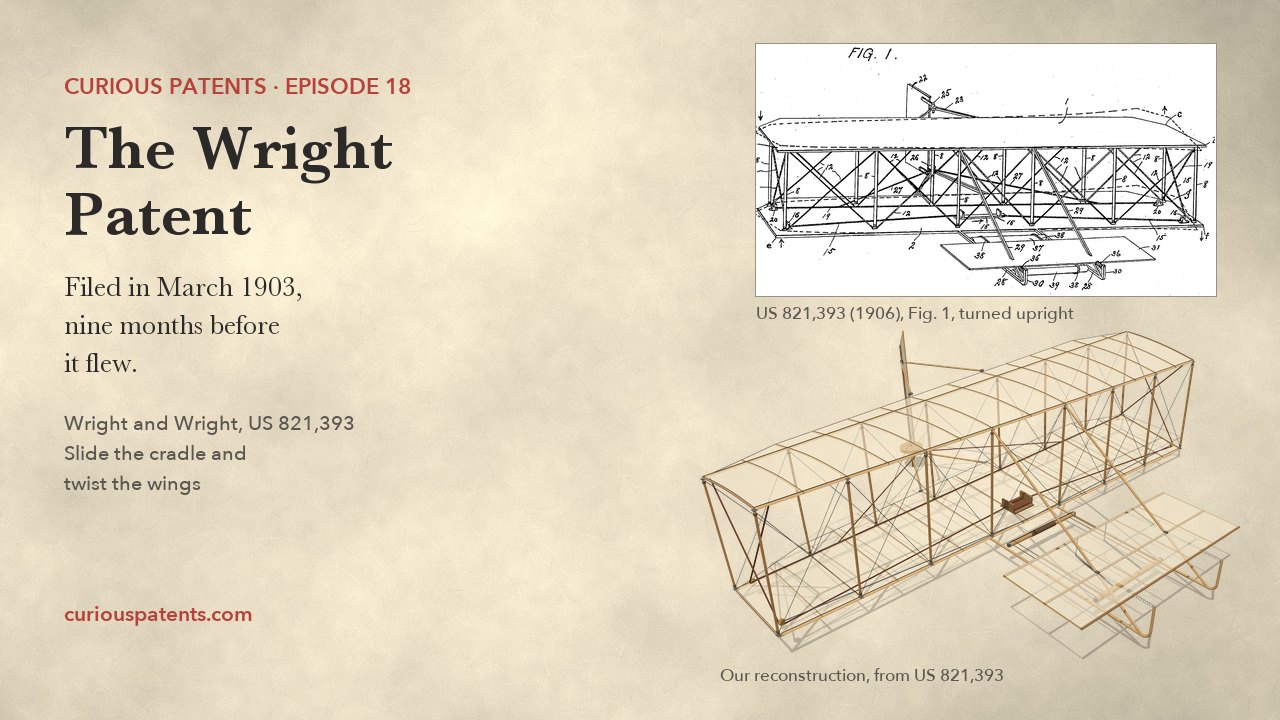
The Wright brothers' patent for a flying machine never uses the word engine. It was filed in March 1903, nine months before their first powered flight. Slide the pilot's cradle on the machine rebuilt from its drawings and watch both wings twist and the rear rudder turn; then follow the patent through the courts, the Smithsonian's tests of 1914 and the patent pool of 1917, with every source.
Watch the episode
A flying machine with no engine
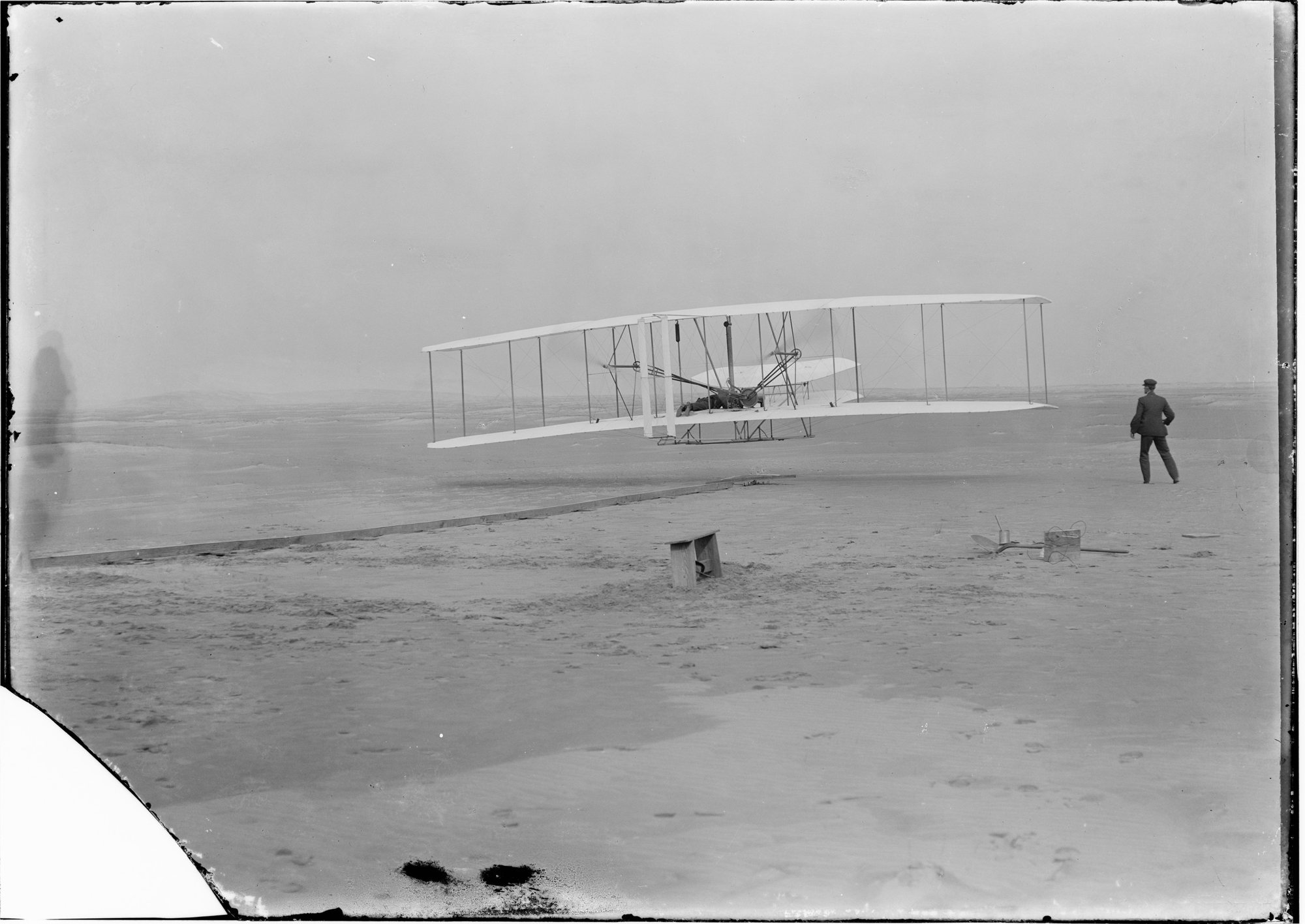
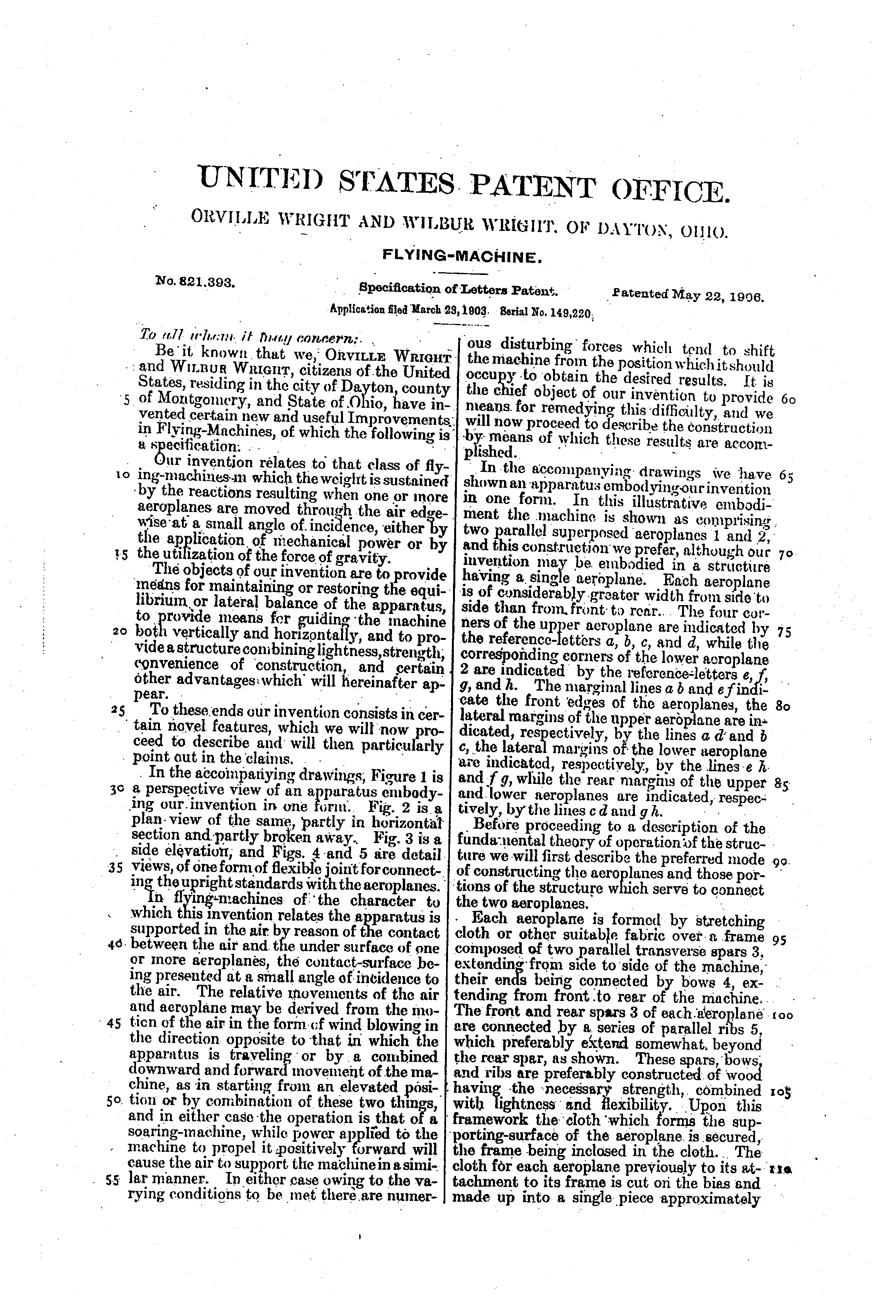
The patent was filed by Orville and Wilbur Wright of Dayton, Ohio, on 23 March 1903, nine months before their first powered flight on 17 December. It was granted on 22 May 1906, "after a pendency of three years in the Patent Office", as a judge put it in 1910 (US 821,393, p. 1; 177 F. 261).
Its first sentence says what kind of flying machine it means: one held up when its surfaces "are moved through the air edgewise at a small angle of incidence, either by the application of mechanical power or by the utilization of the force of gravity". A few lines on, it speaks once more of power that will "propel it positively forward". The words engine, motor and propeller appear nowhere in its seven pages or its eighteen claims; we read every page image to be sure (p. 1).
Its chief object, it says, is a remedy for the "numerous disturbing forces which tend to shift the machine from the position which it should occupy": "means for maintaining or restoring the equilibrium or lateral balance of the apparatus" (p. 1).
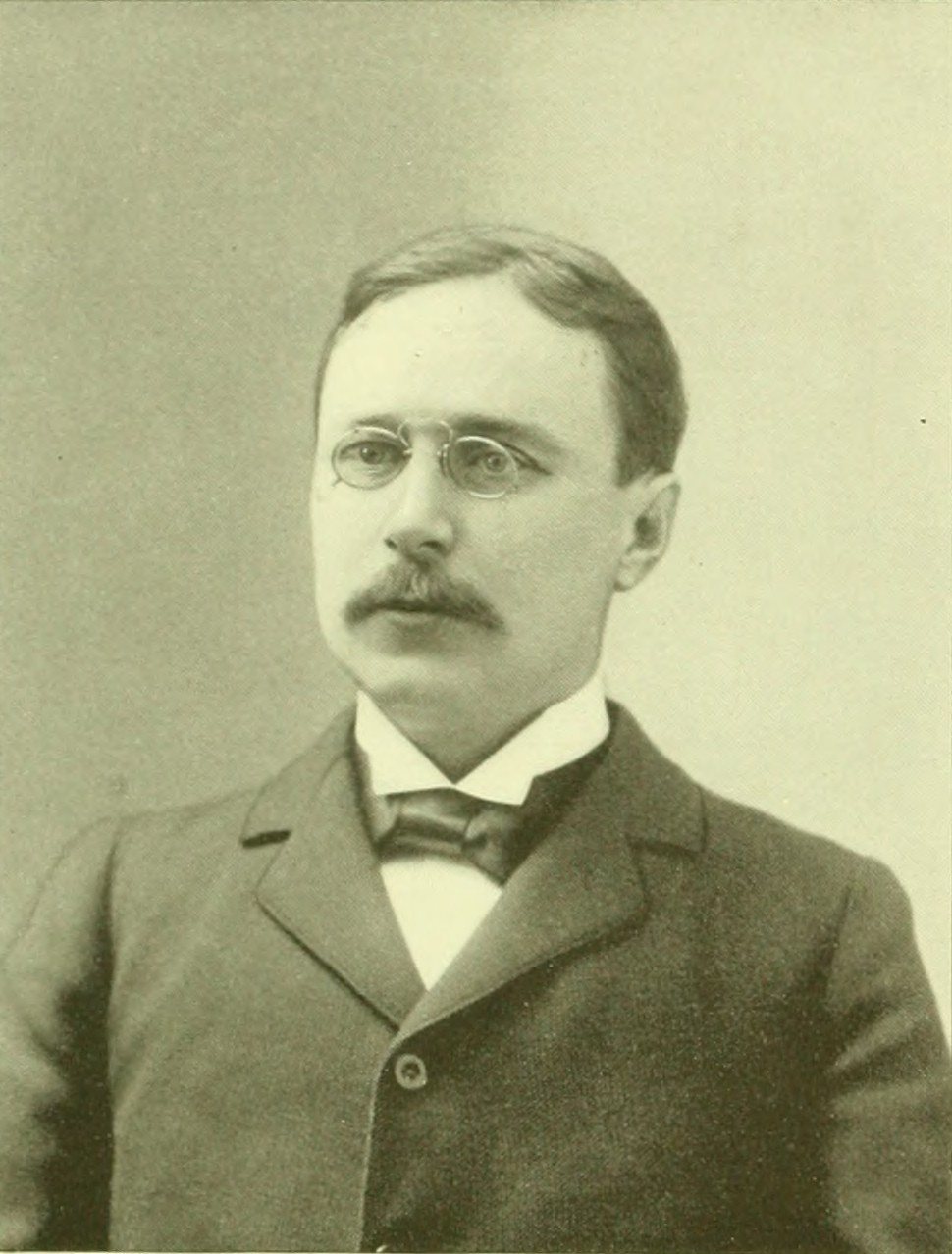

In 1913 a federal judge, John Hazel, noted that Octave Chanute, who had flown gliders in America, had called balance "the most important problem", and a light enough motor "a minor detail" (204 F. 597; the judge's summary of Chanute, not Chanute's own words). Curtiss's side argued that a patent "silent regarding the use of a motor" was meant only for gliding. The judge replied that it "expressly alludes to flying either by the application of mechanical power or gravity" (204 F. 597, p. 607).
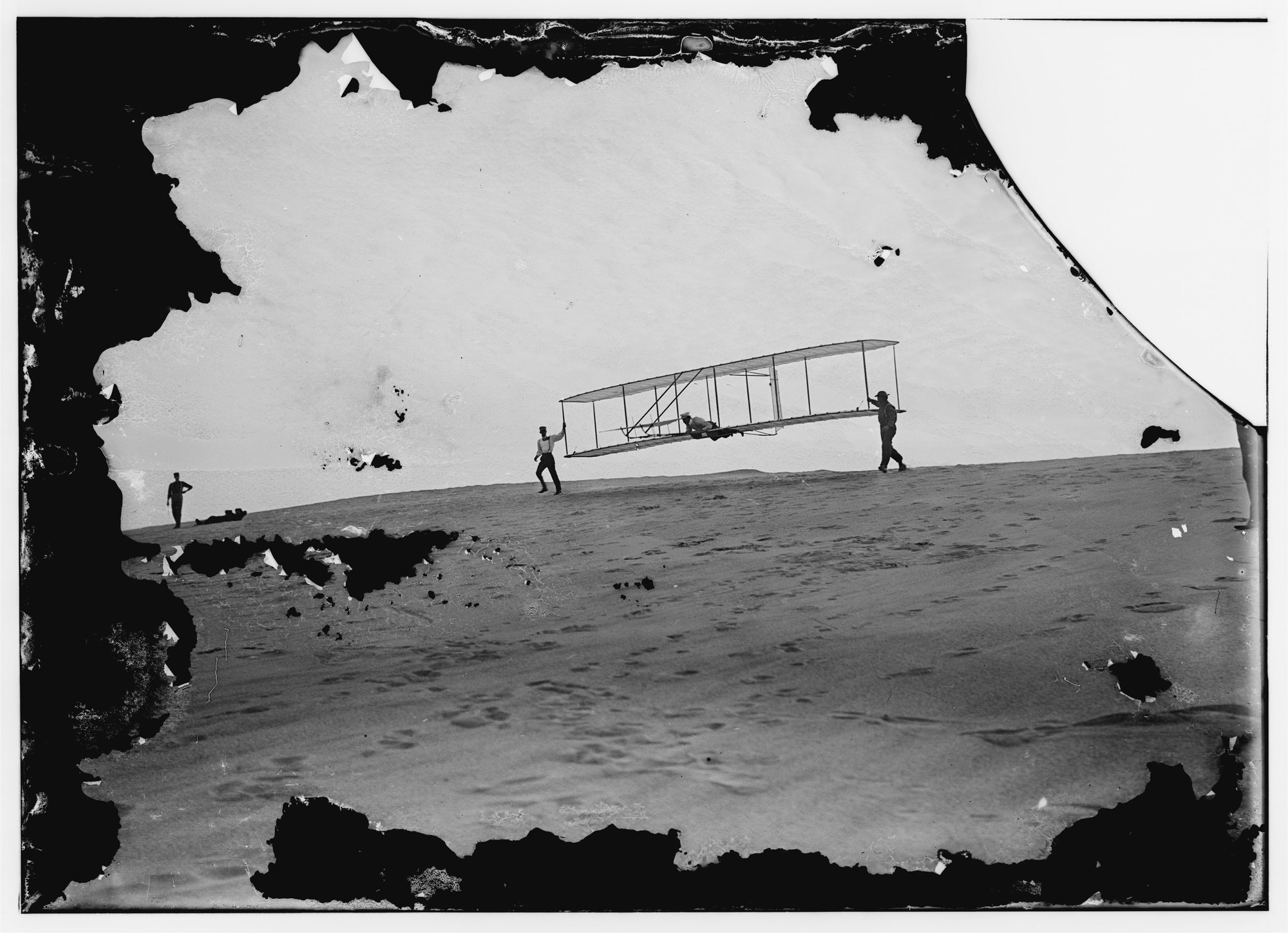
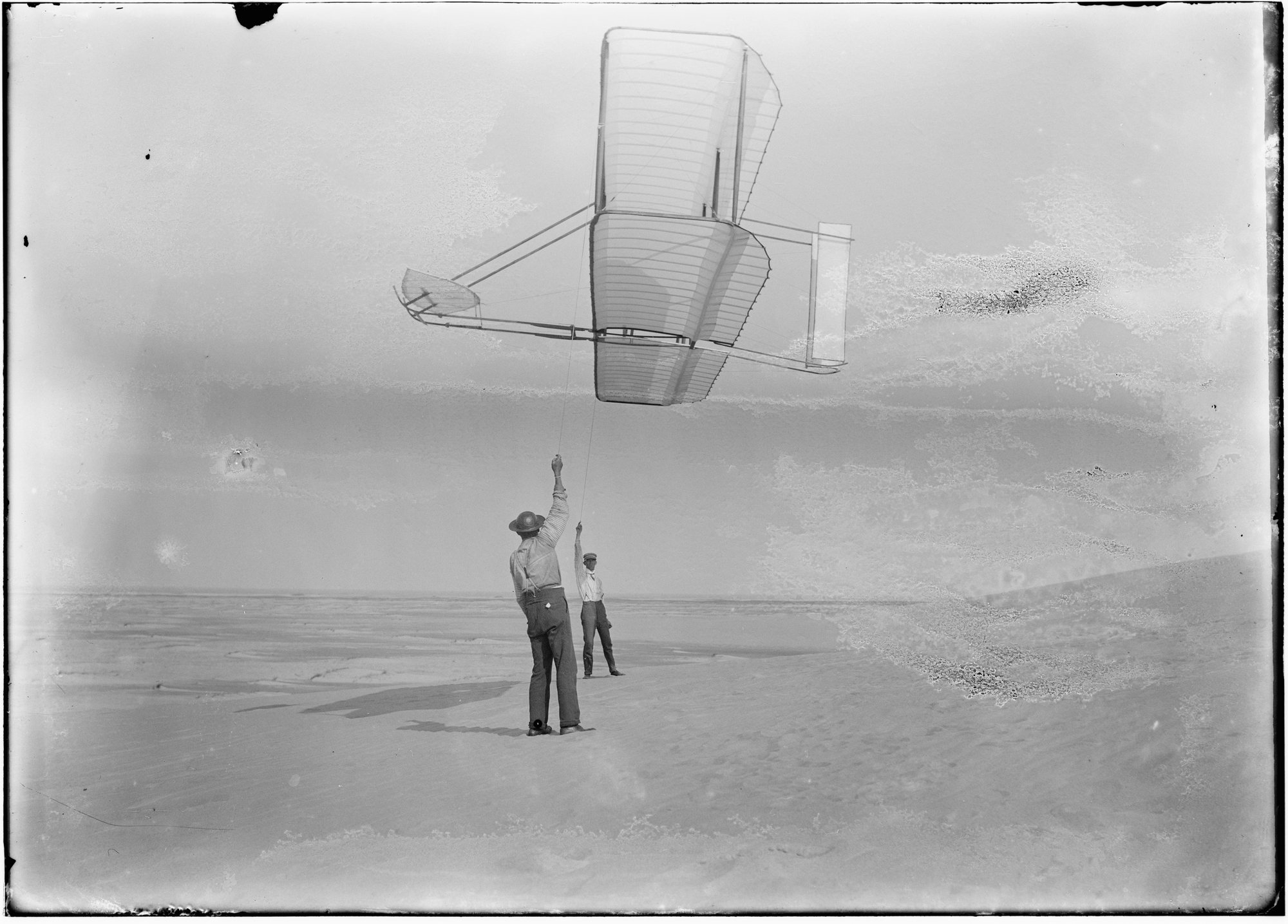
The word glider is not in the patent either. Our reading of the dates is that it describes the kind of glider the brothers flew in 1902, with the pilot lying flat.
The machine on the page
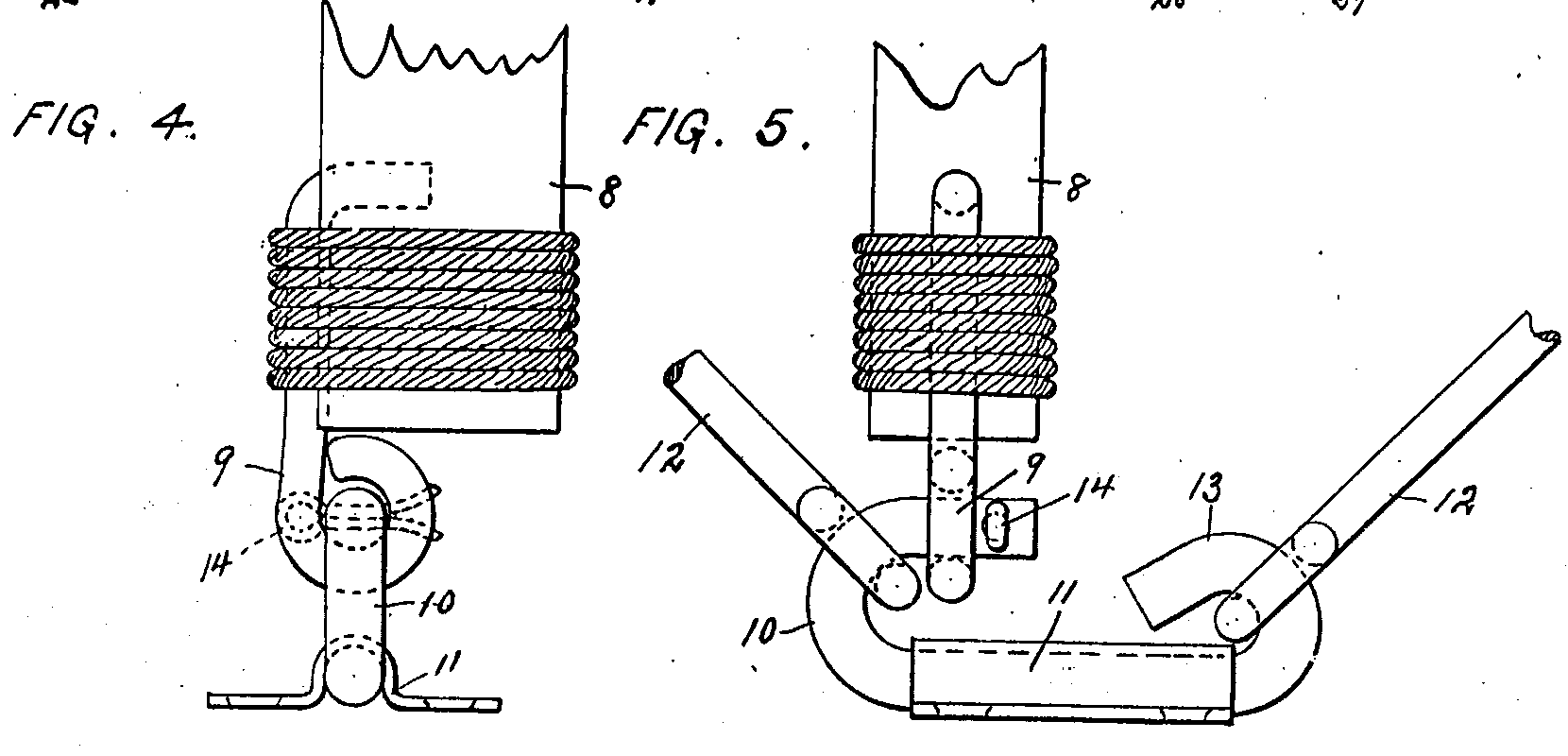
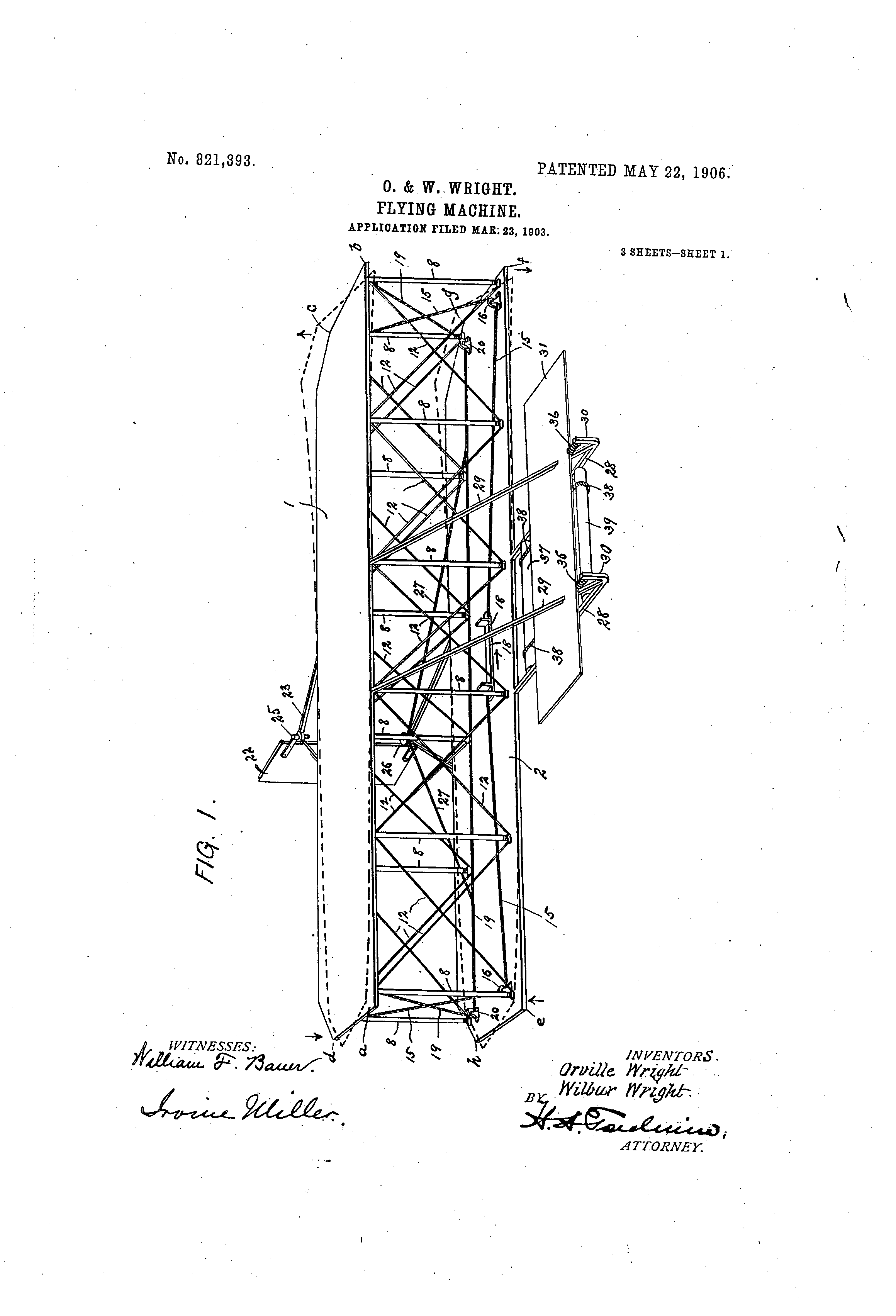
The drawings fill three sheets: two cloth surfaces, one above the other, each "of considerably greater width from side to side than from front to rear". The patent calls each one an aeroplane; we would say a wing (pp. 1, 5).
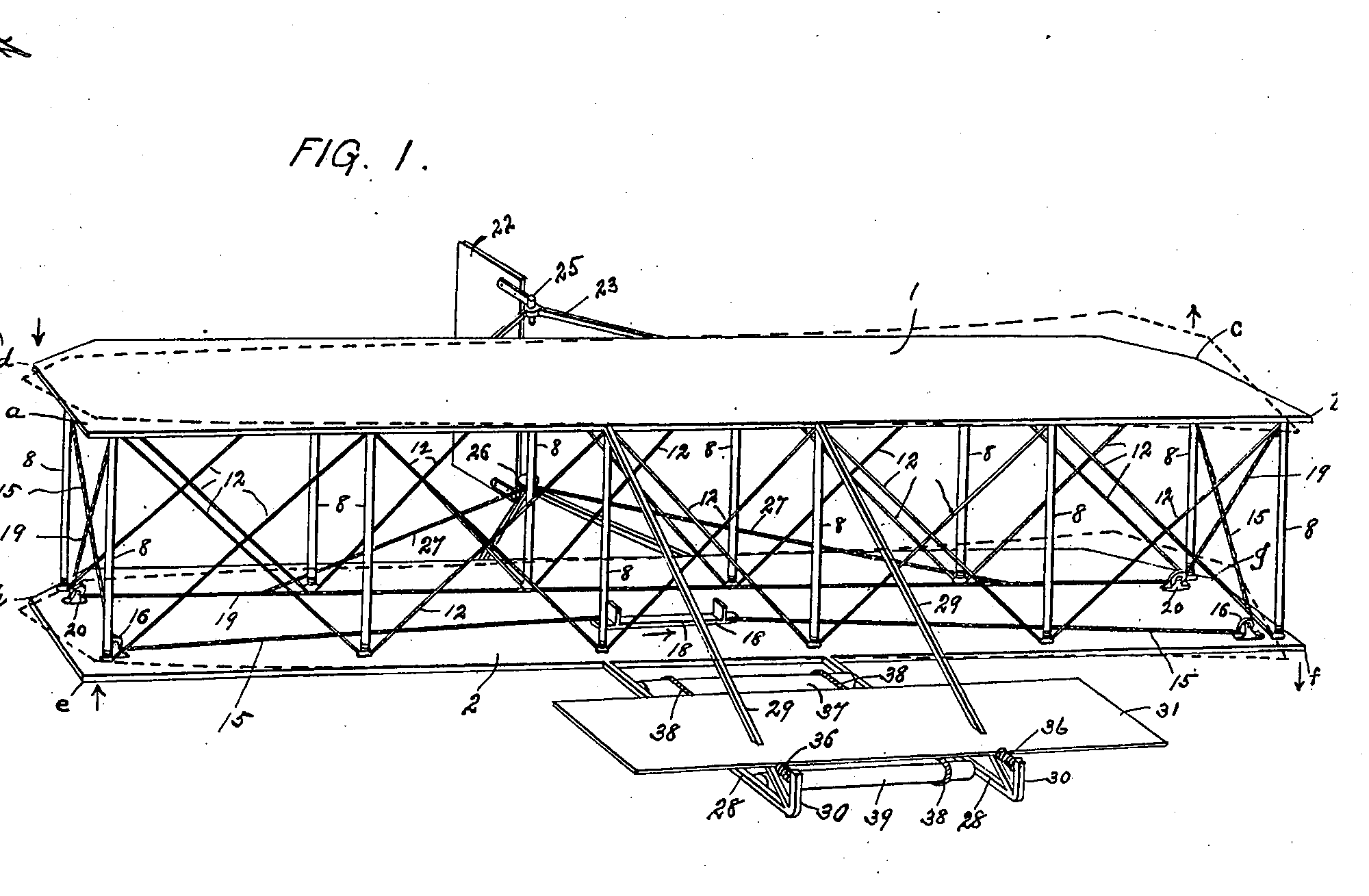
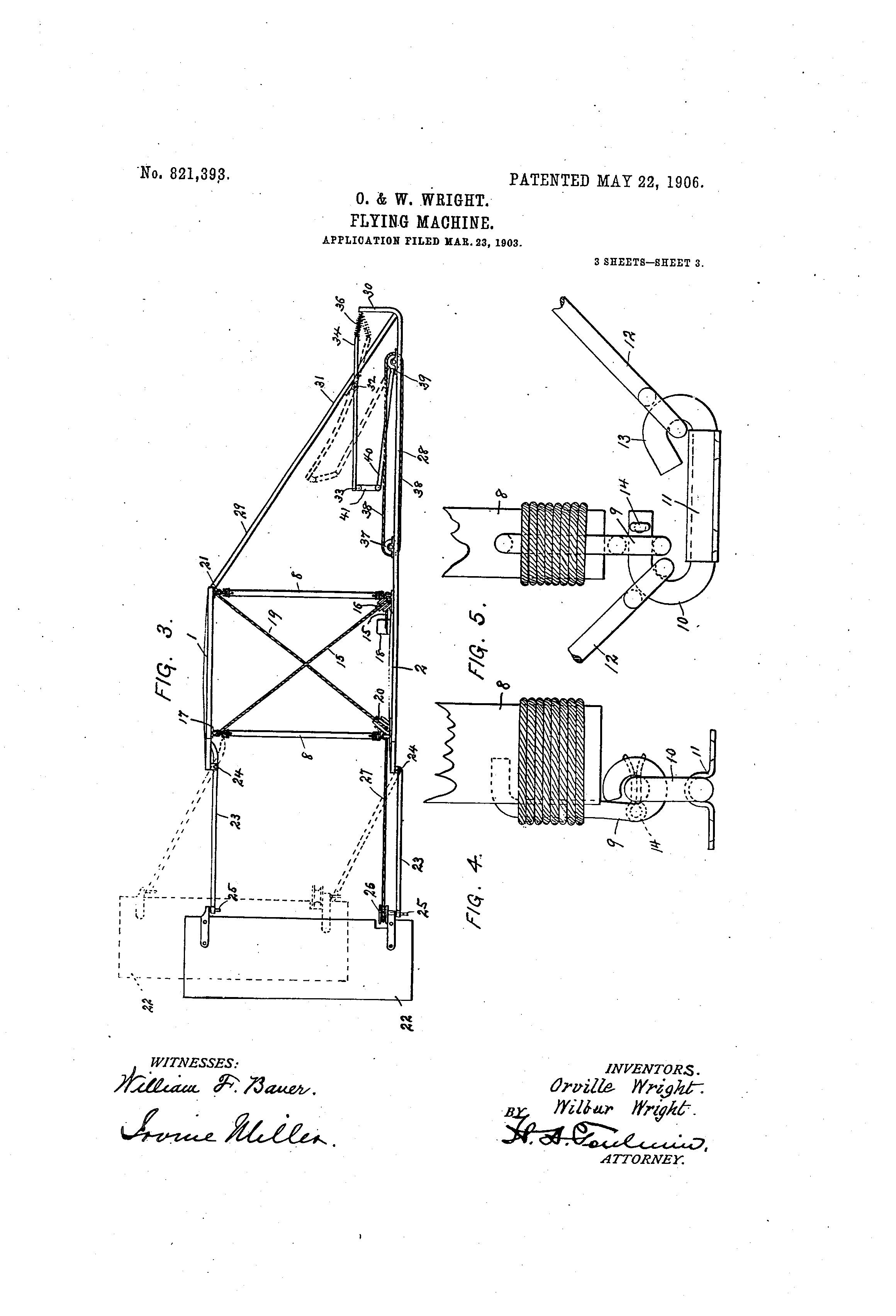
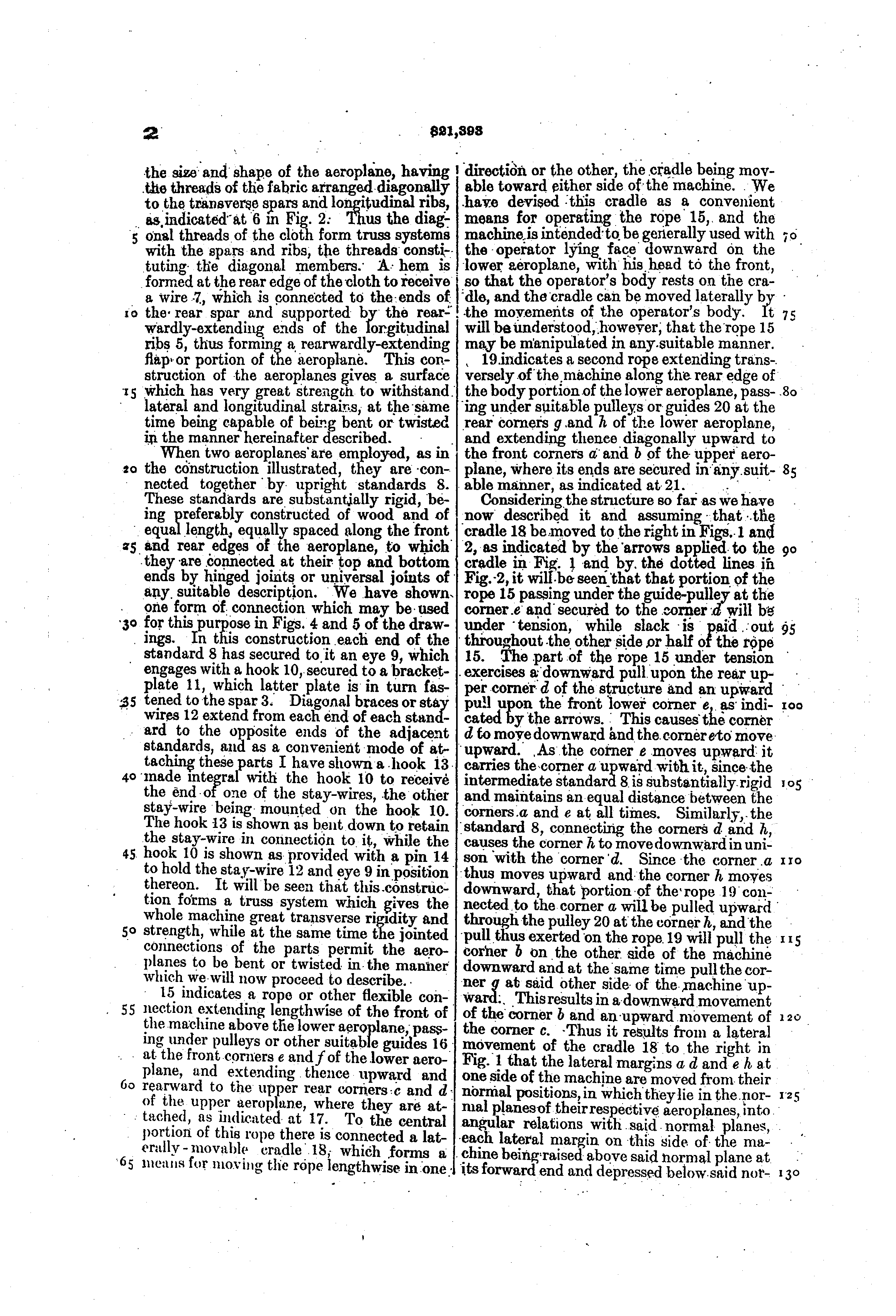
The cloth is stretched over wooden spars and ribs, cut on the bias so its threads run diagonally and "form truss systems with the spars and ribs". Upright wooden posts join the two wings along the front and back edges, fixed at each end "by hinged joints or universal joints", and wires cross diagonally between neighbouring posts. The frame has "great transverse rigidity and strength", while "the jointed connections of the parts permit the aeroplanes to be bent or twisted" (pp. 1-2).
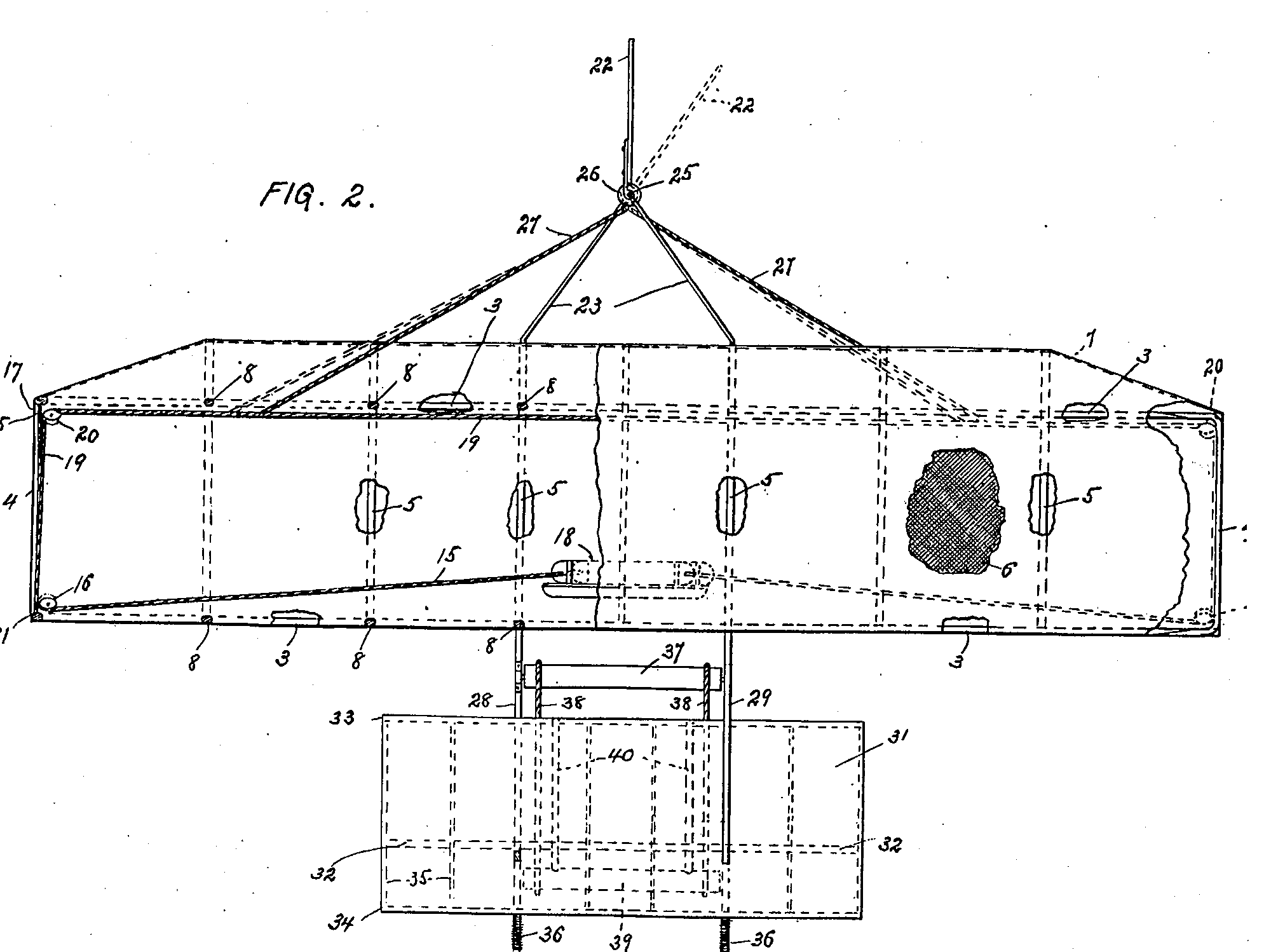
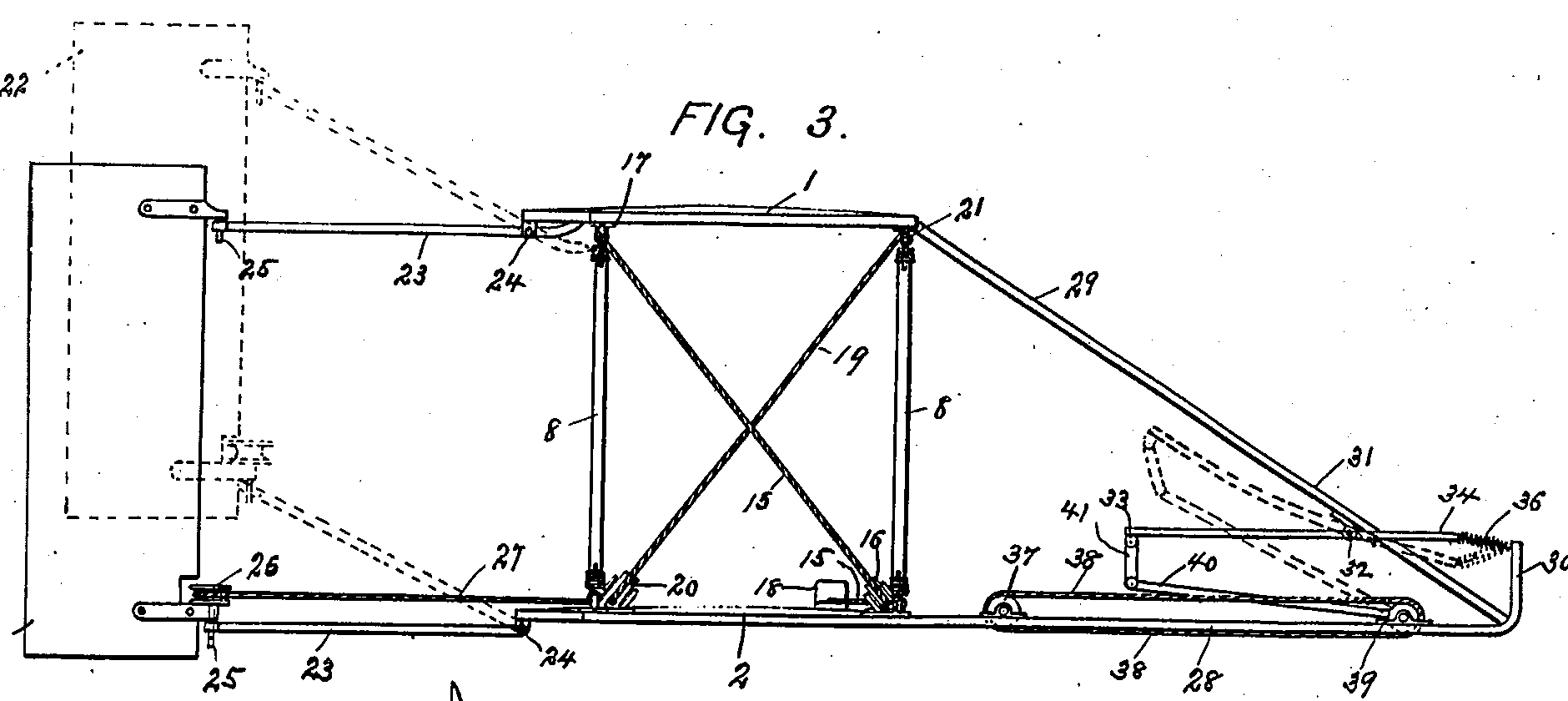
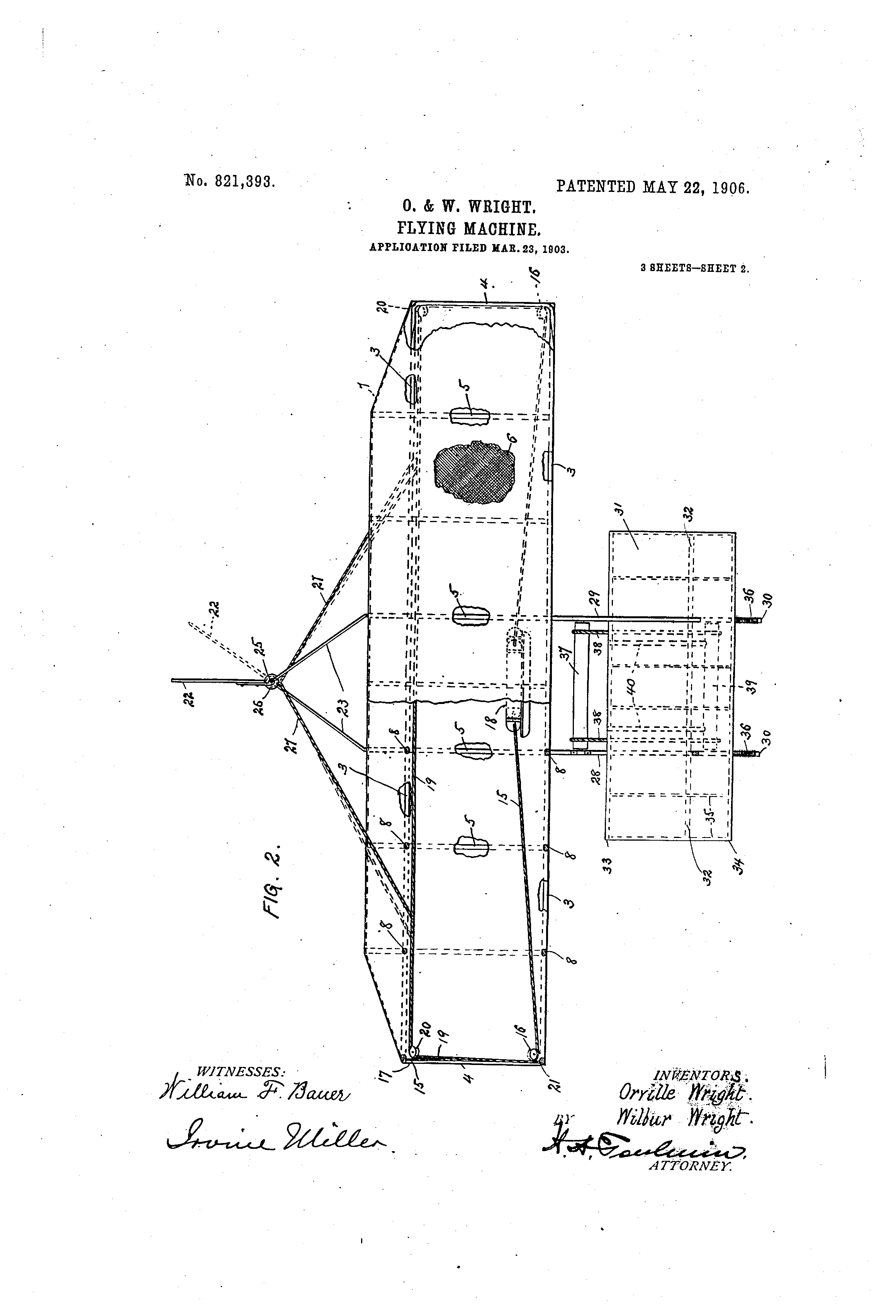
The pilot lies "face downward on the lower aeroplane, with his head to the front", his body on a small cradle, 18, that can slide from side to side. The cradle is tied to the middle of rope 15, which runs along the front. At each lower front corner the rope passes under a pulley, then climbs to the upper rear corner on the same side. Rope 19 does the same at the back, climbing from the lower rear corners to the upper front ones (p. 2). There are no dimensions anywhere in the drawings, and no engine, propeller, wheels or pilot.
Twist the wings: the cradle, the ropes and the rudder
Here is the machine, rebuilt from the patent. The patent gives no sizes, angles or speeds, so every number below is ours.
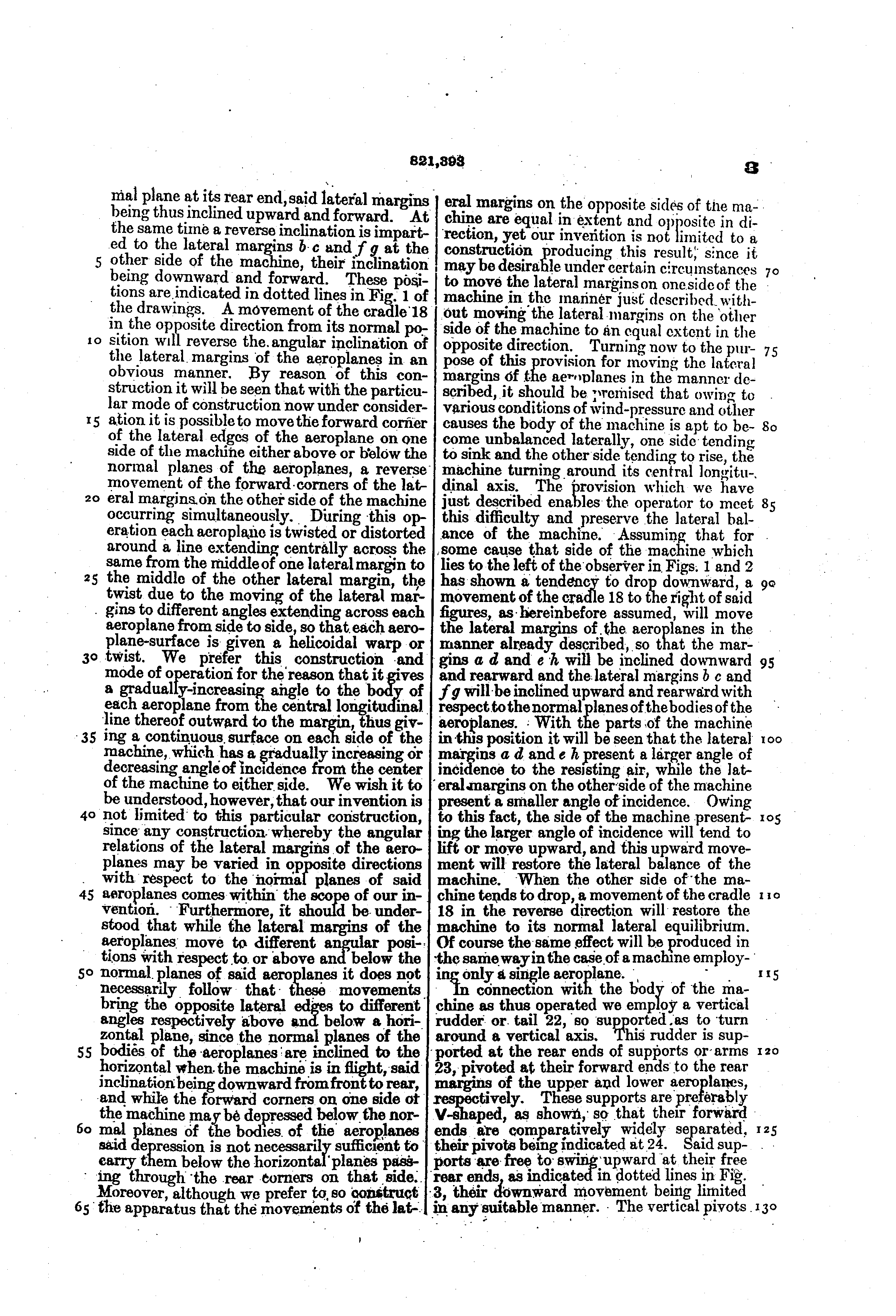
A gust drops one side: "one side tending to sink and the other side tending to rise". The pilot shifts his body toward the high side, and the cradle goes with him. On the low side, rope 15 pulls the upper rear corner down and the lower front corner up, and the posts carry the rest of that wing end with them. Rope 19 moves the other side the opposite way. Both wings twist, a little near the middle and more toward the tips: "a helicoidal warp or twist" (pp. 2-3). That is why the frame is posts and wires on hinged joints: stiff like a box, but a box that can lean, and the leaning twists the wings.
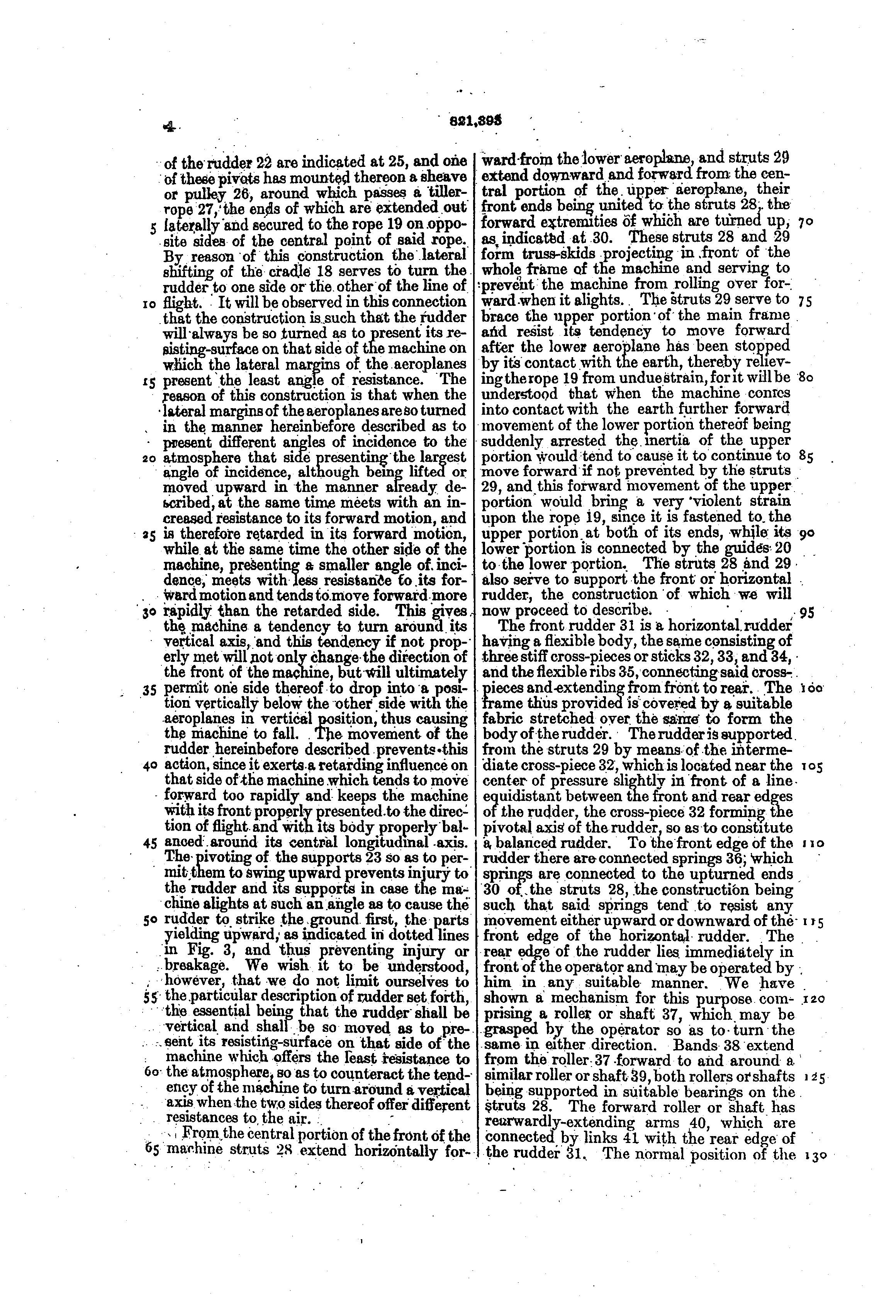
The low side now meets the air at a steeper angle, lifts, and the machine comes level. But that side is also held back harder by the air, while the other side runs ahead, and the machine starts to swing round. Left alone, the patent warns, one side would drop below the other, "thus causing the machine to fall". So the cradle does a second job. The rear rudder's rope, 27, is tied to rope 19: shift the cradle, and the rudder turns as the wings twist, toward the side running ahead, where it "exerts a retarding influence" (p. 4). In this patent that is the rudder's job: to cancel the drag of the twist.
What the patent gives. The planes 1 and 2 with spars 3, bows 4 and ribs 5, the cloth "cut on the bias"; standards 8 "of equal length, equally spaced", on "hinged joints or universal joints" (eye 9, hook 10, plate 11), and stay-wires 12; rope 15 "lengthwise of the front of the machine", under guides 16 at corners e and f, "thence upward and rearward to the upper rear corners c and d"; cradle 18 on its middle, "laterally-movable"; rope 19 along the rear edge, under guides 20 at g and h, "thence diagonally upward to the front corners a and b"; each plane "twisted ... around a line extending centrally across the same", "a helicoidal warp"; rudder 22 on arms 23, the sheave 26 "around which passes a tiller-rope 27, the ends of which are extended laterally and secured to the rope 19"; the rudder turned "to present its resisting-surface on that side of the machine at which the lateral margins of the aeroplanes present the least angle of resistance"; the front rudder 31 on struts 28 and 29, springs 36, rollers 37 and 39, bands 38, arms 40 and links 41 (US 821,393, pp. 1-5; Figs. 1-5). Which way the cradle goes for which side, and which way the rudder turns, are checked against the text and Figs. 1 and 2.
What is ours (the episode's list, from the model itself):
Port is the pilot's left, starboard his right. The angles are the change at the wing tips from flat, as the cradle moves; the patent gives none.
Checked. The episode's own test, run again on this page's copy of the model: 48 checks, all pass. Among them: moving the cradle toward one side gives the other side's wing ends more angle, as the patent's example says; the rudder turns toward the side with less; ropes 15 and 19 keep their lengths through the whole travel; and with the rudder tied to the warp, the flight model keeps the nose on its path, while with the rudder held fixed the machine slips sideways.
To turn, the pilot holds the twist. The machine banks, the rudder keeps the nose from swinging away, and the tilted wings carry it round. That turn is our reconstruction. With the rudder held fixed, the low wing still lifts, but the nose swings away. In 1913 a court heard that machines flown that way "skidded to the side" (204 F. 597).
The front rudder, and what the patent leaves out
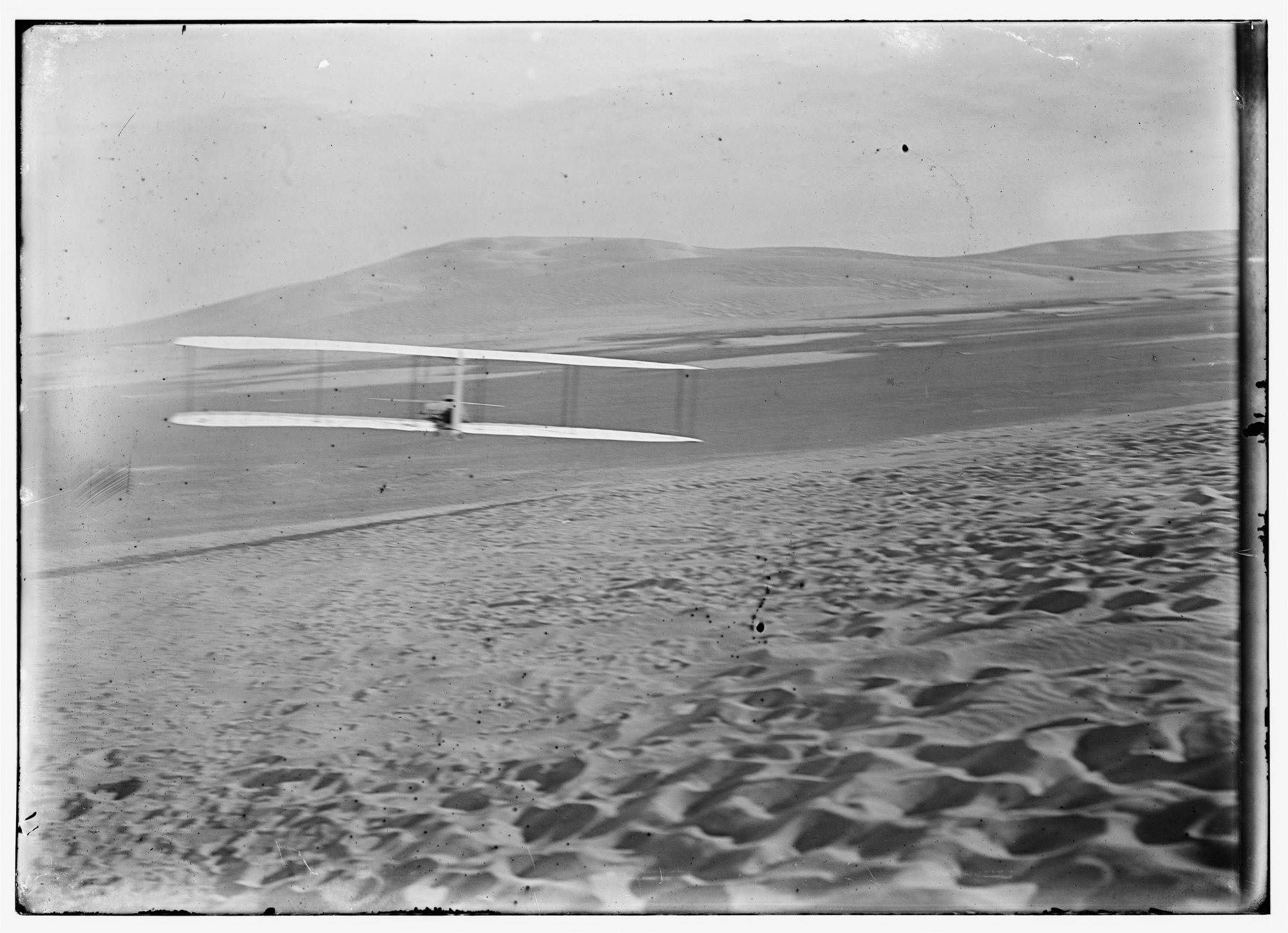
At the front is a second rudder, lying flat, which today we would call an elevator: "The front rudder 31 is a horizontal rudder". Springs hold its front edge. The pilot turns a roller to move the rear edge, the cloth bends into "a concave surface", and the nose rises or falls (pp. 4-5). Choose Front rudder above and turn roller 37.
"Contrary to the usual custom, we place the horizontal rudder in front of the aeroplanes at a negative angle and employ no horizontal tail at all." (p. 5)
If the machine slows too much, that front surface lifts and keeps the nose from dropping, which, the patent says, "has frequently been productive of serious injuries" (p. 5). The patent says nothing about the engine, the propeller or the landing gear; the nearest it comes is the "truss-skids" on the struts in front (p. 4).
The claims
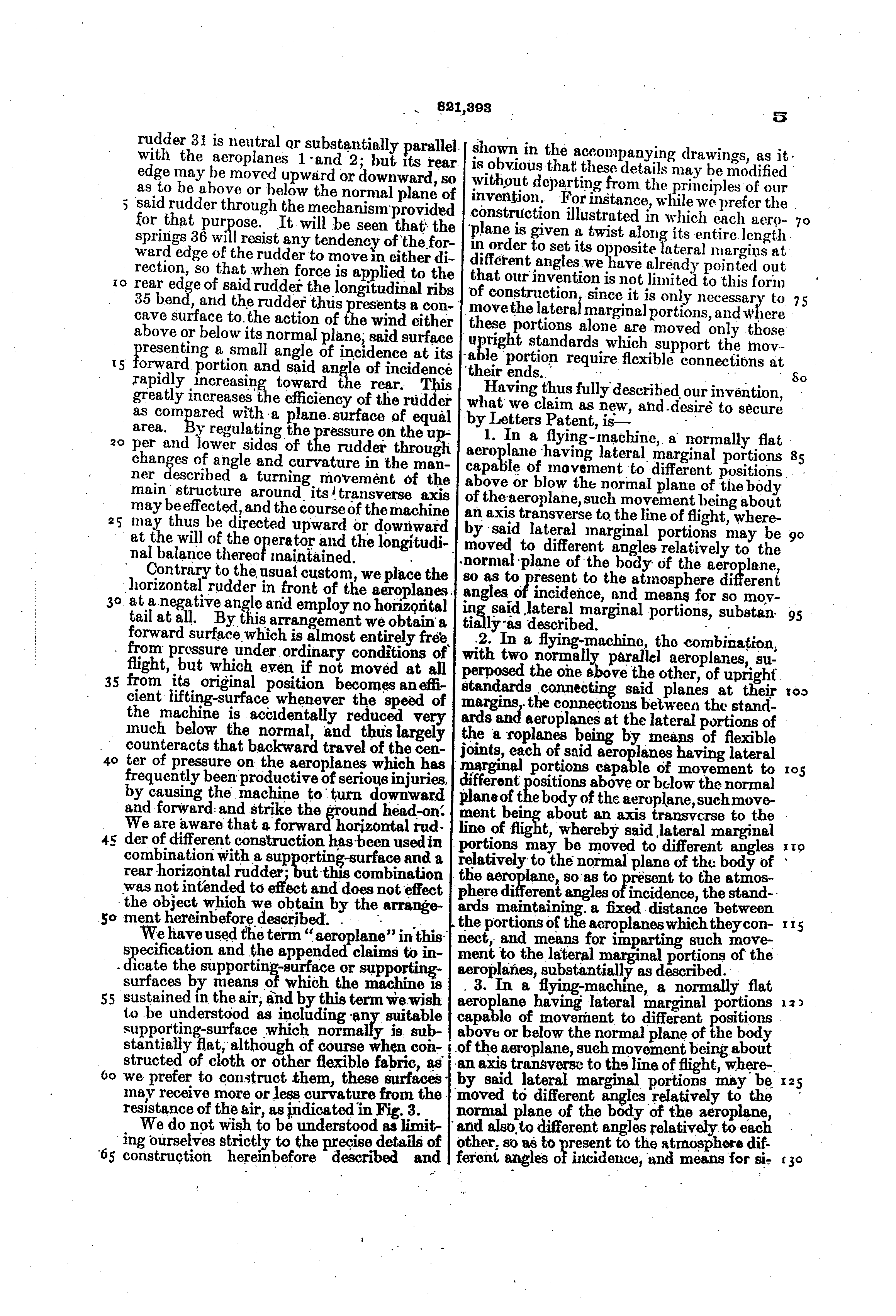
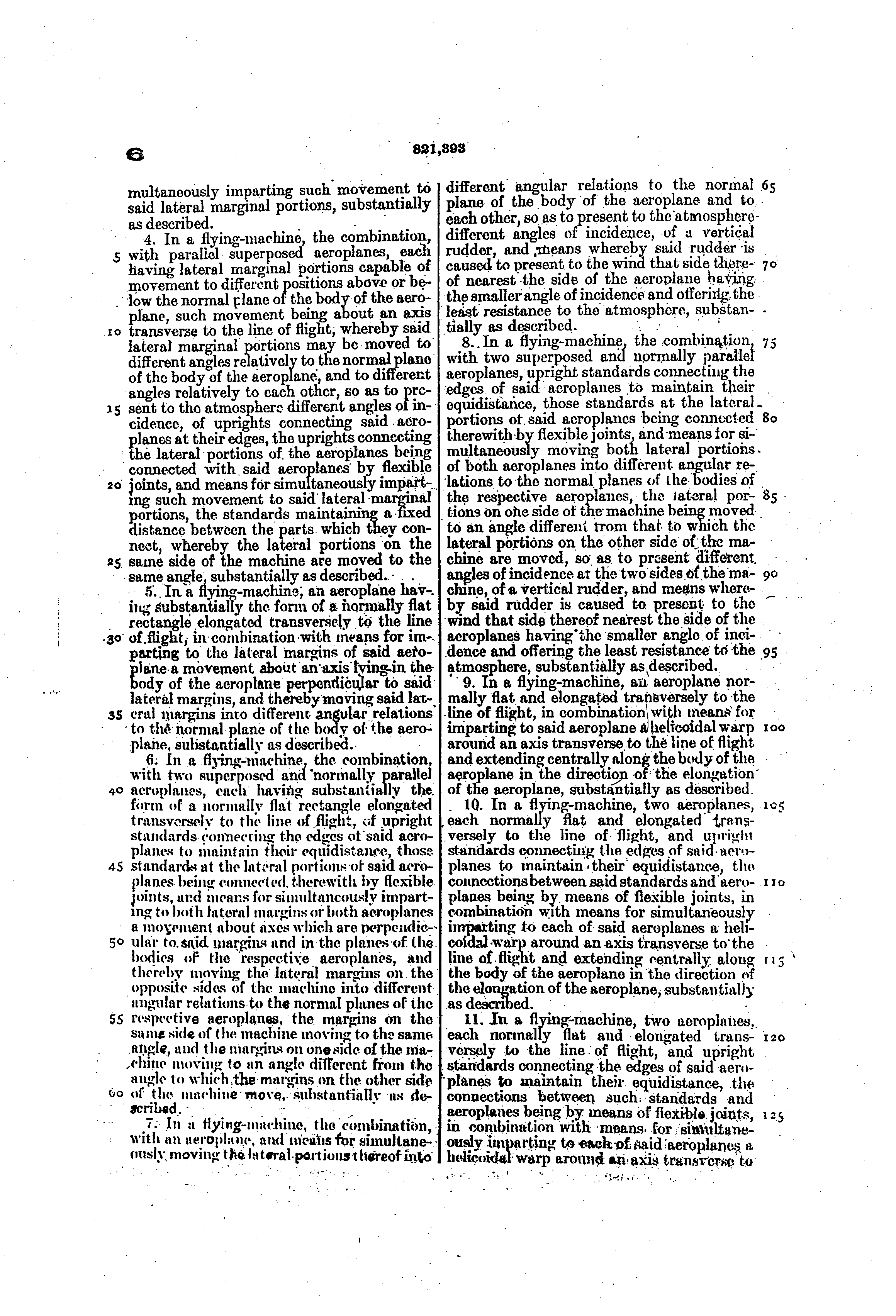
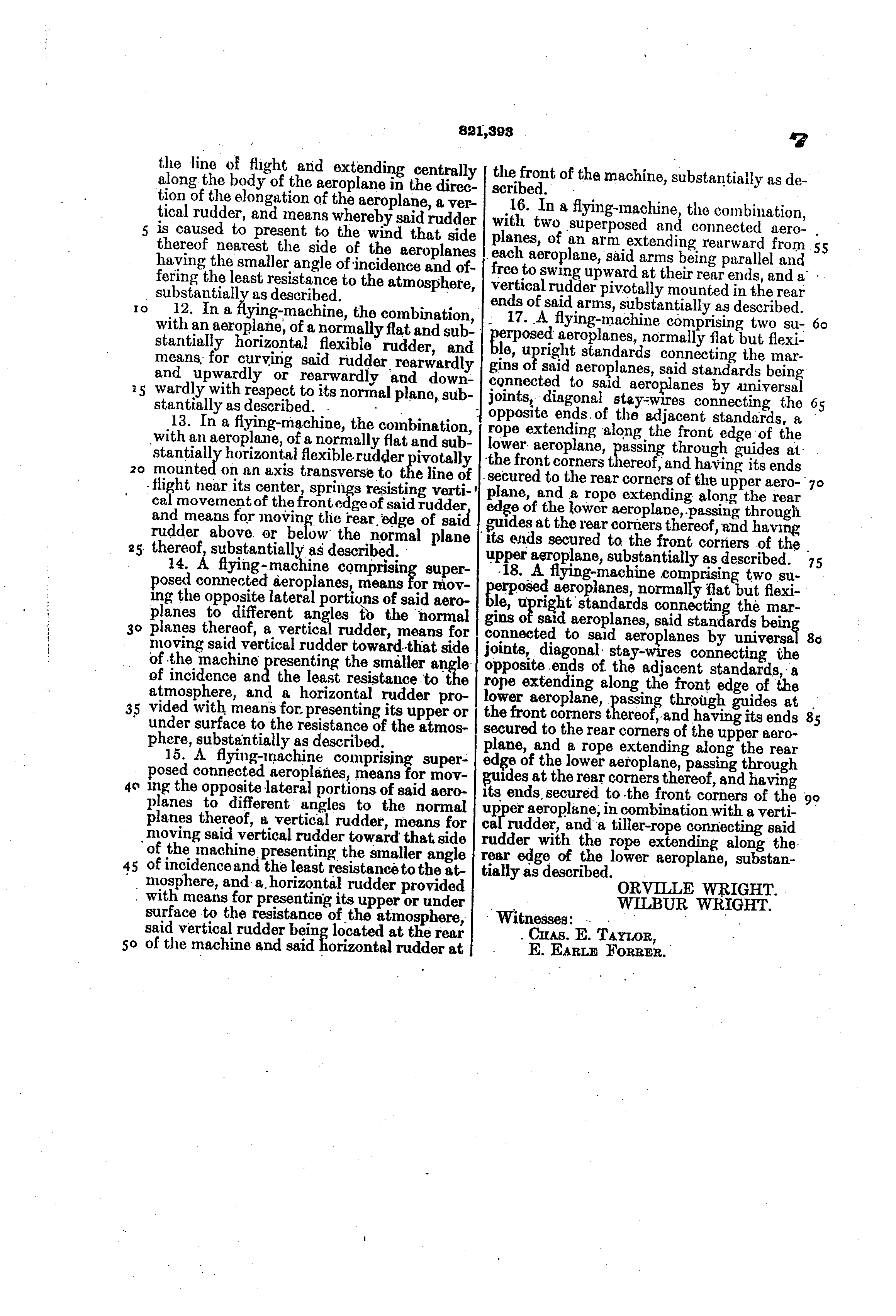
A patent ends with its claims: numbered sentences that a court reads to decide what the patent covers. This one has eighteen. Claim 3 mattered most. It asks for a flat wing whose side portions can move "to different angles relatively to the normal plane of the body of the aeroplane, and also to different angles relatively to each other", and "means for simultaneously imparting such movement". It mentions no twist and no rudder (pp. 5-6). Claim 7 adds the rudder. Claim 9 asks for the twist itself, "a helicoidal warp", and that narrower claim was not among those sued on against Curtiss (claims 3, 7, 14 and 15 were; 204 F. 597, 211 F. 654).
The description says it outright: "Any construction whereby the angular relations of the lateral margins of the aeroplanes may be varied in opposite directions ... comes within the scope of our invention." And later: "it is only necessary to move the lateral marginal portions" (pp. 3, 5). Twisting the whole wing is just the form the brothers preferred.
The 1913 court went through older patents with movable surfaces at the wing's ends, back to a British one of 1868 (Boulton's, "too conjectural to teach others how to reduce them to practice"). Even if the brothers were "not strictly pioneers, in the sense of producing an apparatus novel in its entirety," the judge wrote, they "strikingly surpassed their predecessors in devising means for restoring lateral balance" (204 F. 597).
What the fight was over
Aeroplanes were still rare. In 1910 Judge Hand wrote that "the number of persons who can fly at all is so limited" that few infringers were to be expected (177 F. 261, p. 267). Buyers were few too. In 1917 Charles Walcott told the government's aeronautics committee that in the eight years before 1916, the Army had ordered only 59 aeroplanes (Roland, vol. 1, p. 40).
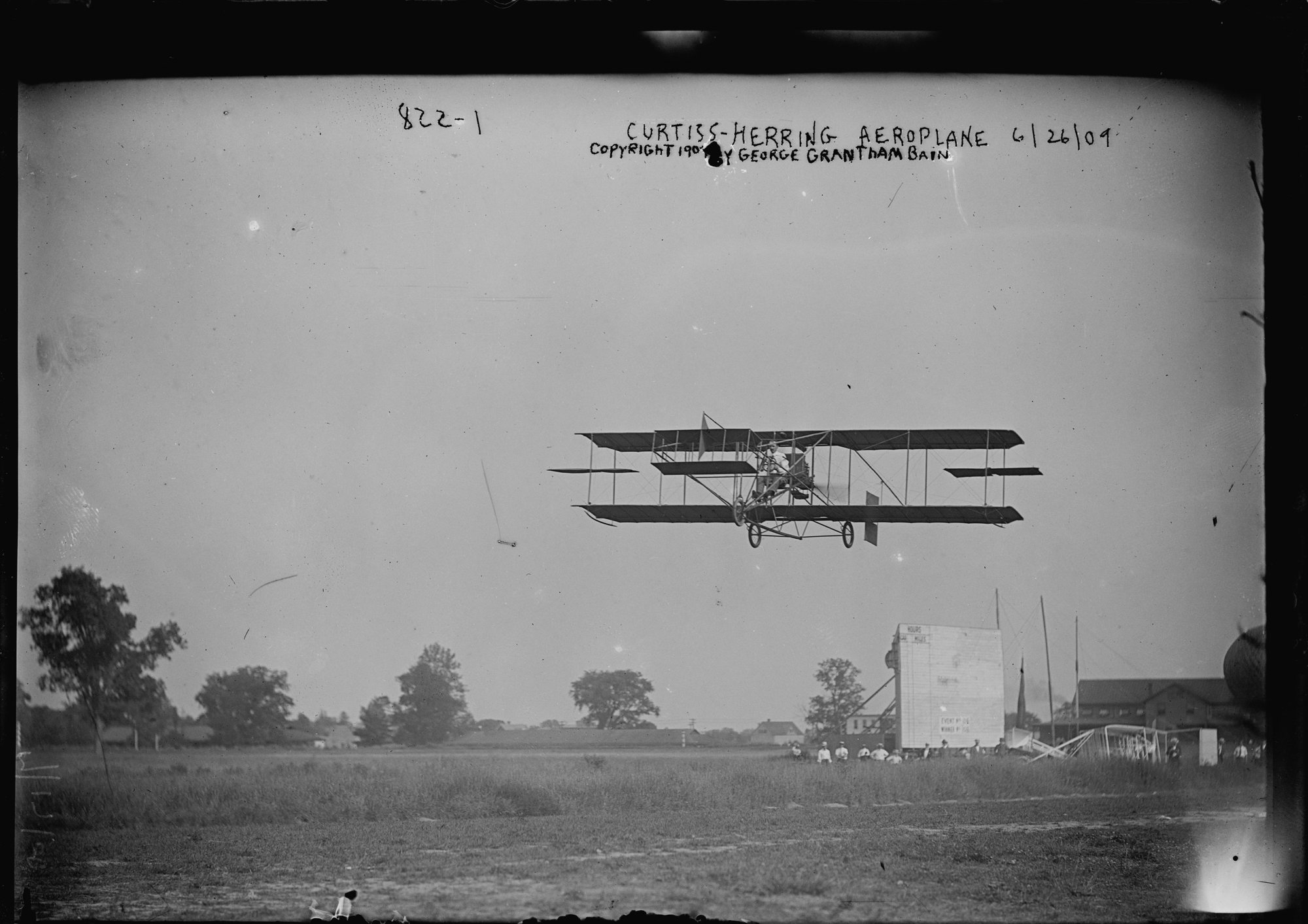
In July 1908 Glenn Curtiss flew a machine he called the June Bug, with movable surfaces at its wingtips. The Wrights told him at once that it infringed their patent. He answered, the court recorded, that he was flying it "for scientific purposes", not for profit. But by the time of the suit, his machines were being flown "for prizes and emoluments", and his company was set to build them for sale: "an active rival" in the business of making flying machines (177 F. 257, pp. 260-261).
The suits, 1910 to 1914
The brothers assigned the patent to the Wright Company. In January 1910 Judge Hazel, in western New York, granted it an injunction, for the time being, against Curtiss and his company (177 F. 257). Curtiss's machines did not twist their wings. They had ailerons: small surfaces "pivoted to supports and crosspieces midway between the upper and lower planes", which the pilot moved by leaning in "a movable seat" (204 F. 597).
In February 1910 Judge Hand in New York stopped a French flier, Louis Paulhan, who was flying a Farman biplane in America. Of its flaps he wrote: "The use of such ailerons is an obvious equivalent." What mattered, he said, was "a differential in the marginal angle" (177 F. 261, p. 266). In June 1910 the appeals court lifted the order against Curtiss: on sworn statements that contradicted each other, "infringement was not so clearly established" (180 F. 110).
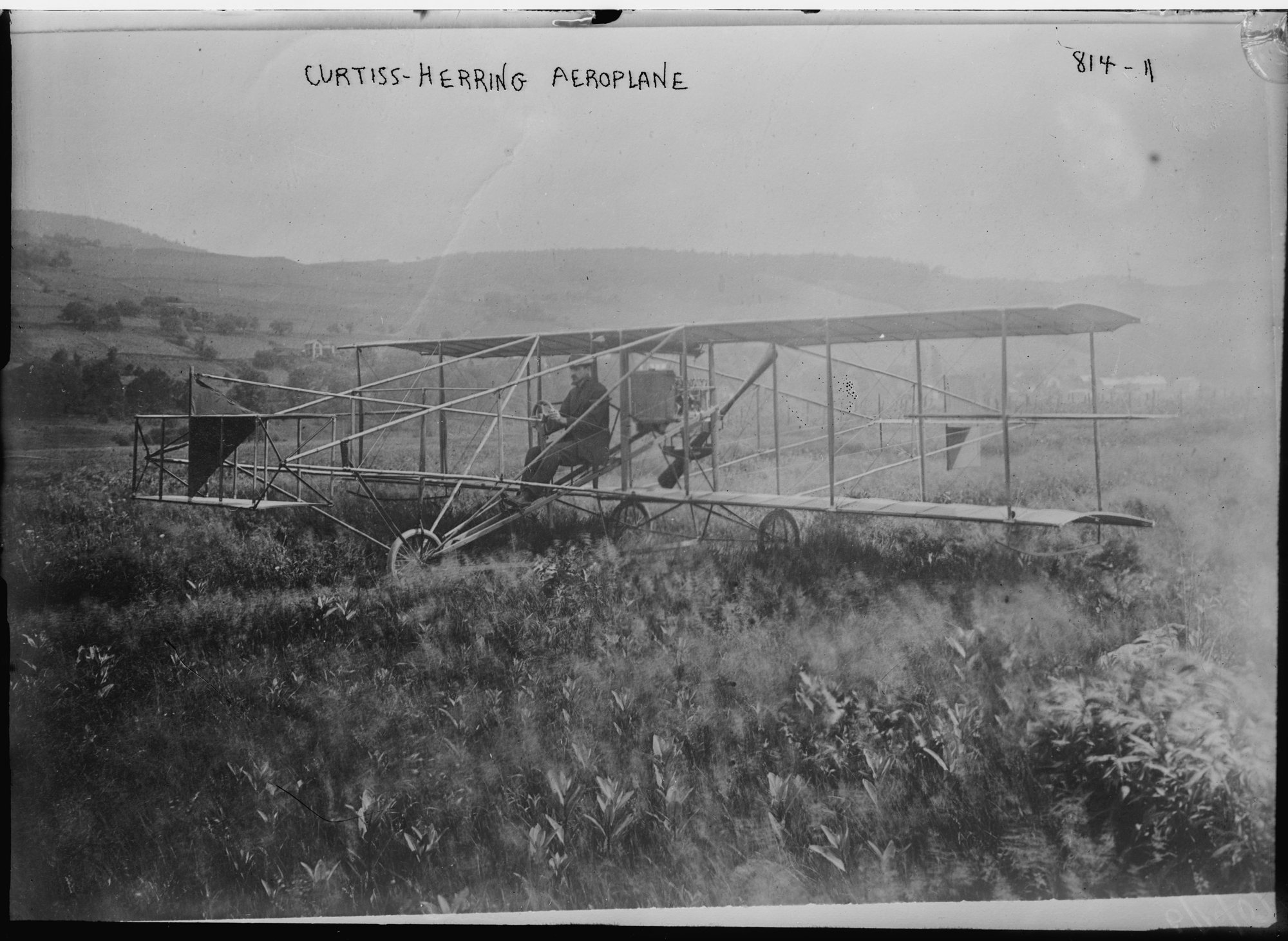
After a full hearing, in February 1913, Judge Hazel ruled for the Wright Company. Curtiss argued that his ailerons did not move as claim 3 describes; the judge called "any such alteration" "immaterial". Curtiss swore that his rear rudder was only for steering. An Army Signal Corps pilot named Milling, who had flown both makes, testified: "By moving the vertical rudder toward the high side, the machine resumed a horizontal position immediately." The judge also noted that the Wright rudder turned to the right when the machine went to the left, while Curtiss's machine went the way its rudder pointed; that difference was "not of controlling importance" (204 F. 597).
A machine "that infringes part of the time", the appeals court agreed in January 1914, "is an infringement". It upheld Hazel, agreeing that the patentees "may fairly be considered pioneers in the practical art of flying with heavier-than-air machines" (211 F. 654).
Curtiss shared a patent of his own with Alexander Graham Bell and others, on pivoted balancing surfaces, granted in 1911 (US 1,011,106). How the courts weighed it, we have not found.
Wilbur, and Europe
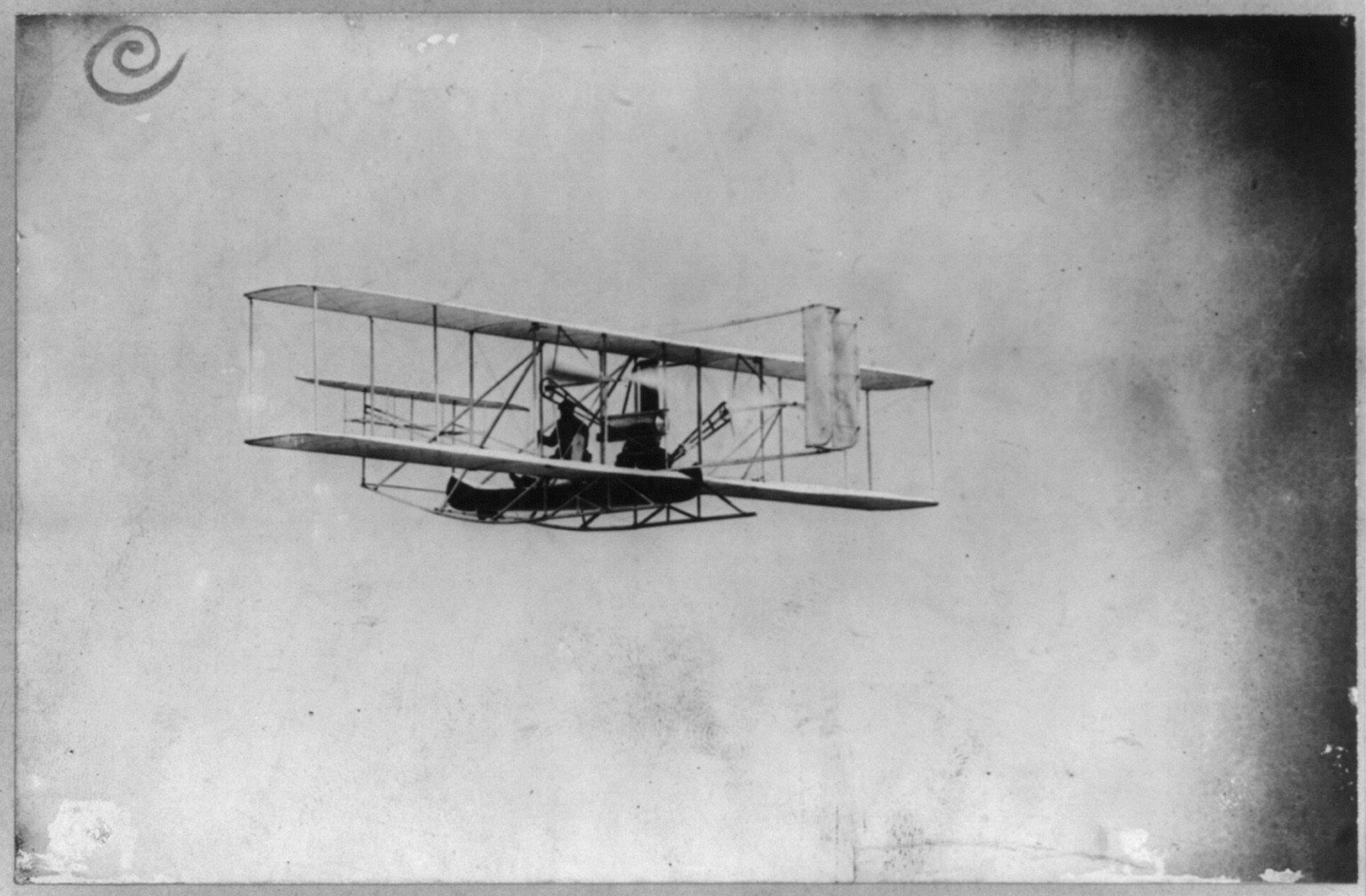
The brothers held patents abroad too. In February 1912 the German Imperial Patent Office reportedly struck down their main claim there, because the idea had already been described in public, among other places in a lecture Wilbur gave in 1901 (Aeronautics, March 1912, via the U.S. Centennial of Flight Commission's bibliography; we have not read the decision).
Wilbur Wright died in Dayton on 30 May 1912, of typhoid fever, with the American case against Curtiss still open. His father wrote in his diary, as the National Park Service quotes it: "A short life, full of consequences." According to the U.S. Centennial of Flight Commission, the family blamed Curtiss's refusal to back down, believing Wilbur had lost his health over the patent fight. That was their belief; no record we have settles it.
The Aerodrome
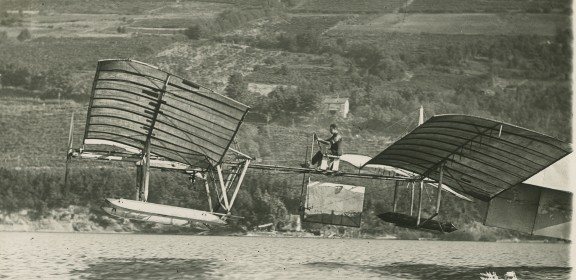

In March 1914, two months after the appeals court ruled, the Smithsonian's Secretary, Charles Walcott, "contracted with Glenn H. Curtiss to attempt a flight with the Langley machine", the large Aerodrome that the late Secretary Samuel Langley had built in 1903 (Abbot, 1942). At Curtiss's works in Hammondsport, the Smithsonian's man was Albert Zahm, who had been an expert witness for Curtiss. With new cloth and floats, it was launched on Lake Keuka on 28 May. The Smithsonian's report for 1914 says it "flew in steady poise" 150 feet (about 46 m) (Annual Report for 1914, p. 9).
A Smithsonian paper of 1942 says that with Langley's own engine, its longest time off the water "was approximately five seconds". Later in 1914, with a Curtiss motor and propeller, it flew for up to 65 seconds (Abbot, 1942; Annual Report for 1914, pp. 9, 221).
Orville Wright listed 35 differences between the machine flown in 1914 and the one of 1903, and the Smithsonian later accepted them "as correct in point of facts". The wings were smaller (1,040 to 988 square feet, about 96.6 to 91.8 m²), and the weight with pilot had grown from 850 pounds to 1,170 (about 386 to 531 kg). For balance, the 1903 machine had "the dihedral only", the upward tilt of its wings; in 1914 it also had a rudder that, in an affidavit by Zahm himself, "serves as a vertical aileron" (Abbot, 1942, quoting Orville's list).
The 1914 report had said that Langley "had succeeded in building the first aeroplane capable of sustained free flight with a man". In 1942 the Smithsonian's Secretary, Charles Abbot, in a paper Orville had accepted, wrote that the flights of 1914 "did not warrant" that claim, and added: "I sincerely regret that the Institution employed to make the tests of 1914 an agent who had been an unsuccessful defendant in patent litigation brought against him by the Wrights." Orville died in January 1948. That December, on the forty-fifth anniversary of the first flight, his own machine of 1903 was dedicated at the Smithsonian (the National Park Service's reprint of Abbot's paper).
Did the patent hold back American flying?
Here is the record, and two readings of it. In December 1916 the company that had bought Orville out, Wright-Martin, told other makers they owed it five per cent on each aircraft sold, at least $10,000 ≈ $300,000 a year, "whether they achieved differential lifting by the wing-warping technique of the Wrights or the far more popular ailerons employed by Curtiss". Alex Roland's history of the government's aeronautics committee, published by NASA, calls that "the final straw", for an industry that "faced an impasse" (Roland, vol. 1, p. 38).
Congress voted money to acquire the key patents "by purchase, condemnation, donation, or otherwise". Instead, the makers were brought into a pool: a fixed payment on every aeroplane built, and patents shared (Roland, pp. 39-41). The plan in March 1917 was $200 ≈ $5,000 an aeroplane: $135 ≈ $3,400 to Wright-Martin, $40 ≈ $1,000 to Curtiss, and $25 ≈ $630 to run the association (p. 40).
The draft of 10 July 1917 kept the two hundred dollars. Once $2,000,000 ≈ $50 million had been paid to the Wright Company, Curtiss would be paid at $175 ≈ $4,400 an aeroplane, up to two million in all. Payments to the Wright Company, the meeting recorded, "should cease with the life of its patent", which ran out on 22 May 1923. The same meeting voted "eight in favor, four opposed" that engines should be included; the version sent up two days later left them out, because of a contract Wright-Martin held on the main engine patent (NACA Subcommittee on Patents, minutes, 10 July 1917, pp. 604, 607; Roland, p. 41).
These are the proposed terms; we have not read the agreement as signed. In Roland's summary, "the American aviation industry would operate without major patents" (p. 41).
In 2015 two researchers, Katznelson and Howells, disputed that account. In their words, "aircraft manufacturers faced no patent barriers in the market dominated by government demand", and the hold-up "is a myth created by government officials". They argue that "Government officials used the threat of condemnation to impose a depressed royalty structure on aircraft patents" (Industrial and Corporate Change 24(1), 2015, abstract).
What the record here does settle: the courts held the patent valid and read it widely, and the pool set an end date for payments on it. Whether flying would have grown faster without it, these documents do not show.
Then and now
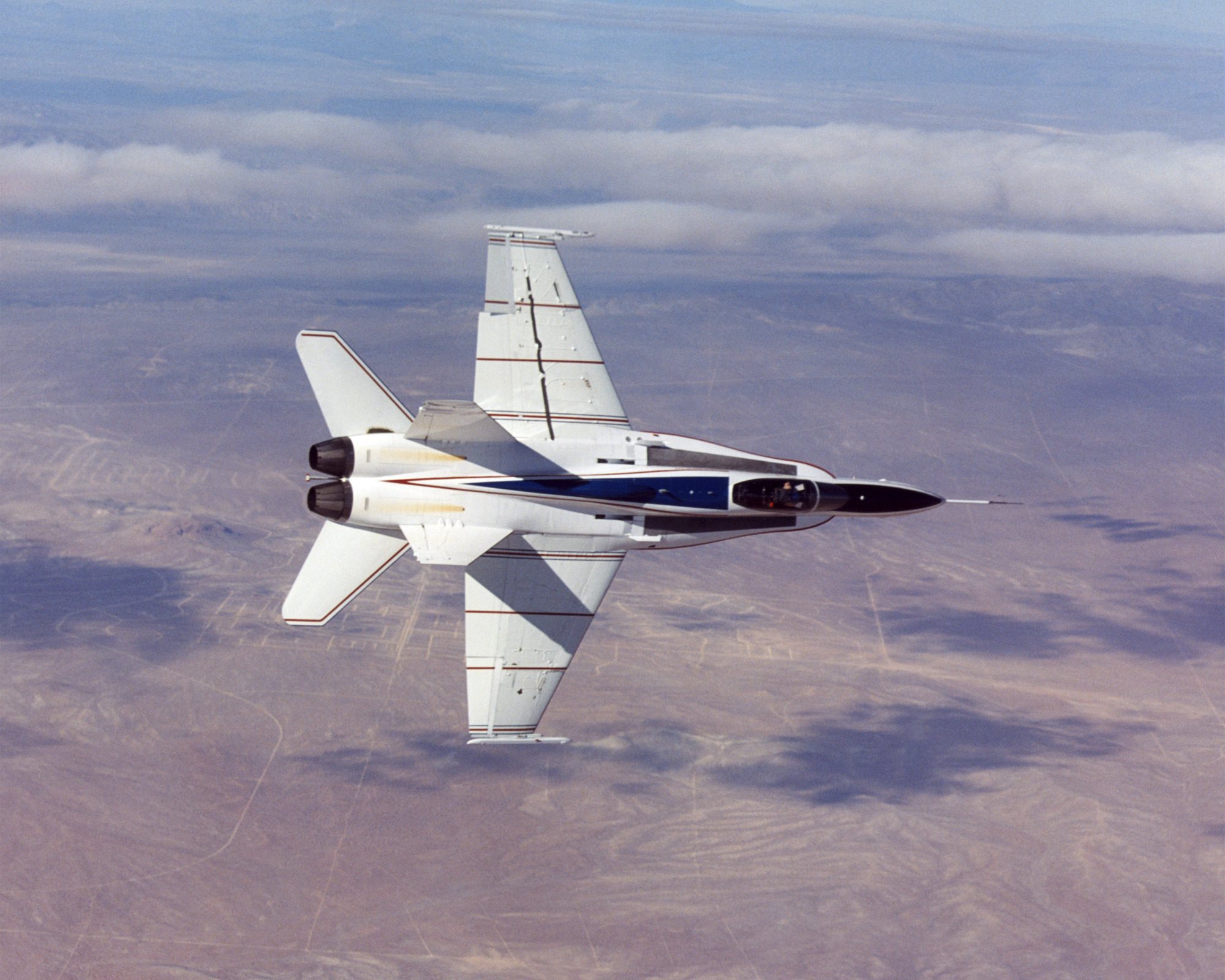
Curtiss's kind of control won. By 1916, in Roland's words, the ailerons Curtiss used were "far more popular" than the Wrights' wing-warping (vol. 1, p. 38).
The twist came back as an experiment. From 1996 to 2005, NASA, the Air Force and Boeing flew a modified F/A-18A from the Navy with flexible wings, and rolled it by twisting them. NASA's fact sheet calls it "a high-tech adaptation of the Wright Brothers rudimentary 'wing-warping' approach to aircraft flight control" (NASA Facts FS-2005-03-061 DFRC).
The patent's first sheet still shows the idea in dotted lines: both wings drawn a second time, twisted by the ropes from the cradle. What it claims is a way to keep a flying machine balanced, and the courts read that claim widely enough to cover Curtiss's ailerons.
Read the original patent
A US patent of 1906, in the public domain. Click a page for full resolution; the three drawing sheets come first, then the seven pages of the specification. The sheets are shown as printed: Fig. 1 is drawn sideways on the sheet.
US 821,393, Orville Wright and Wilbur Wright, Flying-Machine, filed 23 March 1903, patented 22 May 1906
Sources
Every fact on this page comes from these, as in the episode. Where we have a source only second-hand, the text says whose words they are.
The patent (US, public domain; page scans from the USPTO)
- O. Wright and W. Wright, Flying-Machine, US 821,393 (filed 23 Mar. 1903, patented 22 May 1906): the kind of machine, "mechanical power", "propel it positively forward", the chief object (p. 1); the frame, the joints, the cradle and ropes 15 and 19 (pp. 1-3); "a helicoidal warp" (p. 3); the rear rudder and its purpose, "thus causing the machine to fall" (p. 4); the front rudder, "Contrary to the usual custom", "serious injuries" (pp. 4-5); "aeroplane" defined, the 18 claims (pp. 5-7); Figs. 1-5. The machine rebuilt here. We searched every page image for "engine", "motor" and "propeller".
The court opinions (Federal Reporter, via the Caselaw Access Project, Harvard Law School Library)
- Wright Co. v. Herring-Curtiss Co., 177 F. 257 (W.D.N.Y., 3 Jan. 1910, Hazel, J.): the injunction; the June Bug, "for scientific purposes", "for prizes and emoluments", "an active rival" (pp. 260-261).
- Wright Co. v. Paulhan, 177 F. 261 (S.D.N.Y., 17 Feb. 1910, Hand, J.): "an obvious equivalent", "a differential in the marginal angle" (p. 266); "the number of persons who can fly at all is so limited" (p. 267); "a pendency of three years".
- Wright Co. v. Herring-Curtiss Co., 180 F. 110 (2d Cir., 14 June 1910): "not so clearly established".
- Wright Co. v. Herring-Curtiss Co., 204 F. 597 (W.D.N.Y., 21 Feb. 1913, Hazel, J.): Chanute; the motor (p. 607); Curtiss's ailerons and seat; "immaterial"; Milling's testimony; "skidded to the side"; "not of controlling importance"; the older patents; "strikingly surpassed their predecessors".
- Wright Co. v. Herring-Curtiss Co., 211 F. 654 (2d Cir., 13 Jan. 1914): "infringes part of the time"; "pioneers in the practical art of flying".
Other sources
- A. Roland, Model Research (NASA SP-4103, 1985), vol. 1, pp. 37-43: Walcott's 59 aeroplanes, the 1916 royalty, "the final straw", the pool, "far more popular", "without major patents"; vol. 2, App. H, doc. 11, pp. 603-607: the Subcommittee on Patents' minutes of 10 July 1917.
- C. G. Abbot, "The 1914 tests of the Langley 'aerodrome'", Smithsonian Miscellaneous Collections 103(8), 1942, as reprinted by the National Park Service (Dayton Aviation, App. C): the contract, Zahm, "approximately five seconds", Orville's list, "did not warrant", "I sincerely regret", the 1948 dedication.
- Smithsonian Institution, Annual Report for 1914 (Internet Archive), pp. 9, 217-222: "flew in steady poise", 65 seconds, "the first aeroplane capable of sustained free flight with a man".
- Katznelson and Howells, Industrial and Corporate Change 24(1), 2015, abstract (RePEc).
- National Park Service, Wilbur Wright's life story: his death, the diary line. U.S. Centennial of Flight Commission, "Glenn Curtiss and the Wright Patent Battles", and its bibliography: the family's belief; the German decision.
- NASA, NASA Facts FS-2005-03-061 DFRC, the Active Aeroelastic Wing.
- Today's money: US consumer prices, Federal Reserve Bank of Minneapolis, "Consumer Price Index, 1800-", with 2025 as today, rounded to two figures. Rough, so "≈".
- The reconstruction is our own work, as described under the model: the episode's model, checked by its test, run again on this page's copy.
Images
- Patent drawings and specification: USPTO, public domain. Figs. 1-5 are turned upright where they illustrate the text.
- The Wrights' own photographs of 1902 and 1903 (Wilbur and/or Orville Wright, attributed) and the Bain Collection photographs of 1909: Library of Congress, Prints and Photographs Division, each with the Library's rights line ("No known restrictions" or "No known restrictions on publication").
- Judge John R. Hazel: The Men of New York, vol. 1 (1898), via Wikimedia Commons, public domain.
- The Aerodrome, 1914: DeGolyer Library, Southern Methodist University, via Flickr Commons ("No known copyright restrictions").
- The Active Aeroelastic Wing F/A-18A: NASA/Jim Ross.
- The video also uses one AI illustration (an empty courtroom), labelled on screen. It is not used on this page.