 Curious Patents
The Patent on Every Car
In 1903 the leading American carmakers announced that one patent covered every gasoline automobile, and that anyone who made, sold or used an unlicensed one could be sued. It had been filed in 1879 by a Rochester lawyer who had never built a car. Henry Ford refused to pay, and in 1911 the case turned on how the fuel burns inside the engine. Steer Selden's carriage, run the two engines of 1879 side by side, and read the patents and every source.
Watch the episode
Two notices, October 1903
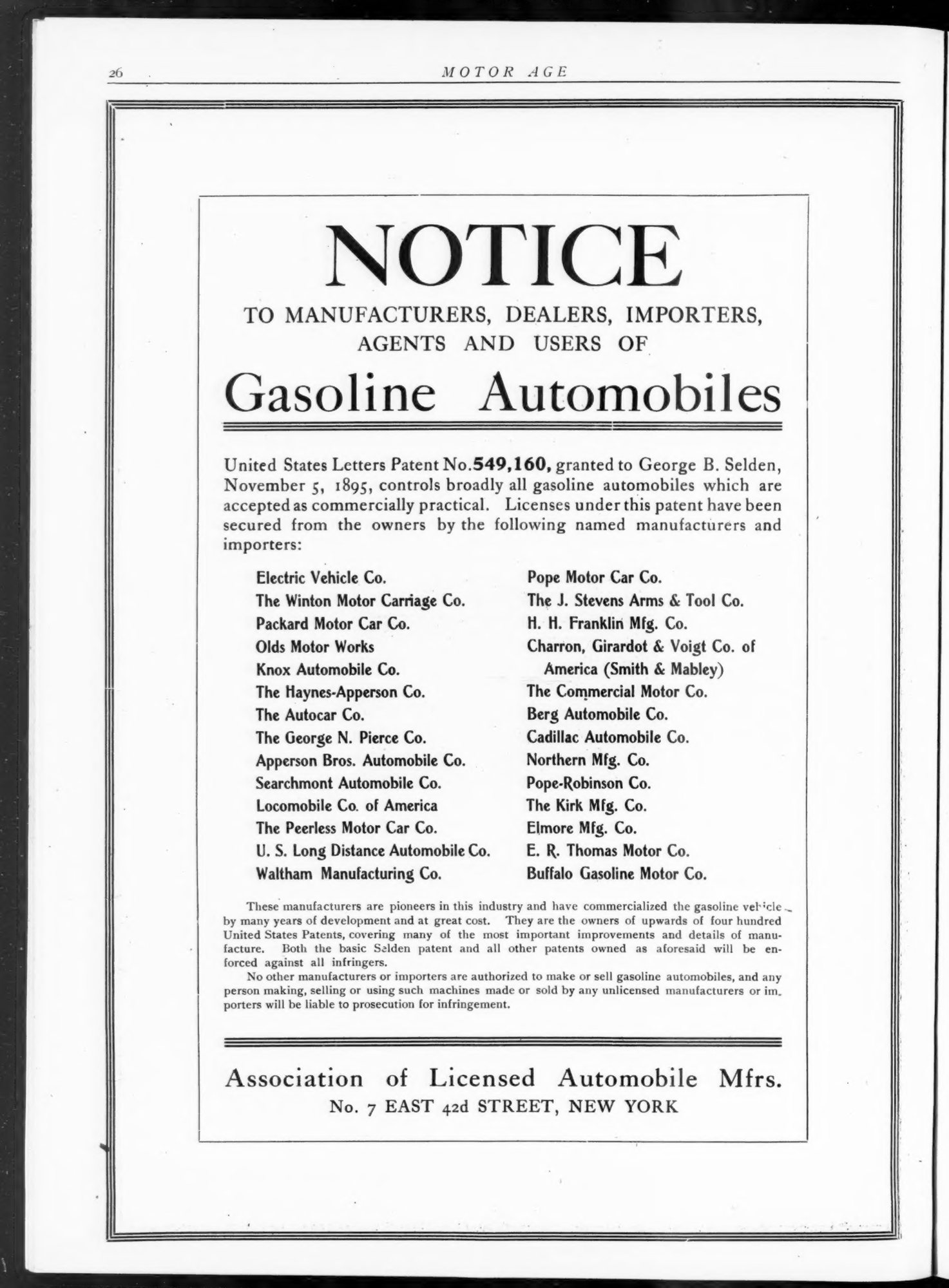
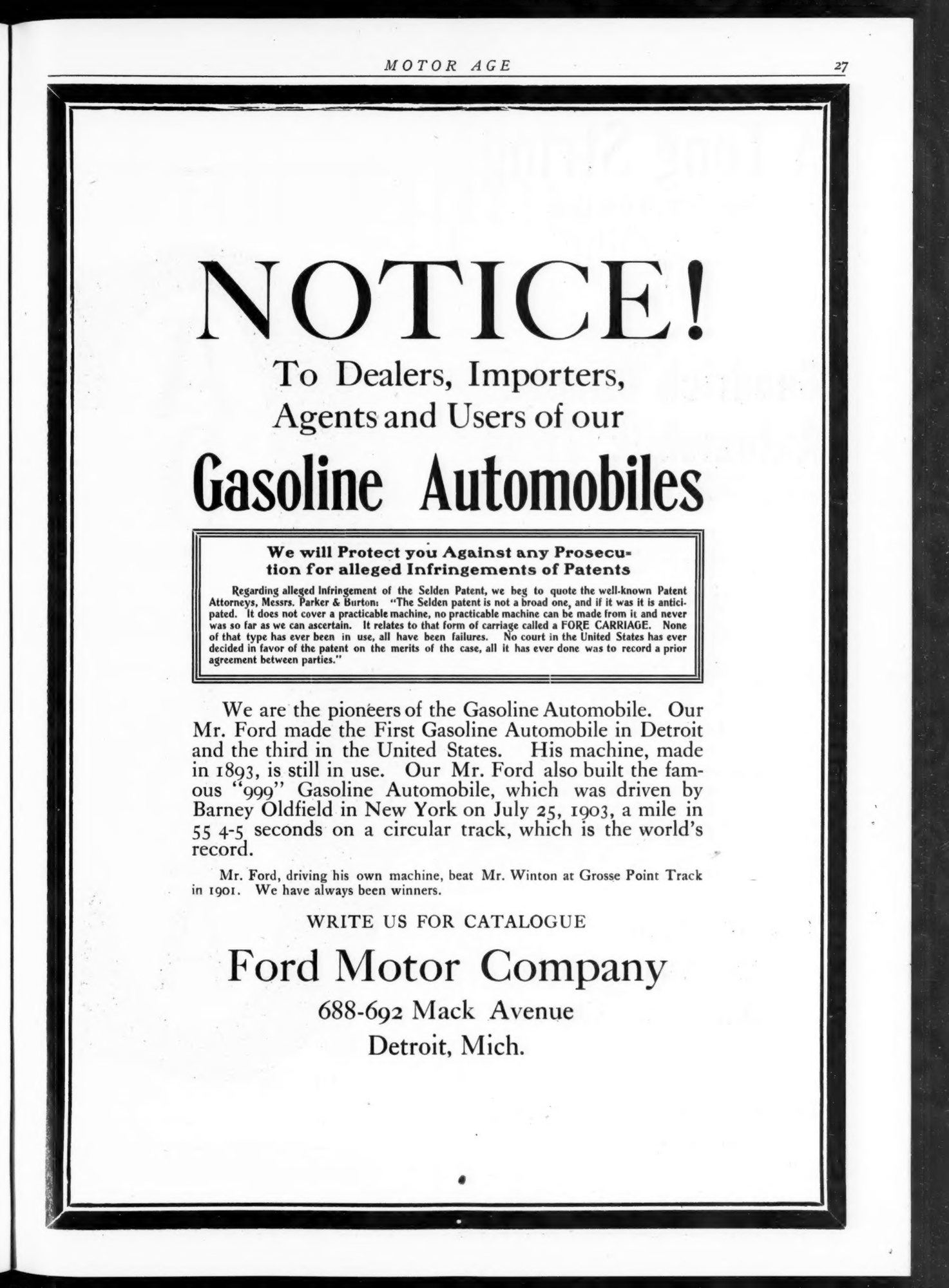
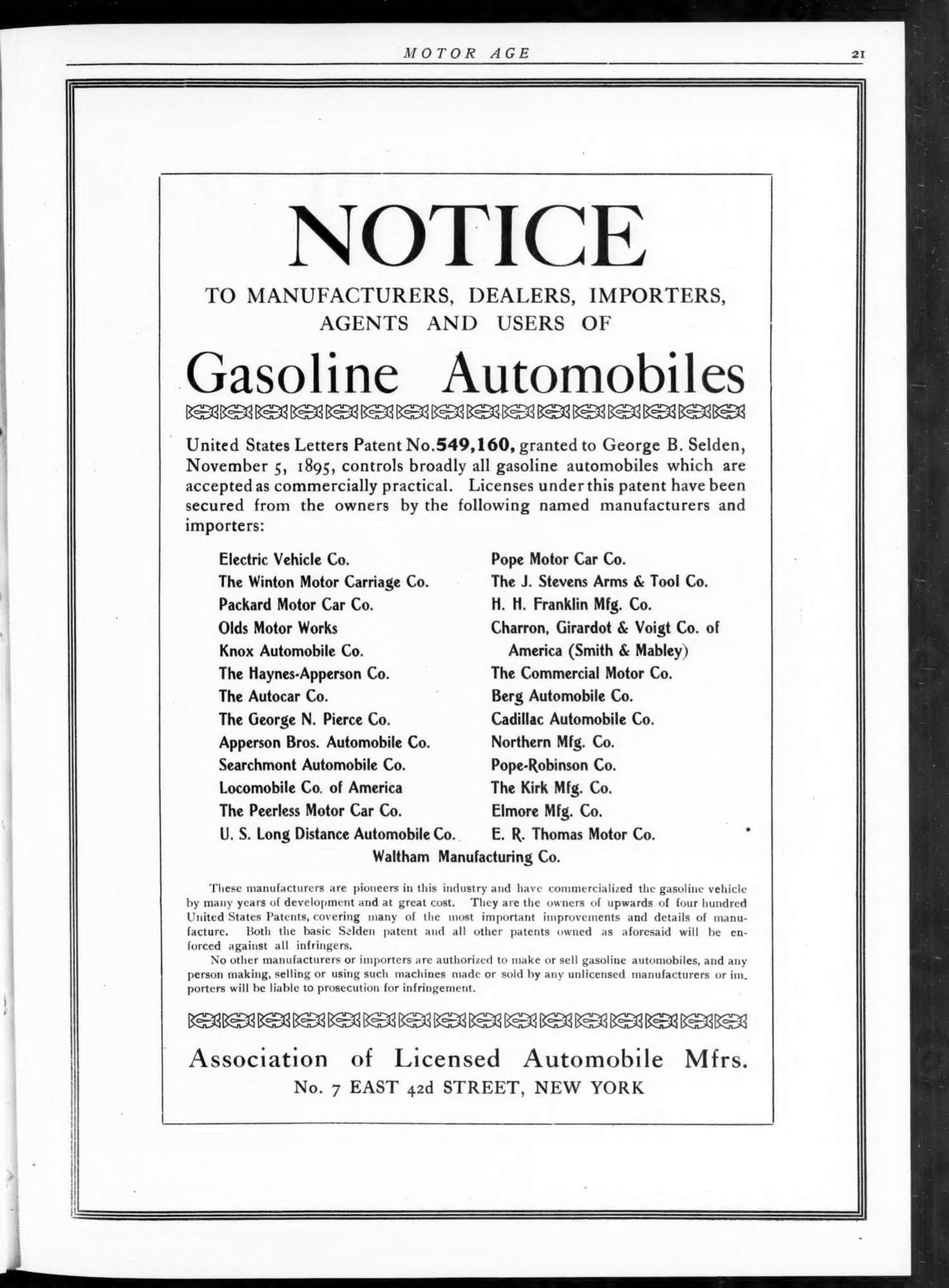
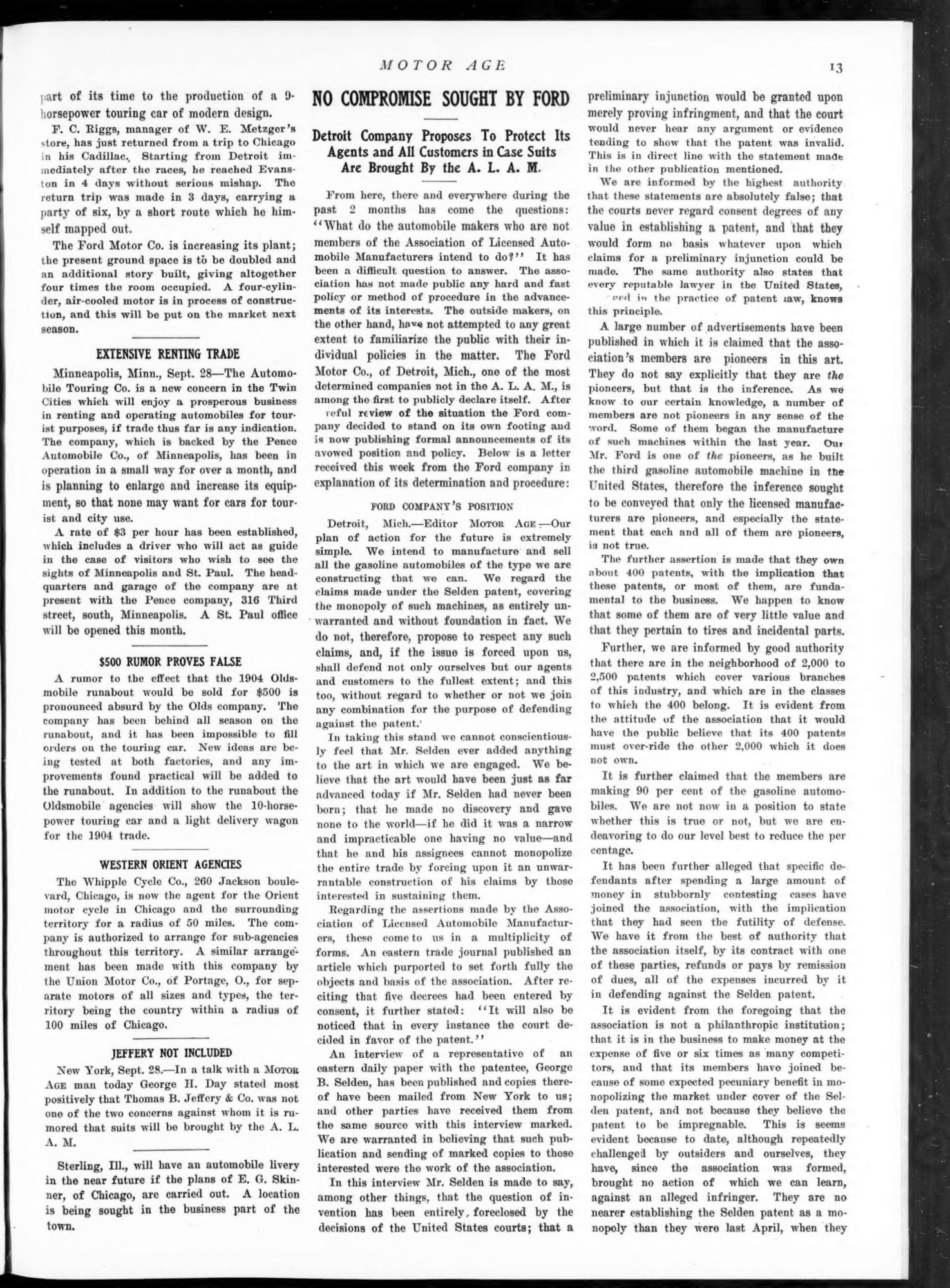
On 1 October 1903 the trade weekly Motor Age printed two notices on facing pages. On the left, twenty-seven licensed makers and importers announced that a single patent, US 549,160, "controls broadly all gasoline automobiles", and that "any person making, selling or using" a car from anyone else was liable to be prosecuted. On the right, the Ford Motor Company: "We will Protect you Against any Prosecution".
The patent had been filed in 1879 by George B. Selden, who, the trial judge later found, "had never built a motor car". After eight years in court, the case came down to a question about fire: how the fuel burns inside the engine.
Rochester, 1877 to 1879
George Selden was a lawyer in Rochester, New York: in the trial judge's words, "a member of the bar, especially devoted to patent causes. He seems to have been his own solicitor".
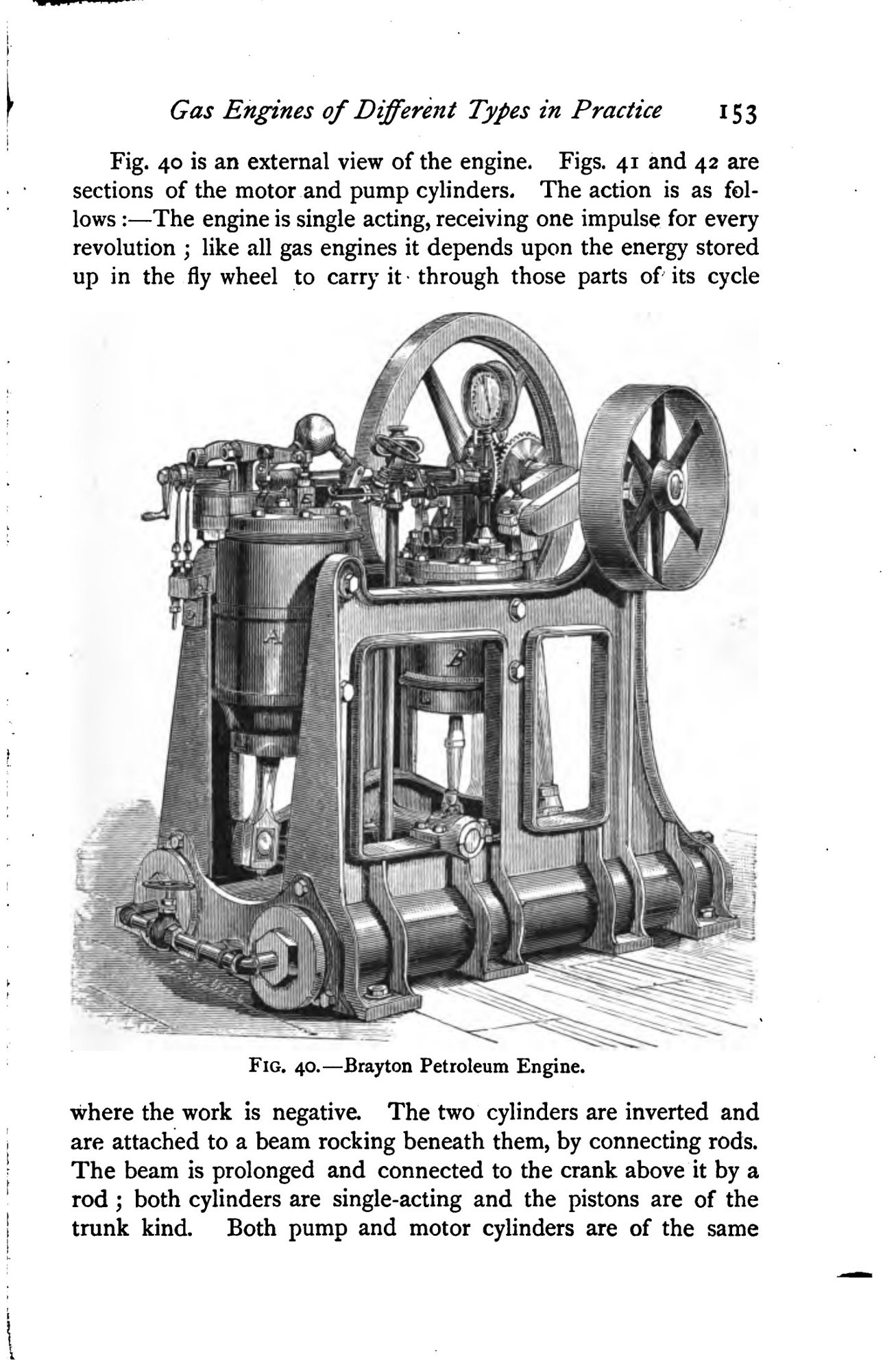
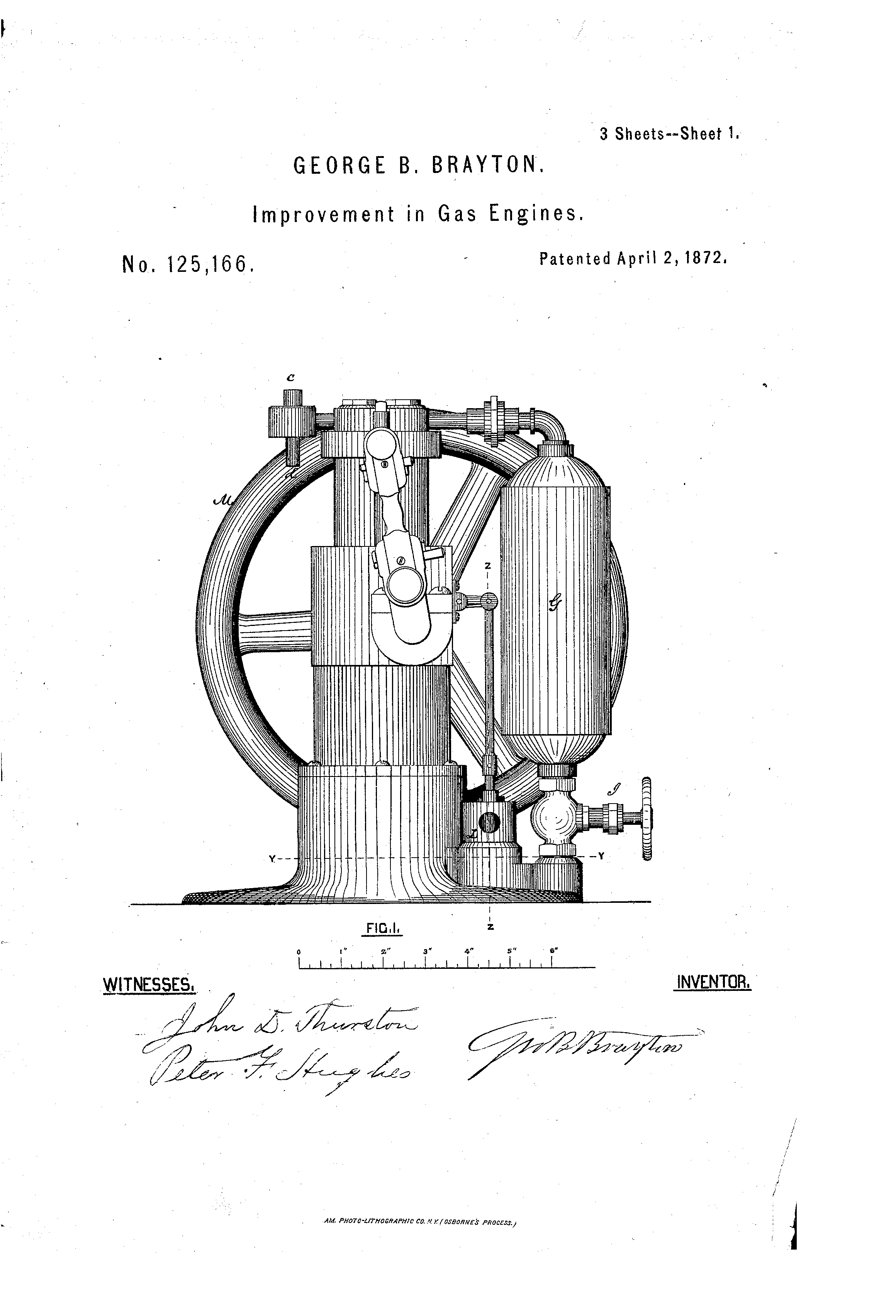
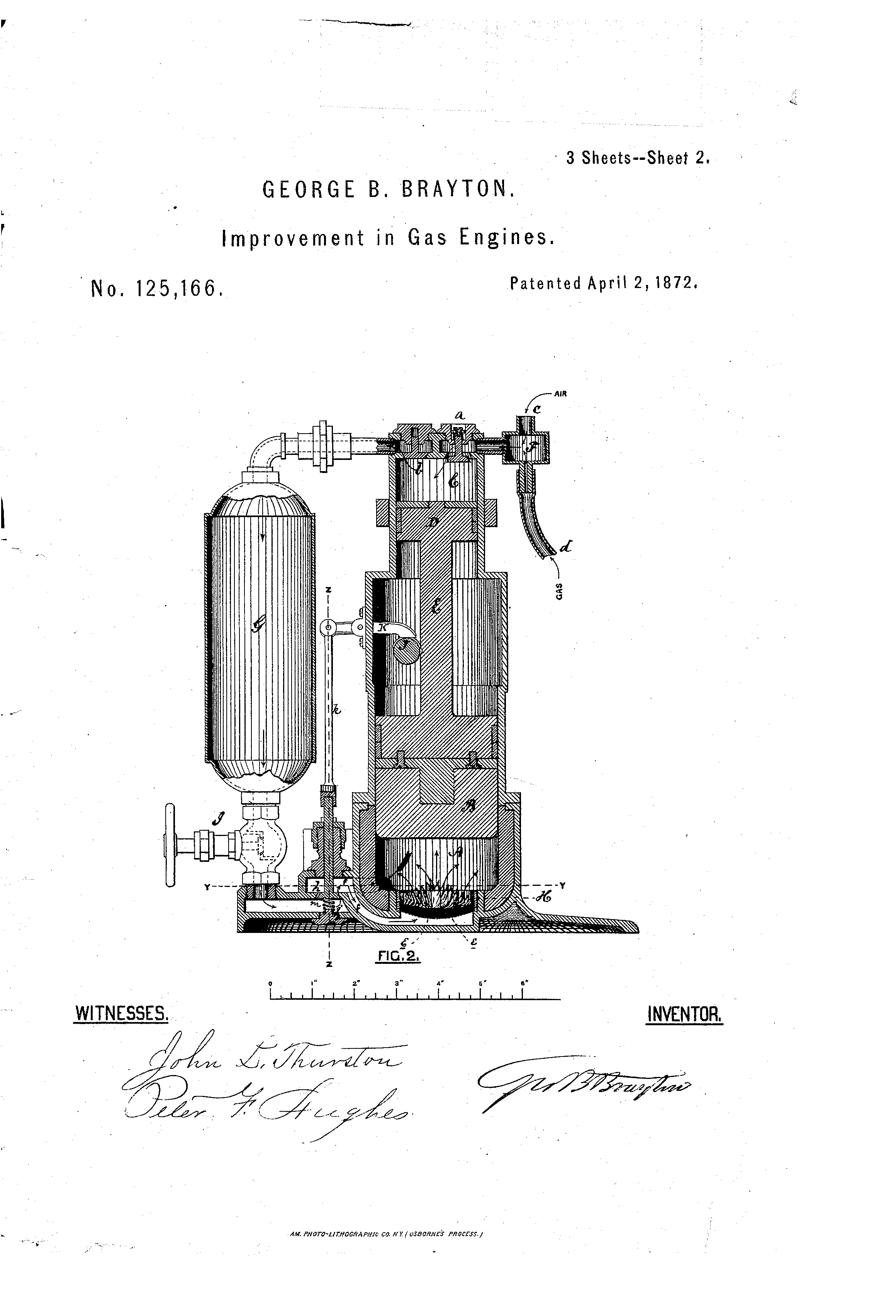
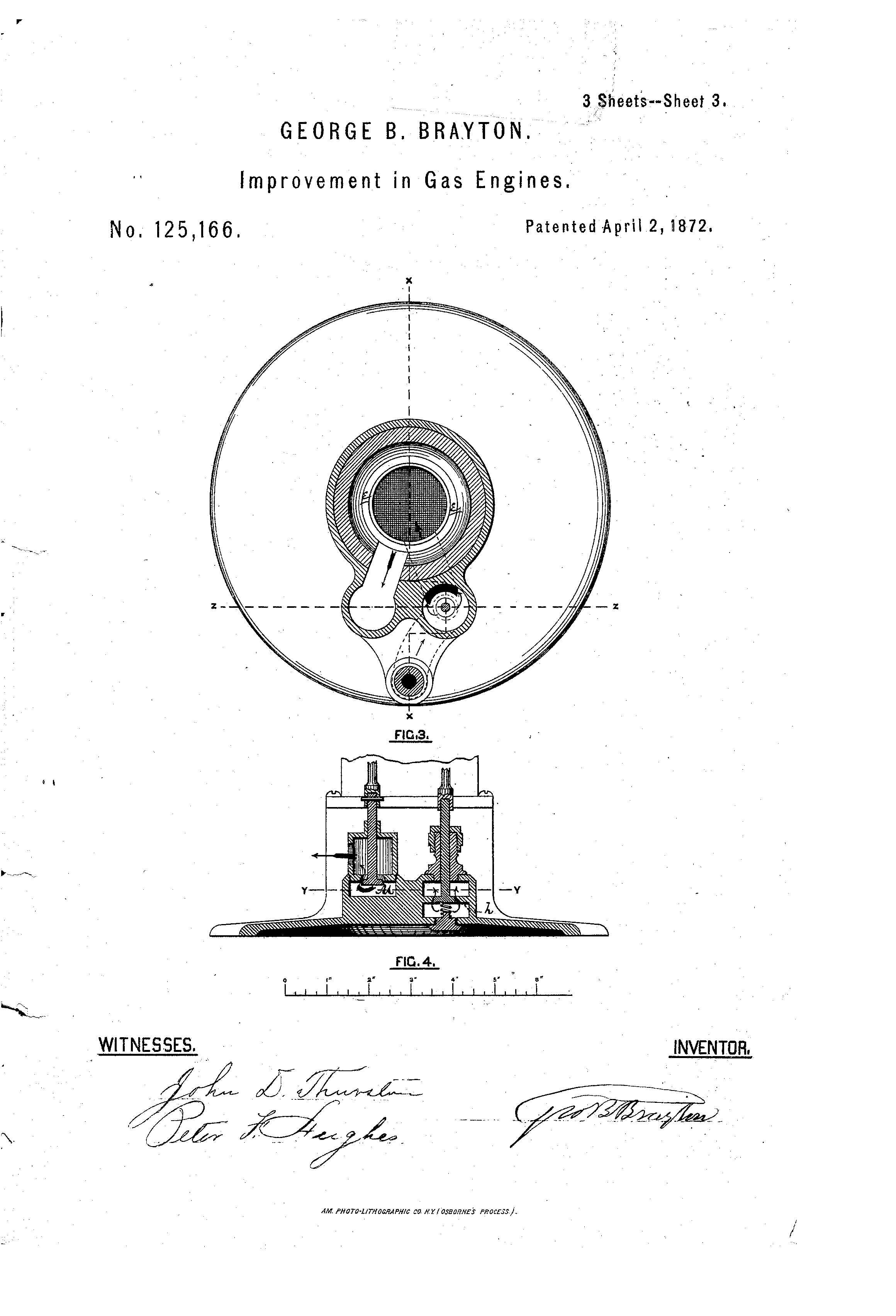
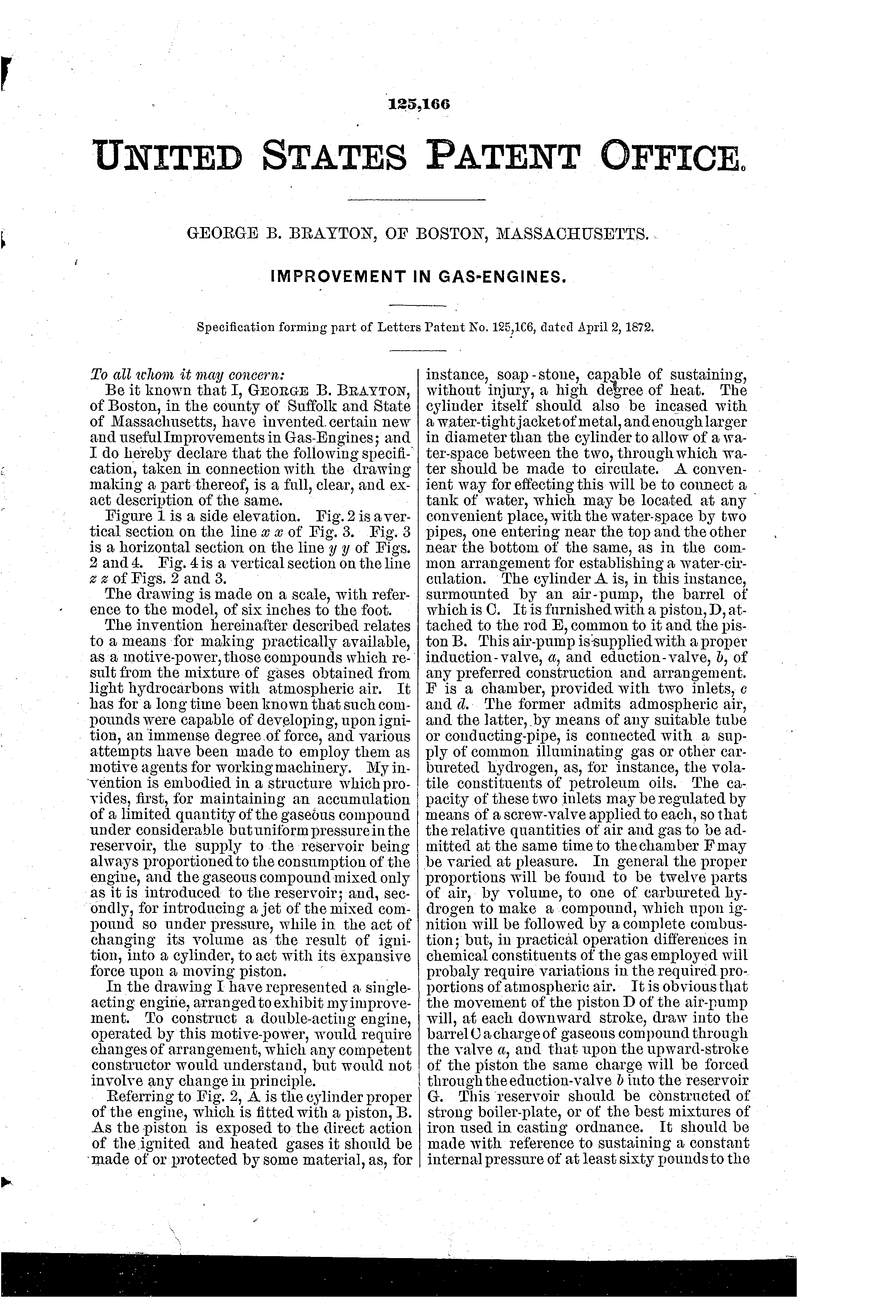
The engine that caught his eye was George Brayton's. In the 1870s it was the leading engine of the kind that compressed its air before burning the fuel, and it was shown at the Centennial Exhibition in Philadelphia in 1876 (Clerk). Brayton pumped air into a tank and burned the fuel as it flowed from the tank into the cylinder, so steadily that Professor Thurston, reporting on one in 1873, found its operation "precisely similar ... to that of the steam engine". The engines were big and heavy, "heavy and cumbersome" in the appeal court's words. Brayton had put them in boats, and "about 1874 Brayton used one of his engines to propel a street car upon a trial track near the city of Providence".
Selden, with a workman, built "one cylinder of a three-cylinder engine of the general type Brayton had patented in 1872 and 1874", made smaller and lighter to run faster. The trial judge found it weighed "less than 200 pounds per brake horse power, as compared with over 800 pounds in the lightest form of Brayton's". When it first turned over, the court was told, Selden said to his workman: "We have struck a new power."
On 8 May 1879 he applied for a patent on a Road-Engine: a carriage driven by an engine of that kind.
Sixteen years in a file wrapper
The patent examiner raised objections, and Selden answered them slowly. After each rejection, the trial judge wrote, Selden "did nothing by way of amendment or reply for about two years", which was "the extreme limit of inactivity permitted him by the then rules". Each answer reworded the claims: "Nothing remained in 1895 of the language of 1879 but the description of the vehicle and engine".
In 1889 he added the paragraph that now opens the patent, promising a car "not materially heavier than the carriages in common use". In all those years he never built it, and never succeeded "in getting any one sufficiently interested in his theories to experimentally try them out". Others built cars instead: the judge names Duryea, Olds and Ford in America, and the cars that ran from Paris to Rouen in 1894.
| 1879, 8 May | Selden files his application for a road-engine. |
|---|---|
| 1879 to 1895 | Objections and answers, about two years apart; the claims reworded each time. |
| 1889, 6 June | The amendment that adds the opening paragraph: "not materially heavier than the carriages in common use". |
| 1894 | Cars run from Paris to Rouen. |
| 1895, 5 November | The patent is granted. Its seventeen years begin. |
The judge who later upheld the patent called it "a great idea, conceived in 1879, which lay absolutely fallow until 1895, was until then concealed in a file wrapper, and is now demanding tribute". He thought he knew why it was so slow: "He was not in a hurry. He could not get any one to back him", and if Selden was ahead of his time, it was "wise not to let his patent get ahead, too". All of it was within the rules. As the published report of the case sums up the law, an applicant's delay in the Patent Office "is immaterial to the courts, and does not affect his rights under his patent, so long as the statute law is not violated".
What Selden drew
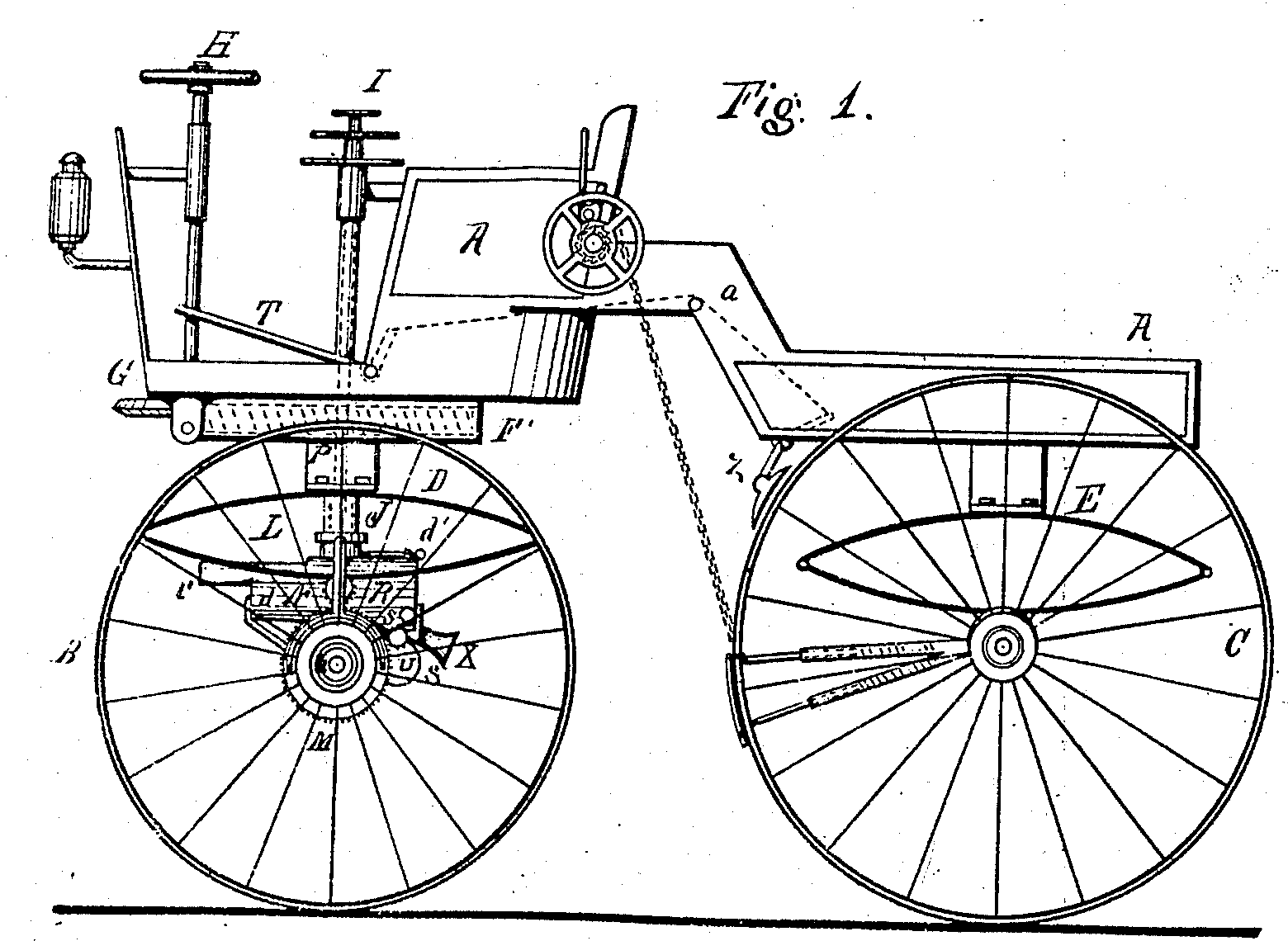
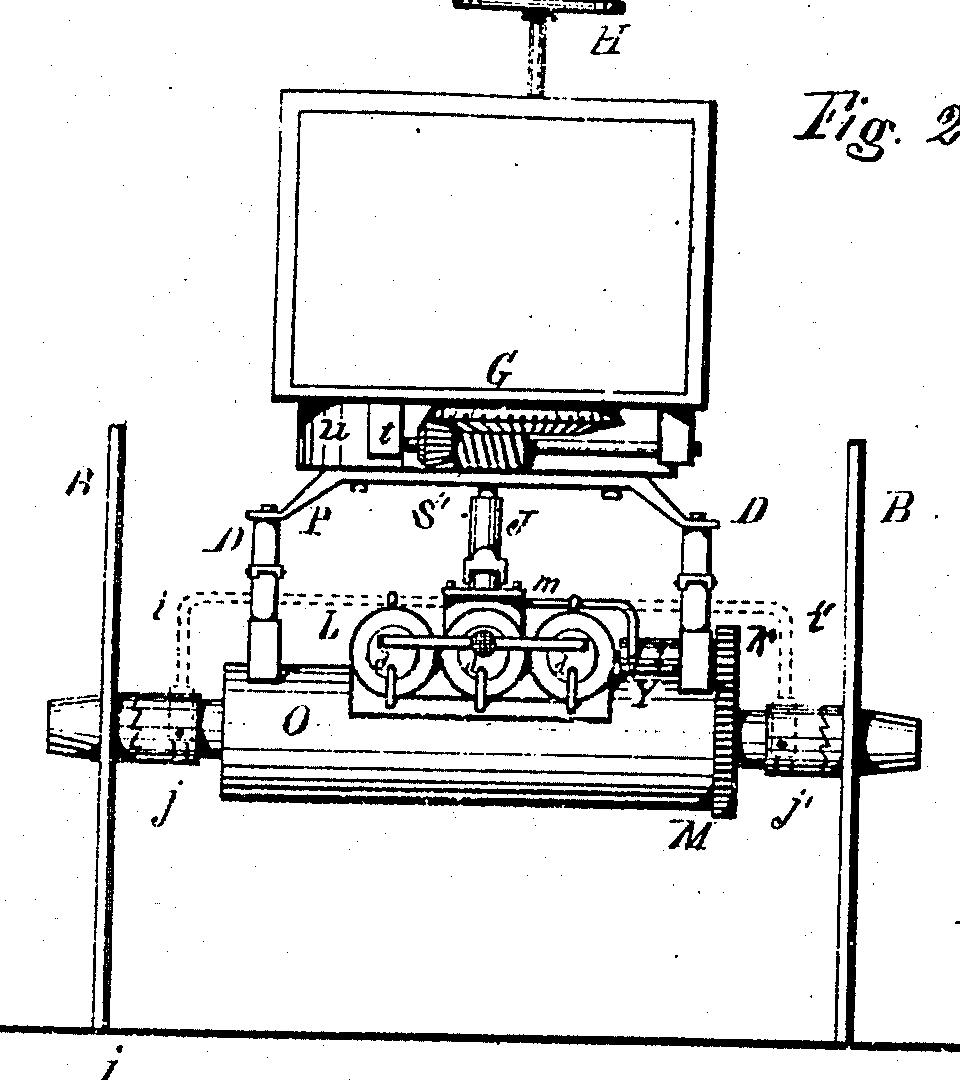
The patent's first sheet shows a light buggy with the engine hung on the front axle, three cylinders side by side across it (Figs. 1 and 2). "I prefer to drive the steering-wheels", Selden wrote, and the front wheels both drive and steer. To steer, the whole axle turns under the body on a ring called the fifth wheel F, which "has a worm-gear cut on the periphery thereof, meshing with the worm S′". The worm is turned from the steering wheel H through a gear G and pinion t.
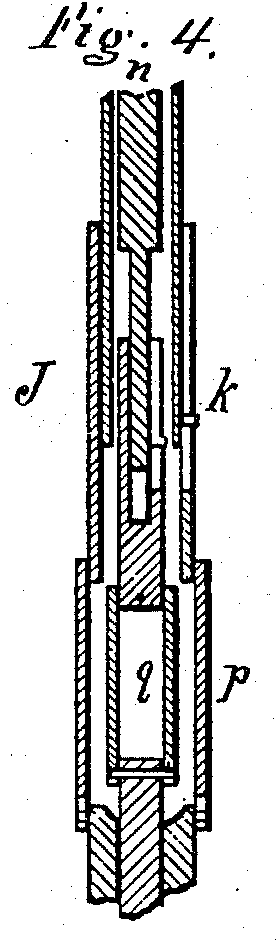
So every control passes down through the middle of that ring, "located in the center of the fifth-wheel F": tubes "one within the other", each in "two parts capable of sliding on each other, but compelled to rotate together by a spline or pin k", with "a universal joint p q", so they can stretch and bend as the body rides on its springs D (Fig. 4).
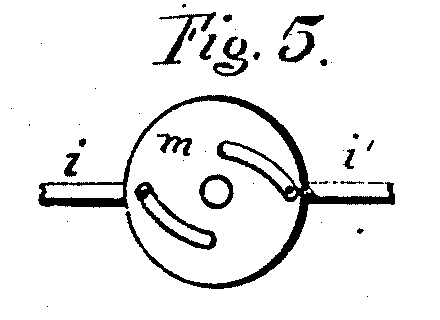
Turned far enough, the driving wheels can go right round under the seat: the body is "a crane-neck, so that the driving-wheel may be turned completely around underneath the driver's seat whenever it becomes necessary to propel the carriage backward". A hand-wheel I turns plate m, which has "two spiral slots, into which the ends of the rods i i′ project, so that when the plate is turned in one direction or the other the rods i i′ will be drawn inward or thrust outward". Drawn in, the rods let go of the clutches j j′, which are otherwise "held in mesh by springs", and the wheels run free of the engine. Why clutches? Because, the patent says, it would be "decidedly inconvenient" to put the flame out at every short stop.
From the patent: body A; driving and steering wheels B and trailing wheels C; springs D; fifth wheel F with its worm-gear rim and worm S′, turned from the steering wheel H by gear G and pinion t; the engine L on the driving axle, its pinion N driving gear M on the axle; air reservoir O along the axle; clutches j j′ held in mesh by springs; plate m with its two spiral slots, turned by a hand-wheel I through the column J, drawing in the rods i i′; the column's tubes through the centre of F, sliding on spline k, with the universal joint p q; the crane-neck body. Sizes are measured off the sheet (the front wheel's two figures differ by 5%; we used the mean). Ours: that the engine, hung on the steering axle, turns with it (the text implies it, but does not say so); the parts under the fifth wheel, simplified; the tooth counts and the steering ratio; the slots' pitch; the outside of the engine (its inside is the left-hand engine further down this page). The patent does not say what keeps a turn of the steering from turning plate m. Checked by a test of our own: every part touches what it should, and no part passes through another, with the wheels straight, turned either way and turned right round.
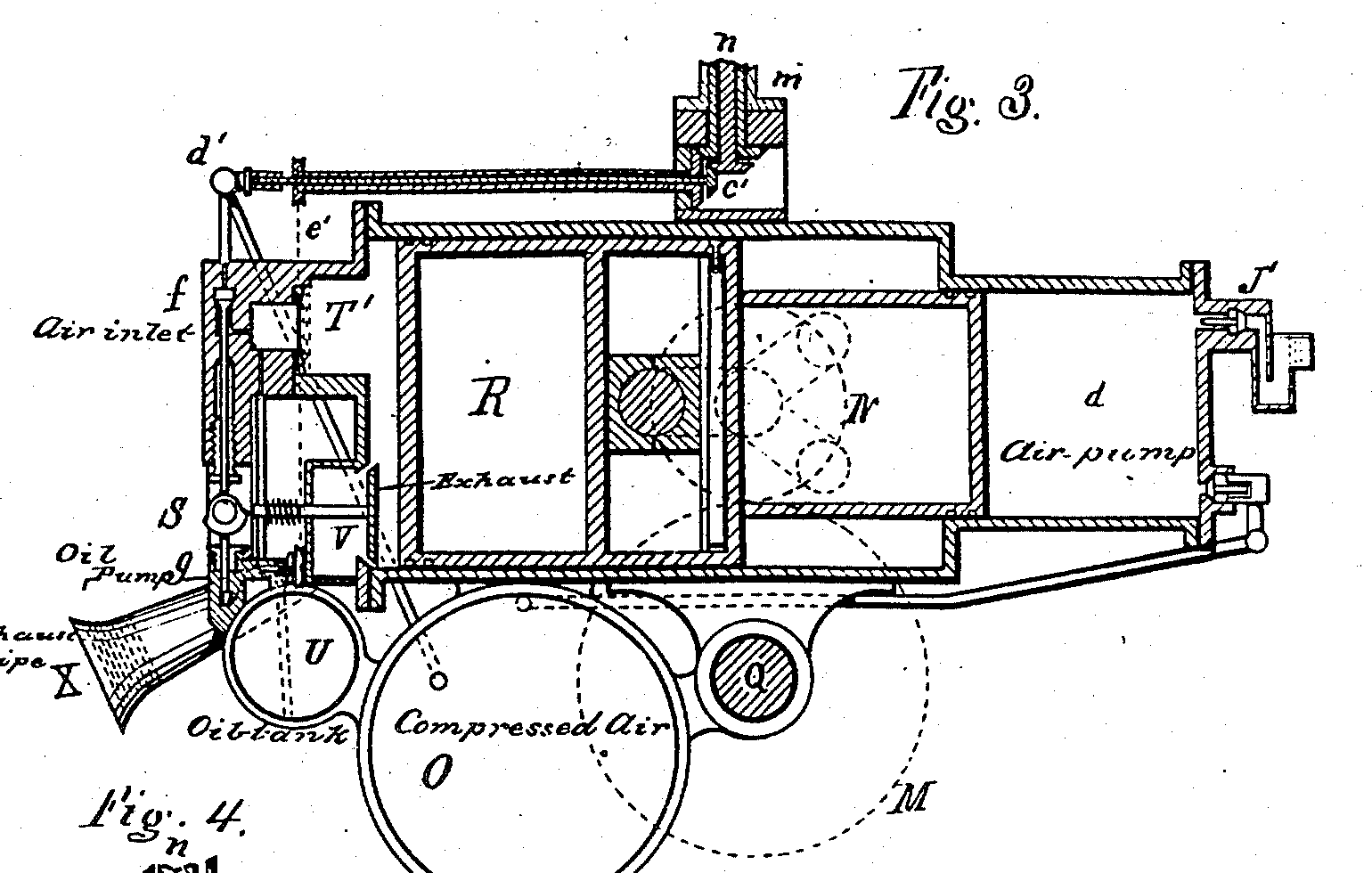
And the engine itself? One section drawing (Fig. 3, below in the patent's sheets), and a sentence saying that engines of this class "are now well known". The claim that mattered is a single sentence. The published report of the appeal sums it up as "a combination of three elements — the carriage, the drive mechanism, and the engine".
Read broadly, "a liquid hydrocarbon gas-engine of the compression type" covered every gasoline car on the road.
The patent finds owners
In 1899 a New York company that built electric cabs bought the patent (The Horseless Age, 1900). In 1900 it sued Winton, one of the biggest carmakers, and the patent survived that first challenge in court. In March 1903, instead of fighting on, the leading makers took licences and formed the Association of Licensed Automobile Manufacturers. "All the patents owned by the various members will be pooled", The Horseless Age reported, and "a deposit of $2,500 ≈ $90,000 will be required from each member".
The usual account of the deal is a royalty of one and a quarter per cent on the price of every car: on a car at $850 ≈ $30,000, $10.63 ≈ $380. We have that rate only from later accounts (The Henry Ford's finding aid, and Greenleaf); the one primary report of 1903 we read gives only importers' terms.
The association chose who could join, and its manager said that any maker who used the patent without paying would be prosecuted. That summer it began to advertise: "No other manufacturers or importers are authorized to make or sell gasoline automobiles". The New York Herald reported that about a hundred and twenty-five other makers "must either gracefully retire from business or prepare to make defence in suits".
Ford says no
One of the makers outside was the Ford Motor Company, a few months old, selling a car for $850 ≈ $30,000. Later accounts say the association turned Ford down, as a mere assembler of other people's parts; the letters of 1903 that we read don't mention it.
Ford's own words at the time were blunt: "We believe that the art would have been just as far advanced today if Mr. Selden had never been born". He promised to defend "not only ourselves but our agents and customers". His notice on the facing page of the October issue quoted his lawyers, Parker & Burton: the patent "does not cover a practicable machine, no practicable machine can be made from it and never was".
In October 1903 the patent's owners sued the Ford company and its New York agent, C. A. Duerr & Co. "The Ford Motor Co., of Detroit, Mich., and C. A. Duer & Co., its agents in this city, have been served" (Motor Age, 29 October 1903, with the agent's name as printed).
Six years, thirty-six volumes, and a car built for court
The case was fought mostly on paper. The record ran to thirty-six printed volumes, "of which more than one-half contain only repeated matter", the trial judge noted.
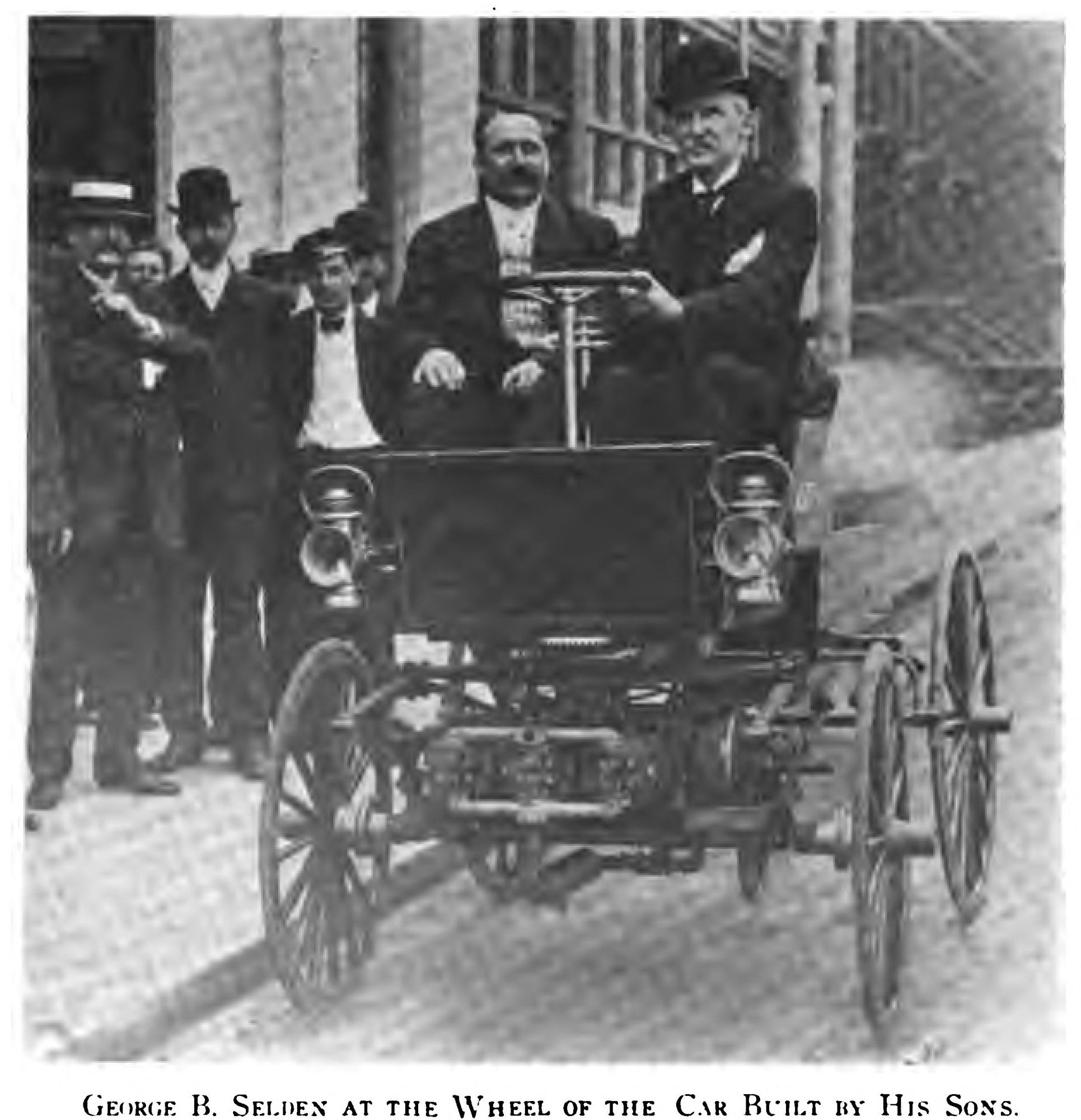
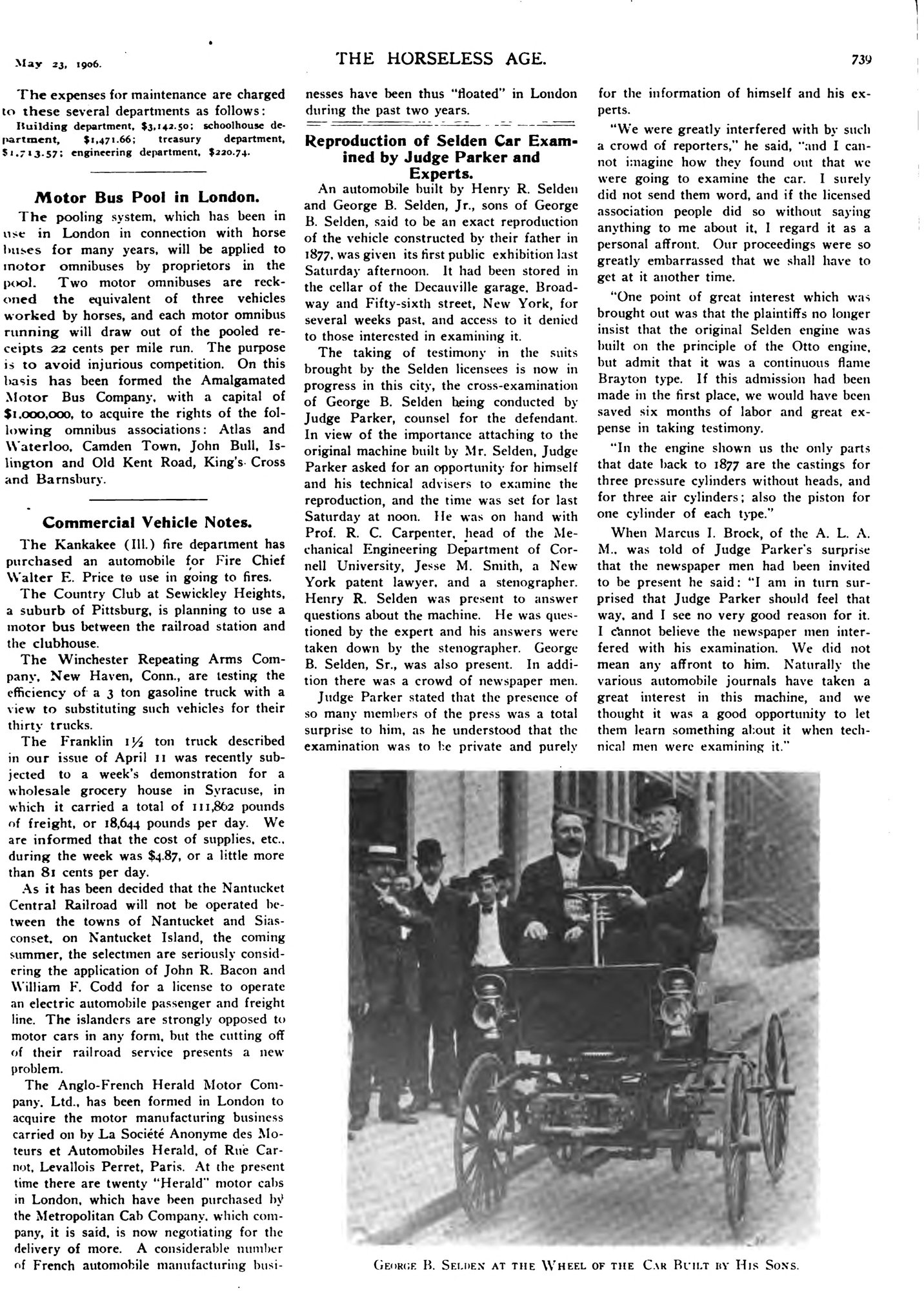
Could Selden's design even run? His sons rebuilt his old engine and put it in a buggy, "completed in the winter of 1905-06". In May 1906 in New York, The Horseless Age reported, Ford's lawyer looked it over: only some castings and two pistons dated back to 1877, and the other side now admitted that the engine was "a continuous flame Brayton type". The licence owners also built a second car, new, from the drawings, with electric ignition.
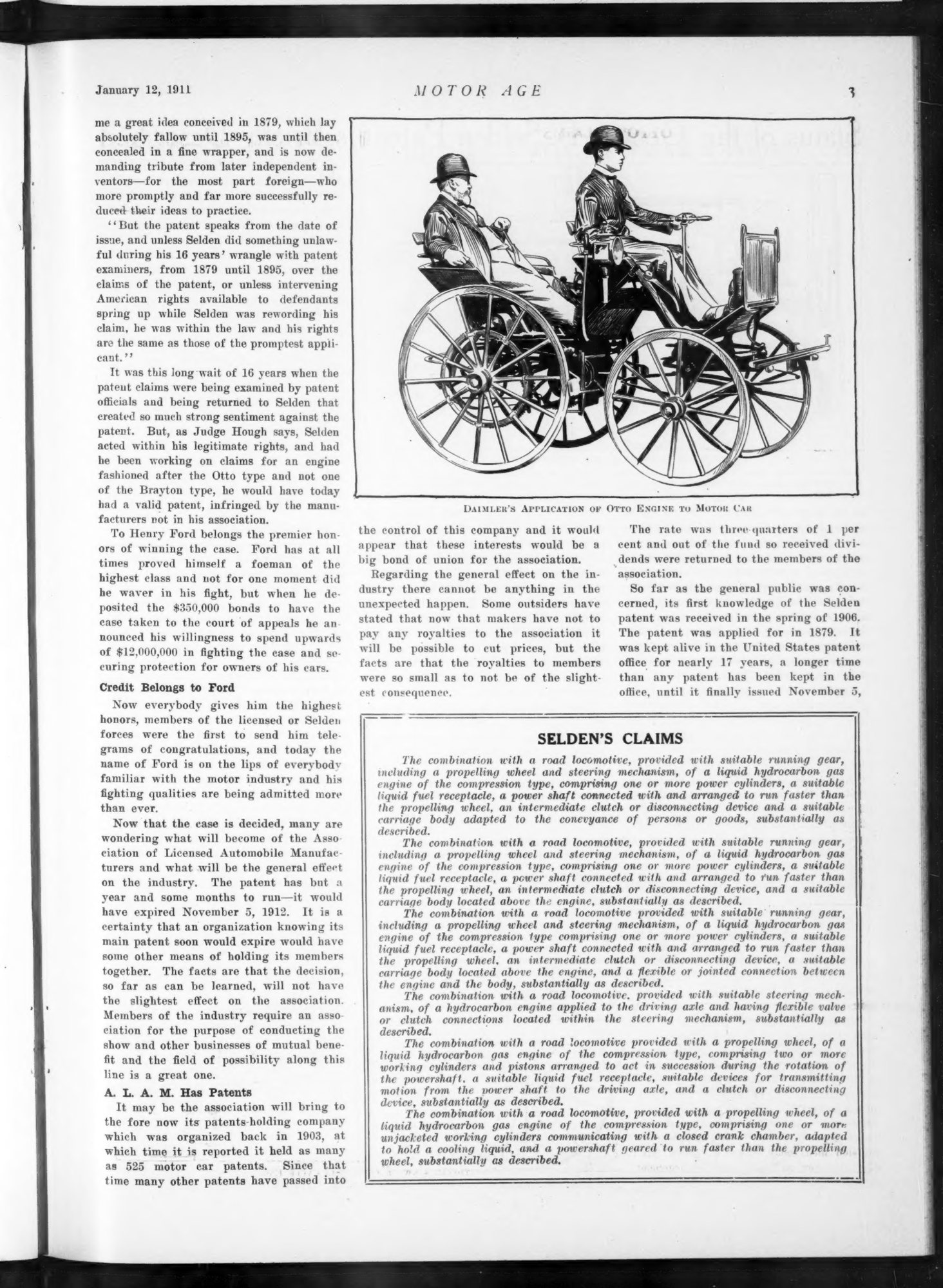
And their drawings put the engines of 1879 into the same buggy, to scale. Motor Age printed them when the case was decided:
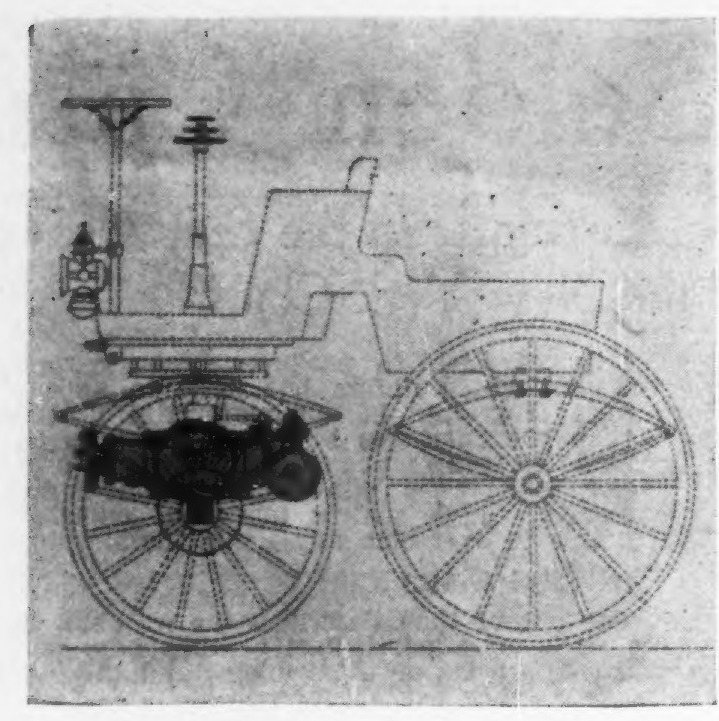
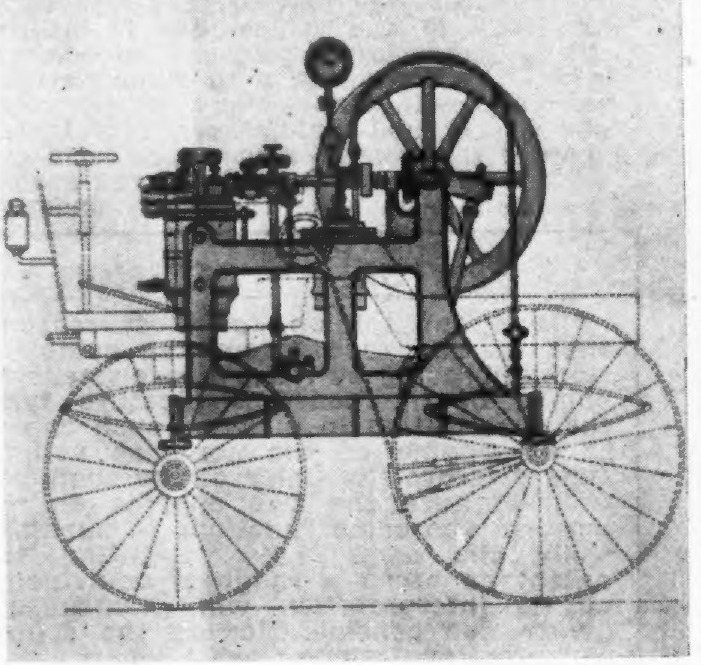
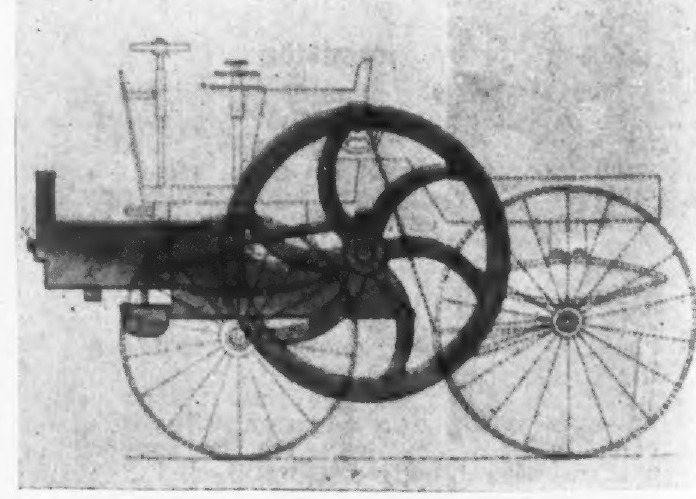
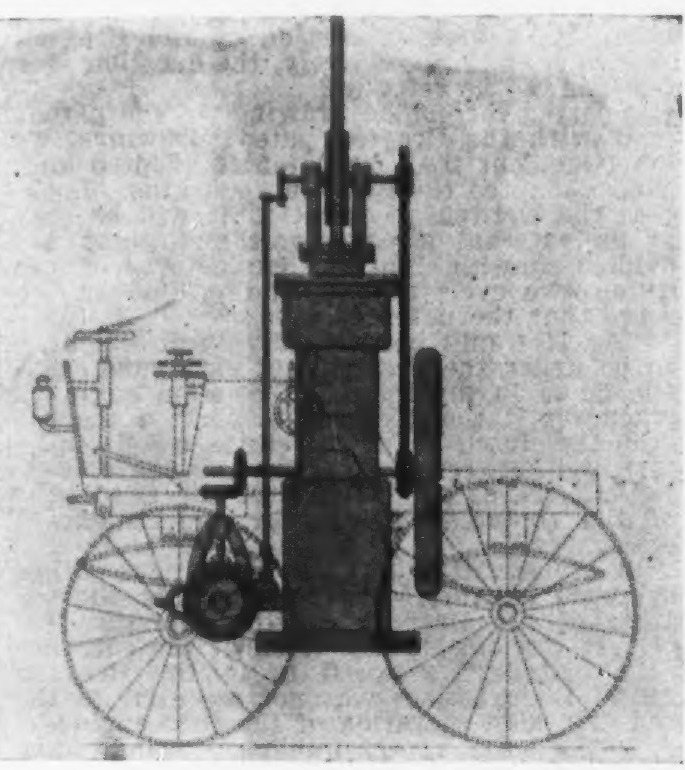
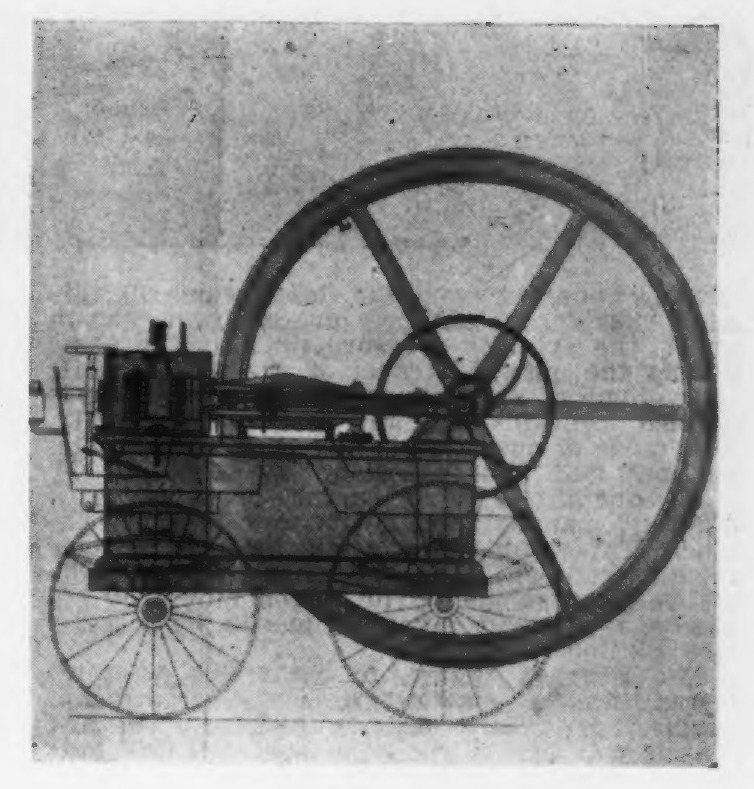
Weight of the engine. The complainants' (Selden side's) comparative scale drawings, as printed in Motor Age, 12 January 1911, pp. 8-9, Figs. 1-5; weights, power and speeds from the printed captions. The bars, drawn by us, are to scale.
Ford's side built a car with an old engine that did no compressing at all, to show it could be done. The judge was not impressed: "It hardly seems that the pleasure of contradicting Clerk was worth so much trouble." Of the licence owners' new car he wrote: "It is a wretchedly poor car for 1905; there were probably as good, if not better, cars in 1895; but it is a marvel of invention for 1879."
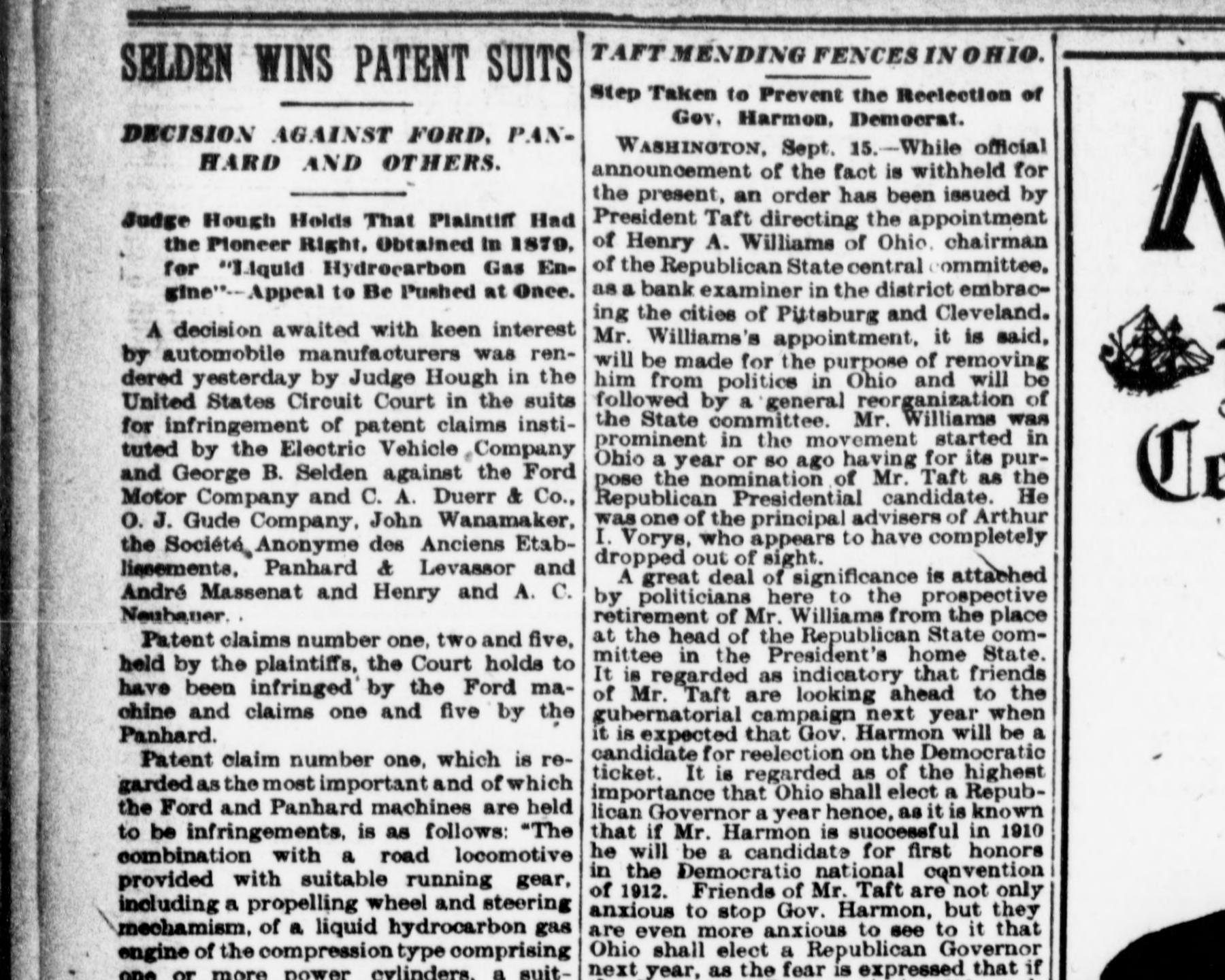
On 15 September 1909 he ruled for Selden: a pioneer patent, and Ford infringed it. Ford answered the same day: "It will be fought to a finish." (The Horseless Age; we read this line in the scan's machine reading.)
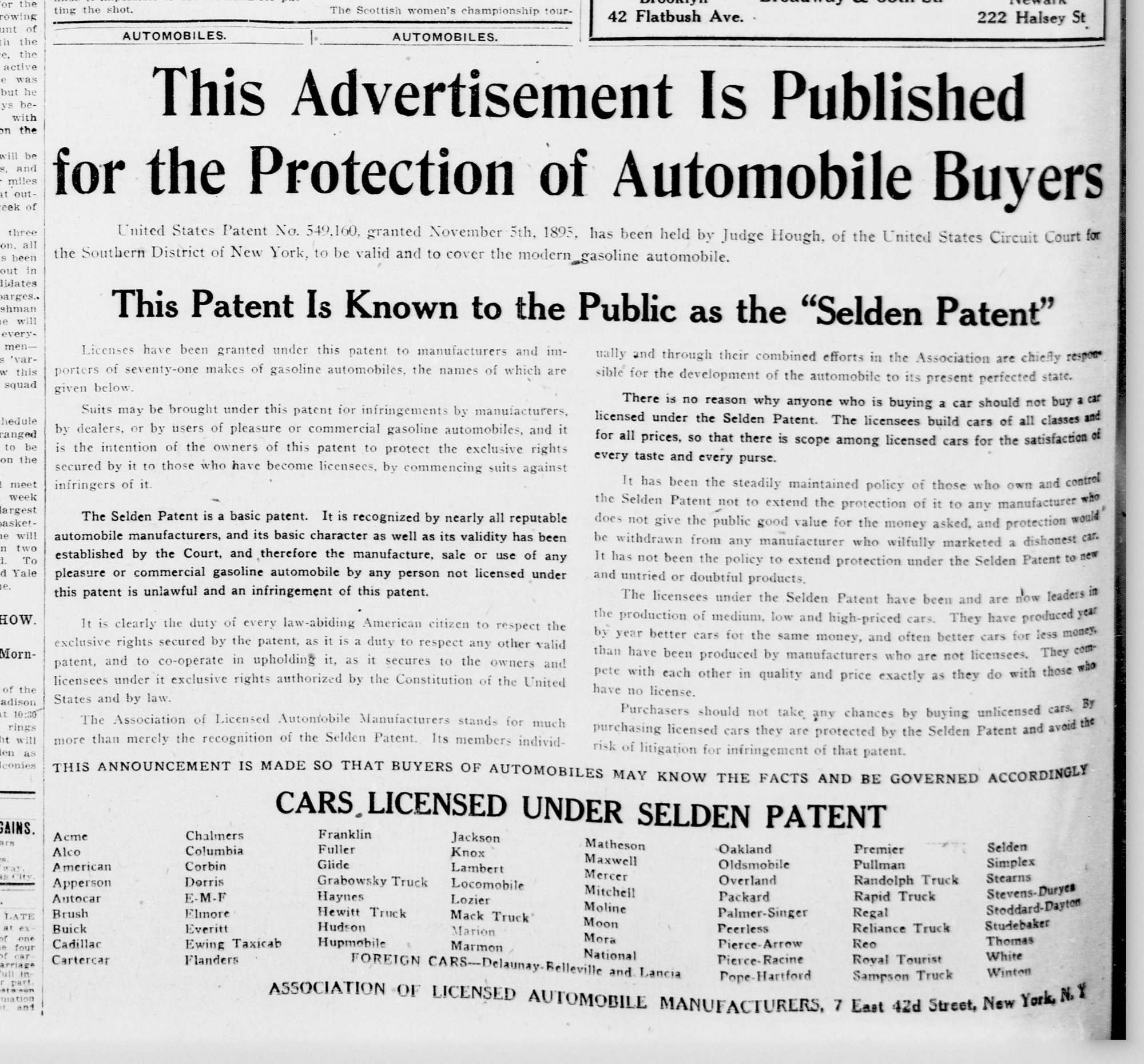
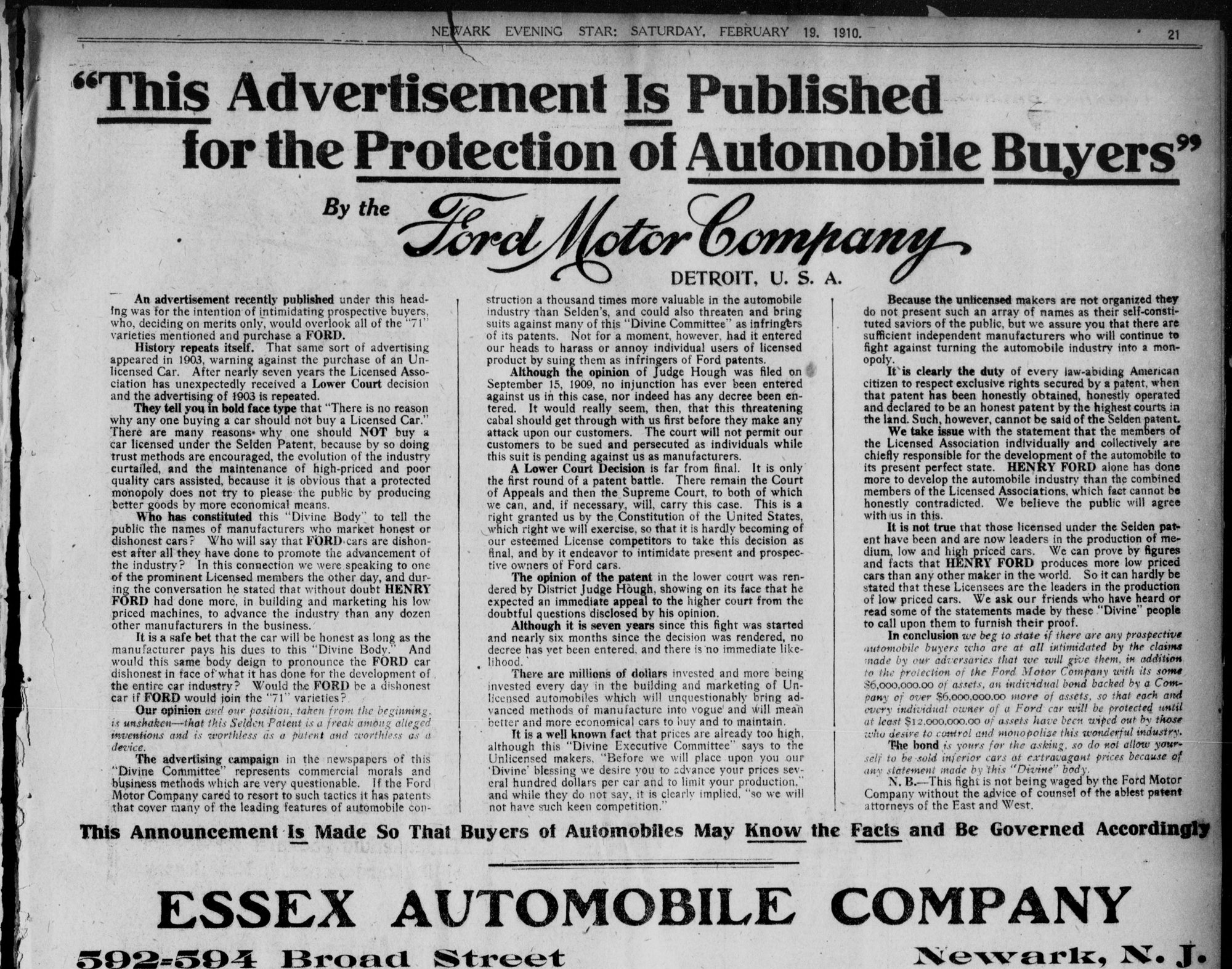
"For the Protection of Automobile Buyers"
Makers who had held out now joined; Buick, The Horseless Age reported, "has paid up all back royalties". In February 1910 the association advertised: "This Advertisement Is Published for the Protection of Automobile Buyers". It listed seventy-one licensed makes, and warned: "Suits may be brought under this patent for infringements by manufacturers, by dealers, or by users".
Ford answered under the same headline, asking who had "constituted this 'Divine Body'" to sort the makers into good and bad. And he offered any buyer who asked a bond, backed, he said, by at least $12,000,000 ≈ $410 million of assets. In his memoir of 1922 Ford wrote that he sold more than eighteen thousand cars that year, nearly double the year before, and that perhaps fifty buyers asked for a bond, "perhaps it was less than that". To take the case to appeal, he put up $350,000 ≈ $13 million in bonds (Motor Age, 12 January 1911).
Two kinds of fire
The appeal court started where the patent stops. Selden had called his engine well known. Well known as which? In 1879 there were two engines that compressed their air before firing: Brayton's, and Nikolaus Otto's.
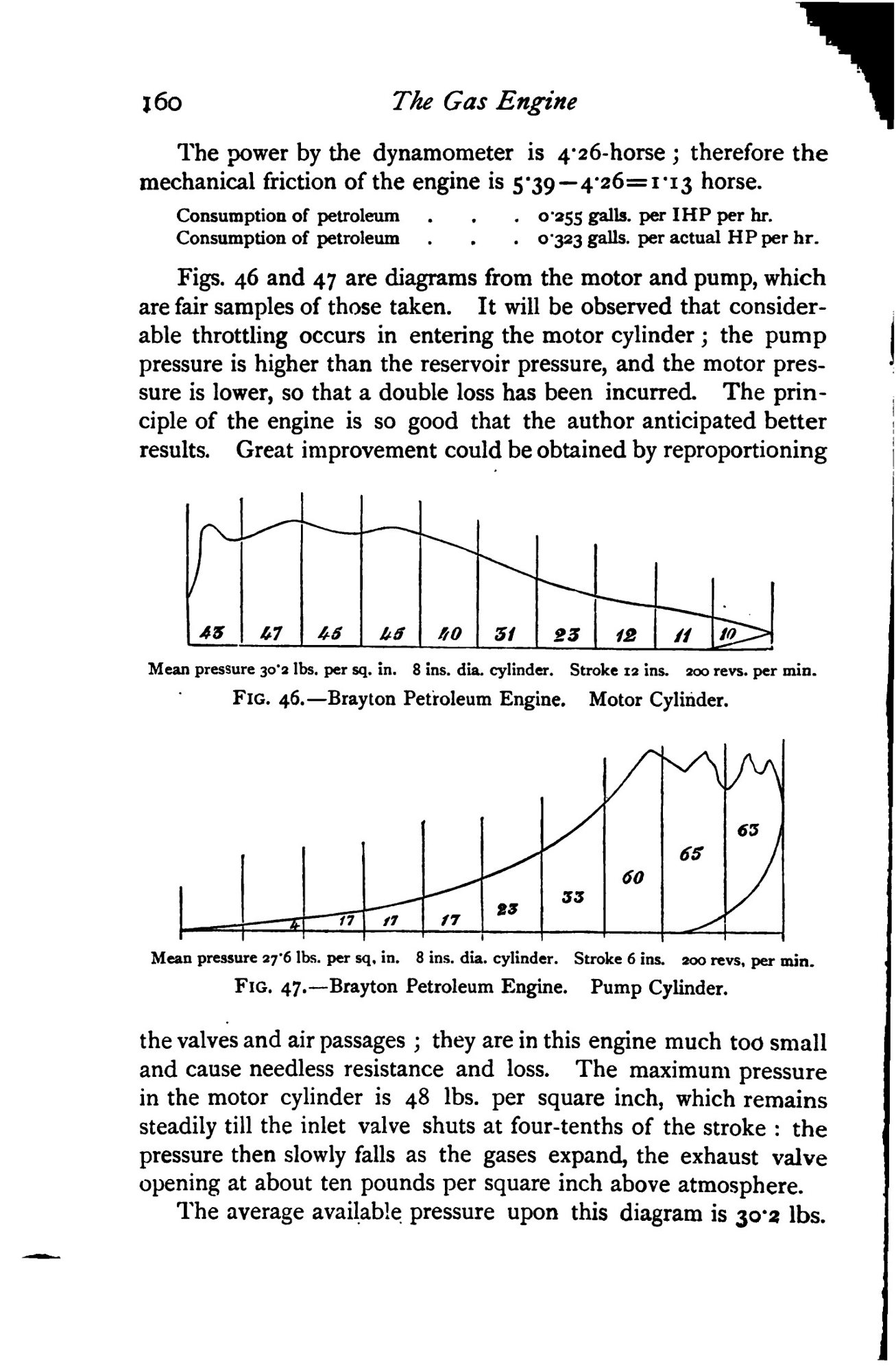
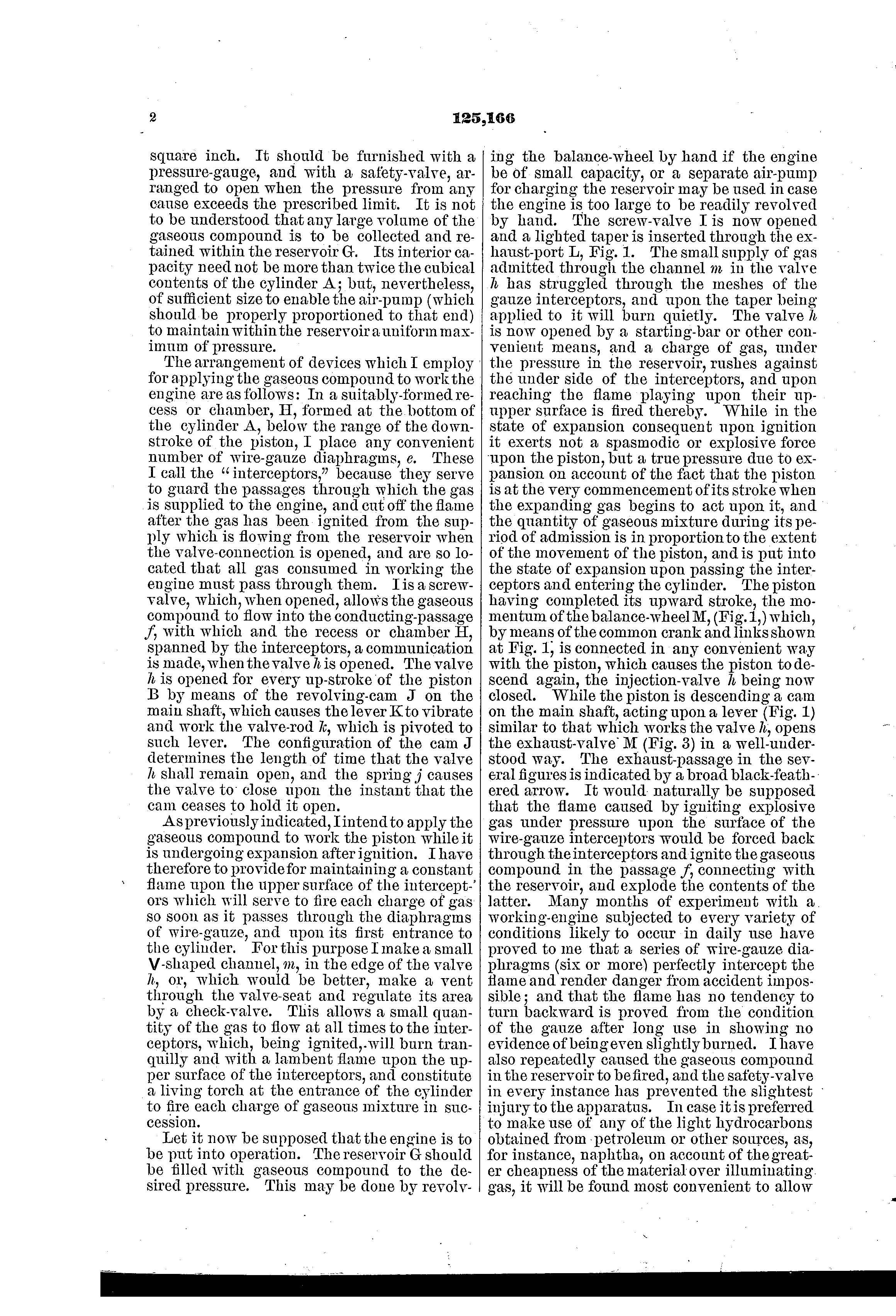
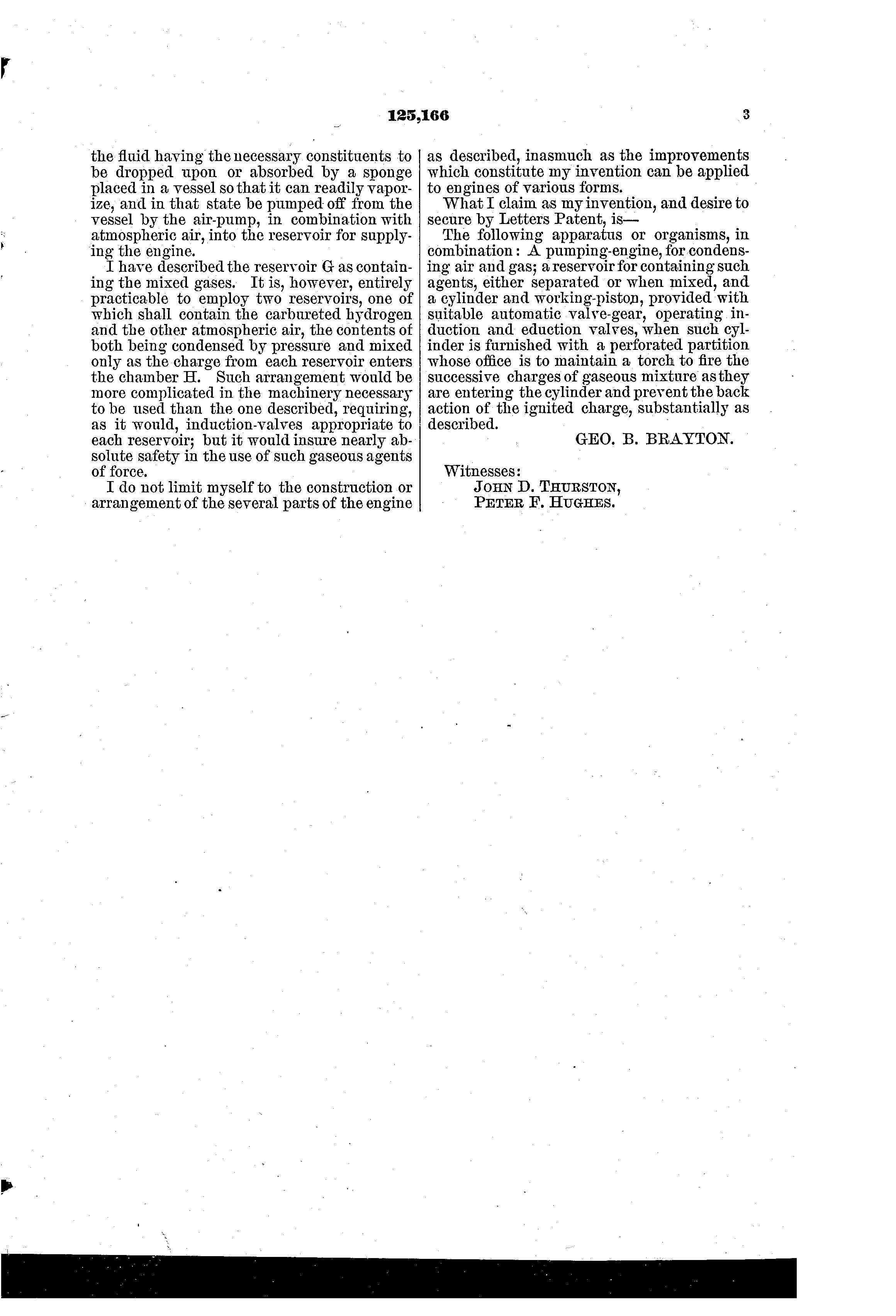
In Brayton's kind, a pump fills a tank with air, at "at least sixty pounds" to the square inch, as Brayton's patent of 1872 puts it. A valve opens; the air picks up a squirt of oil, passes a flame that never goes out ("a living torch", in the same patent), and enters the cylinder already burning. So the piston gets a steady push, like steam. In Dugald Clerk's test of a Brayton oil engine in 1878, the pressure rose to "48 lbs. per square inch, which remains steadily till the inlet valve shuts at four-tenths of the stroke", and then fell away. Clerk explained why that is worth doing: "The pump, say, puts one volume or cubic foot into the receiver; the flame causes it to expand while entering the cylinder to two cubic feet", so it does the work of two cubic feet, though the pressure never rises.
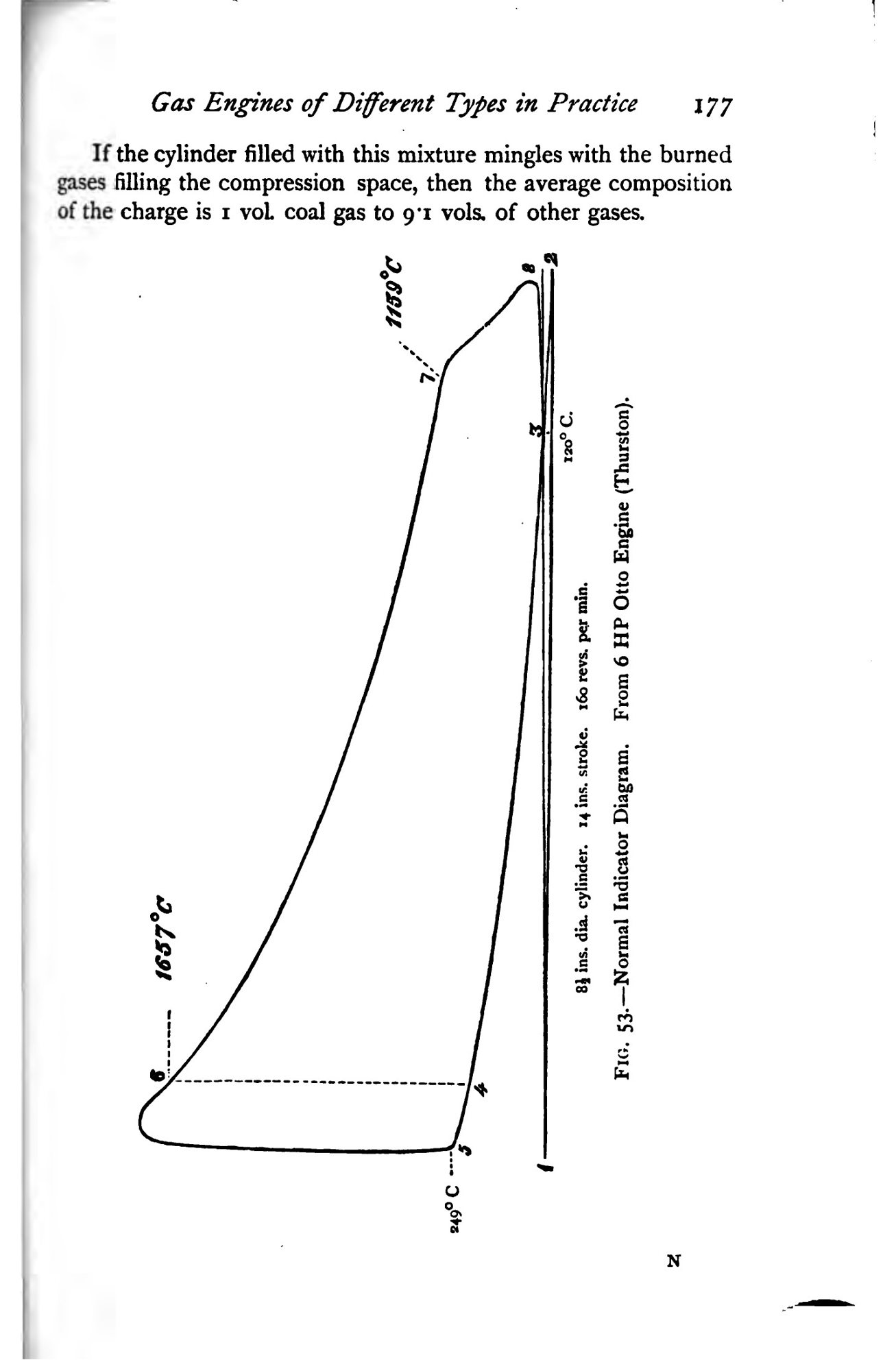
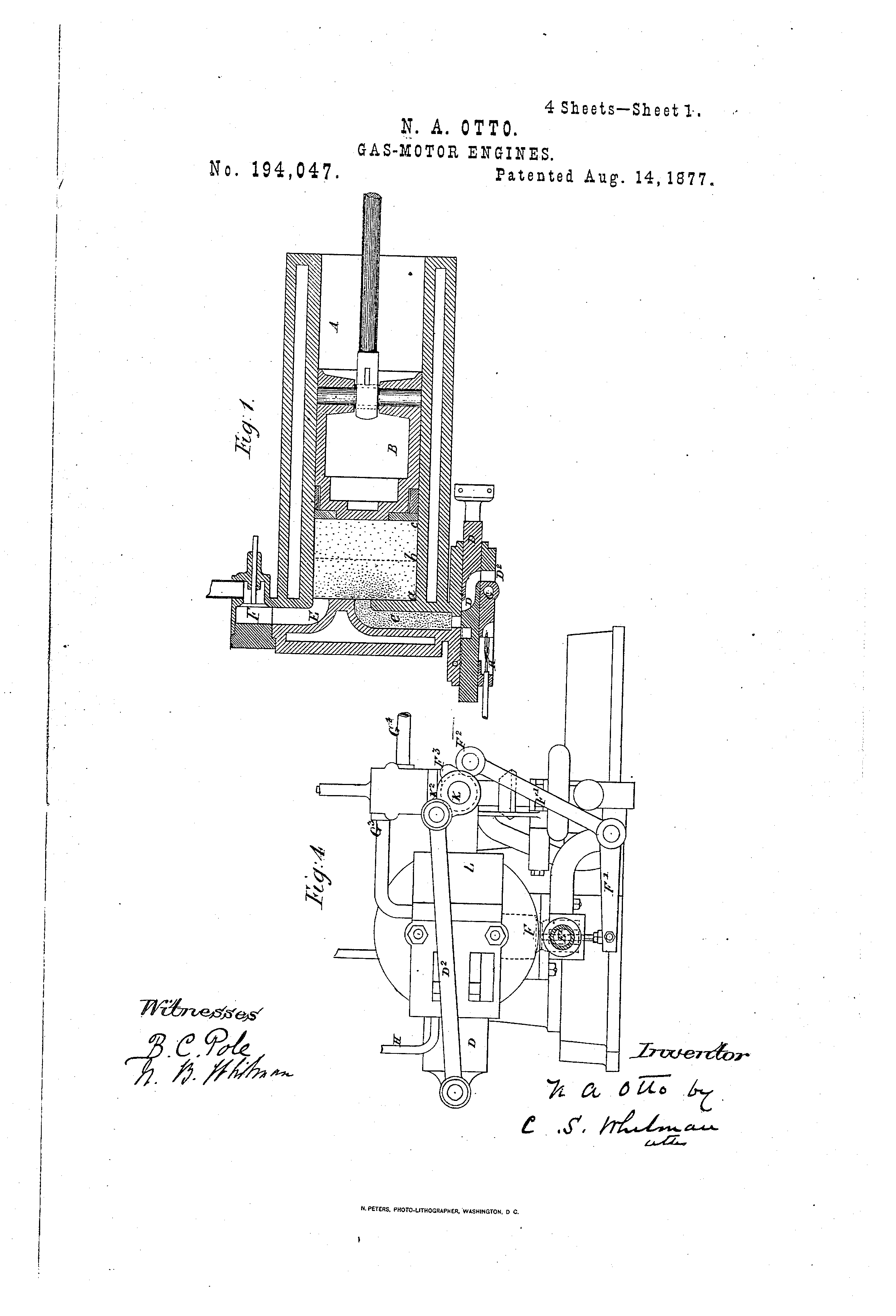
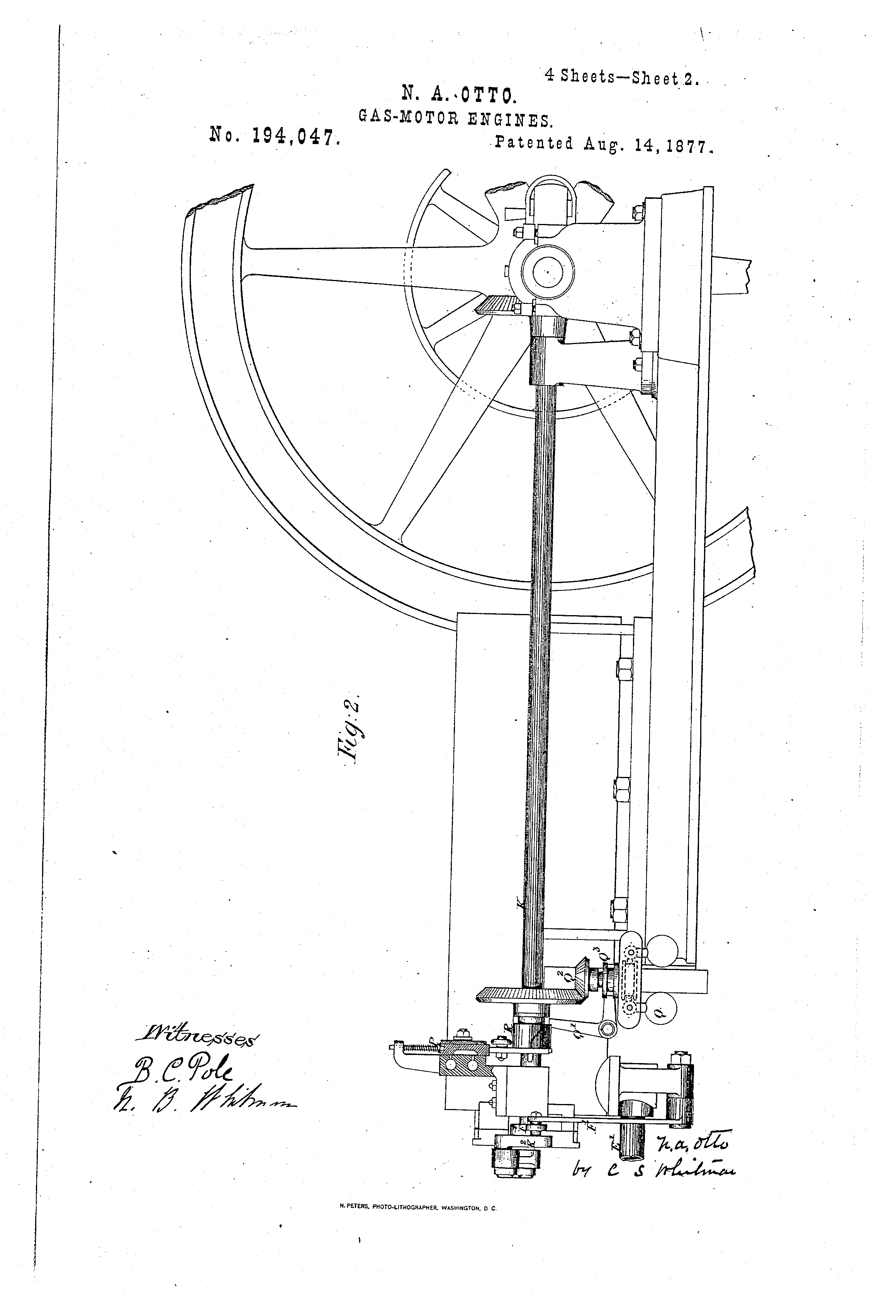
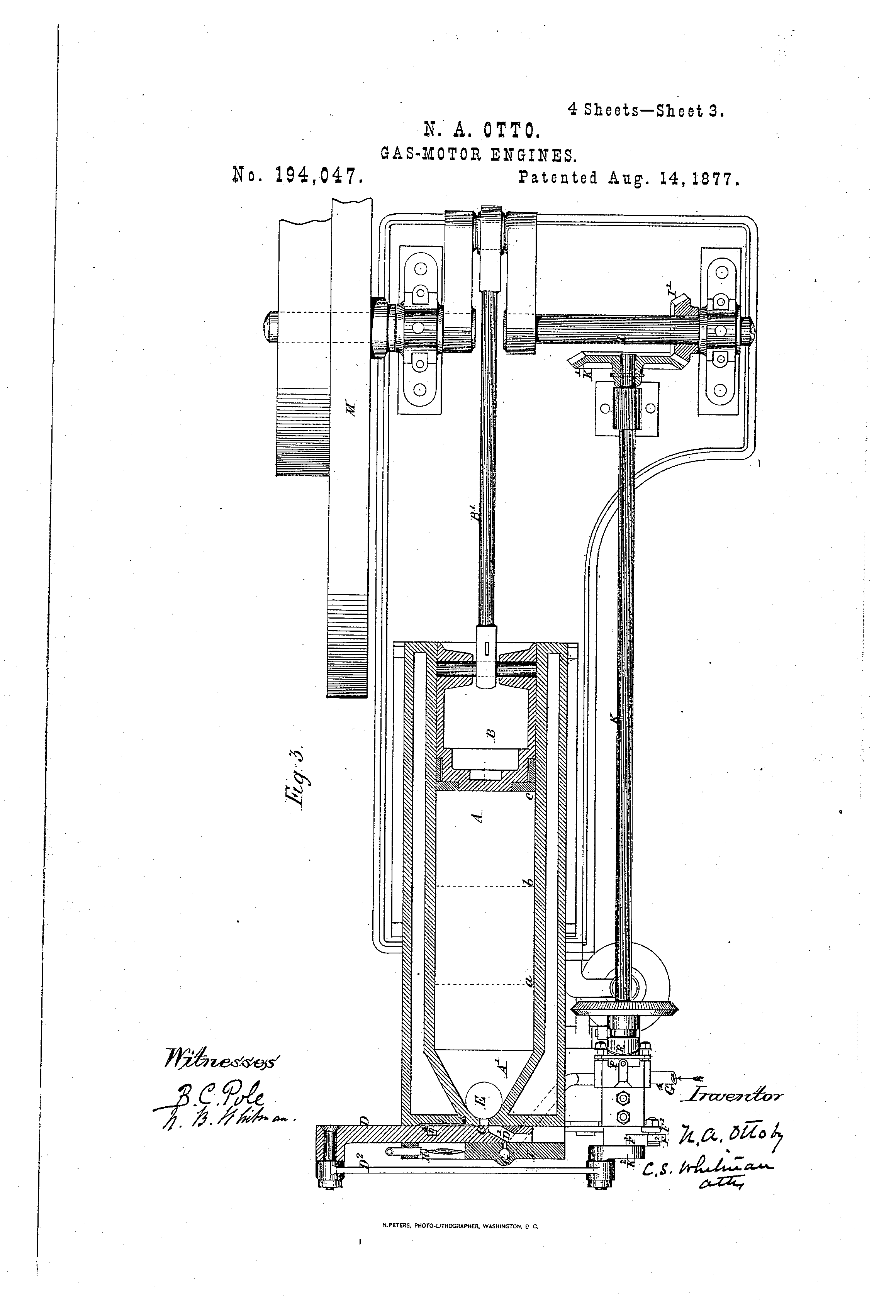
In Otto's kind, from his US patent of 1877, the piston draws in a charge, squeezes it, and fires it all at once: the pressure leaps before the piston has moved. Then the working stroke, and the exhaust. Four strokes for each firing.
Left, Brayton's kind, laid out as Selden's Fig. 3 (US 549,160, sheet 2), with its letters: working cylinder R and air pump d facing each other across the closed chamber where the crank turns (N), reservoir O below, inlet valve f and combustion chamber T′ at the head of R, oil pump g fed from tank U, exhaust valve V to pipe X, pump inlet J′. Selden's patent says nothing of the cycle ("now well known"), so it is worked as Brayton's patents of 1872 and 1874 and Clerk's 1878 test describe. Right, Otto's kind, from US 194,047: one cylinder A that is motor and pump in turn, slide D over the inlet carrying the flame that fires the charge, exhaust valve F, side shaft K at half the crank's speed. The pressure traces are traced from Clerk's printed diagrams, not drawn by hand: Fig. 46 (his own test of a Brayton oil engine, in pounds to the square inch above the air outside) and Fig. 53 (a 6 hp Otto engine, Thurston), whose pressure is shape only, because Clerk prints no scale with it. Ours: one crank for Brayton's pump and cylinder (Fig. 3 shows one crank chamber between them), all proportions, the check valve between the pump and the reservoir, the valve timing except Clerk's cut-off at 0.4, and Otto's valve gear, simplified. Both run far slower than the real engines, which the 1911 drawings above give as 230 and 156 turns a minute. Checked by a test of our own: rods keep their length, pistons stay in their bores, Brayton's inlet is open only on the outward stroke and shuts at 0.4 with a level push while it is open, and Otto's fires once in two turns at the inner dead centre, the pressure climbing while the volume changes by under 2%.
Side by side, their pressure traces: a flat top, and a spike. Clerk's book named the two kinds, constant pressure and constant volume. The appeal court put the difference this way: firing the whole charge at once is "a very different thing from the ignition of successive compressed portions — particle after particle — as they enter the cylinder".
And Selden's drawing has the pump, the tank and the flame. Clerk was Selden's side's own expert, and he wrote: "I at once recognize it as an engine of the Brayton type". The trial judge had called the differences between the engines no more significant than "variations in rapidity of breath in different men". The appeal court disagreed: "These are differences in principles and methods of operation. And these differences in principles and methods are substantial." It mattered for a car, too: "We are satisfied that the slow combustion method necessarily involves slow operation."
Otto's own patent said his charge burned gradually, "instead of an explosion ensuing". What mattered was when it burned: all at once, before the piston moved.
"He made the wrong choice"
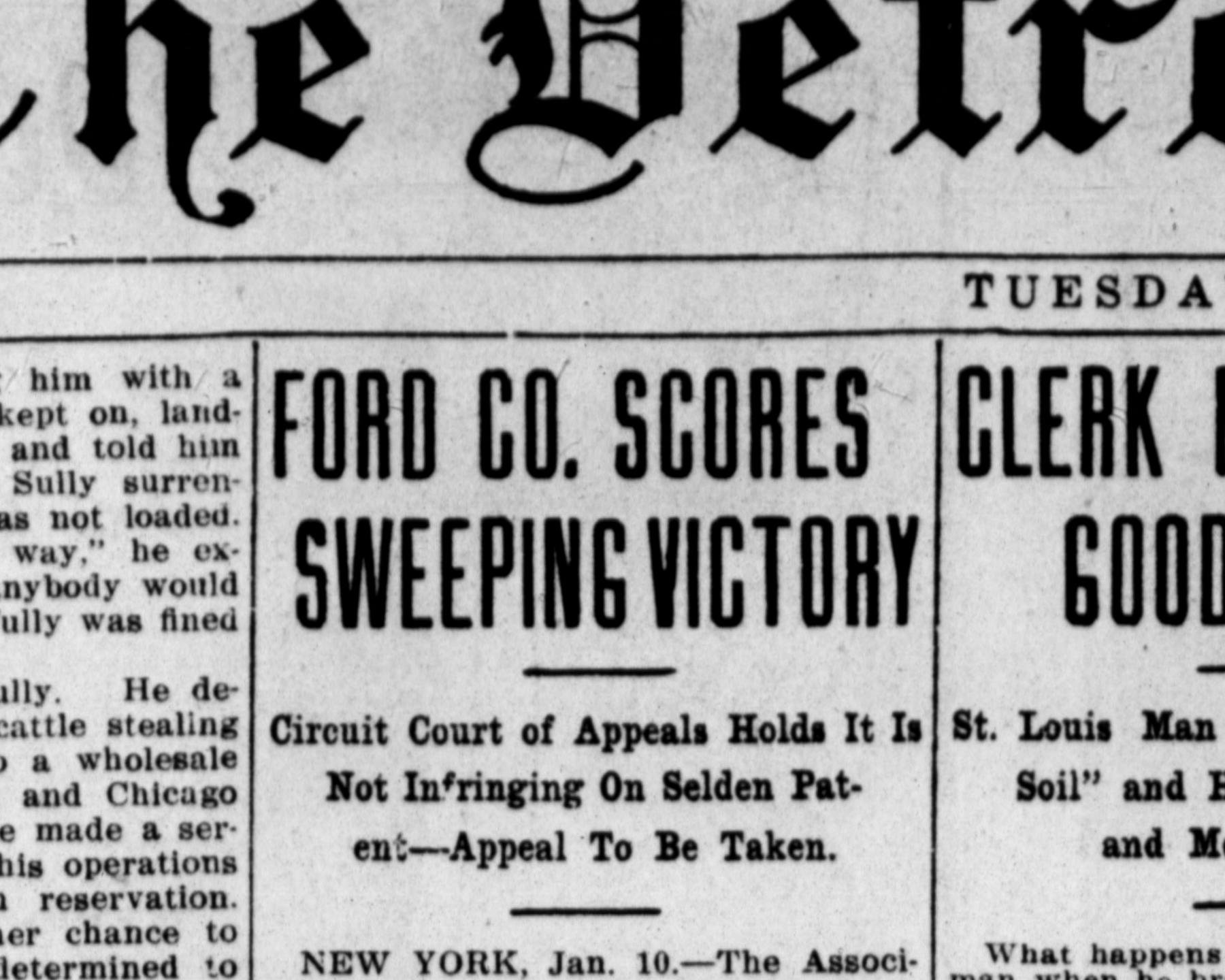
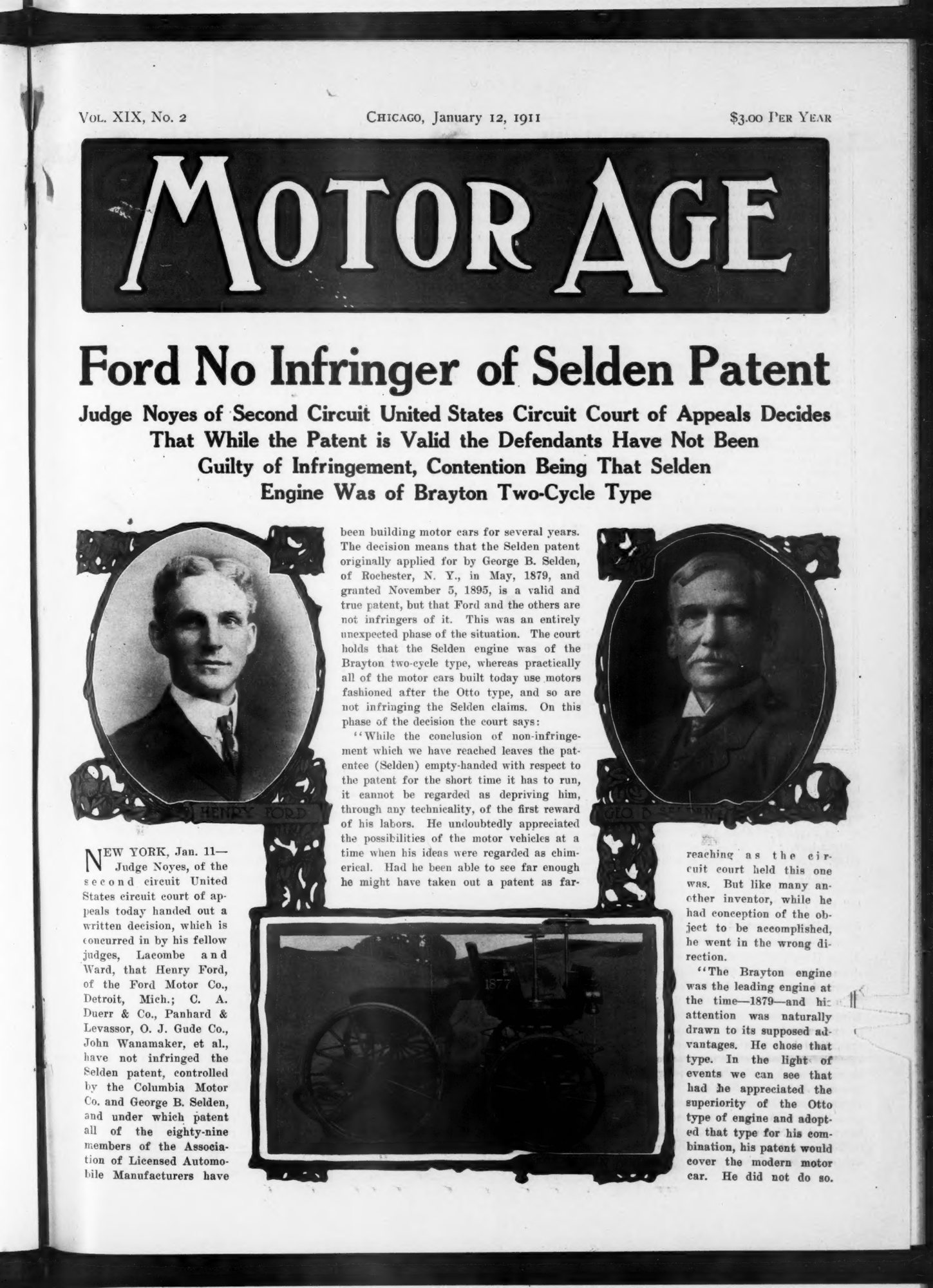
The decision came on 9 January 1911. Read broadly, claim 1 claimed what was already known: Brayton had put his engine in a streetcar and in boats before Selden filed. So, read that way, it was invalid. Read narrowly, as Brayton's engine made lighter and faster, it was valid. And if the claim covered every compression engine, Otto's included, the patent never said how to fit Otto's into a carriage: "A patent is granted for solving a problem, not for stating one." But every car on the road ran on Otto's kind of engine. So: a valid patent, and not infringed.
The court did not hide what it thought of the sixteen years: "The public gained absolutely nothing from his invention, whatever it was." Its conclusion, the court added, "cannot be regarded as depriving him through any technicality of the just reward for his labors".
"He made the wrong choice, and we cannot, by placing any forced construction upon the patent or by straining the doctrine of equivalents, make another choice for him at the expense of these defendants who neither legally nor morally owe him anything."
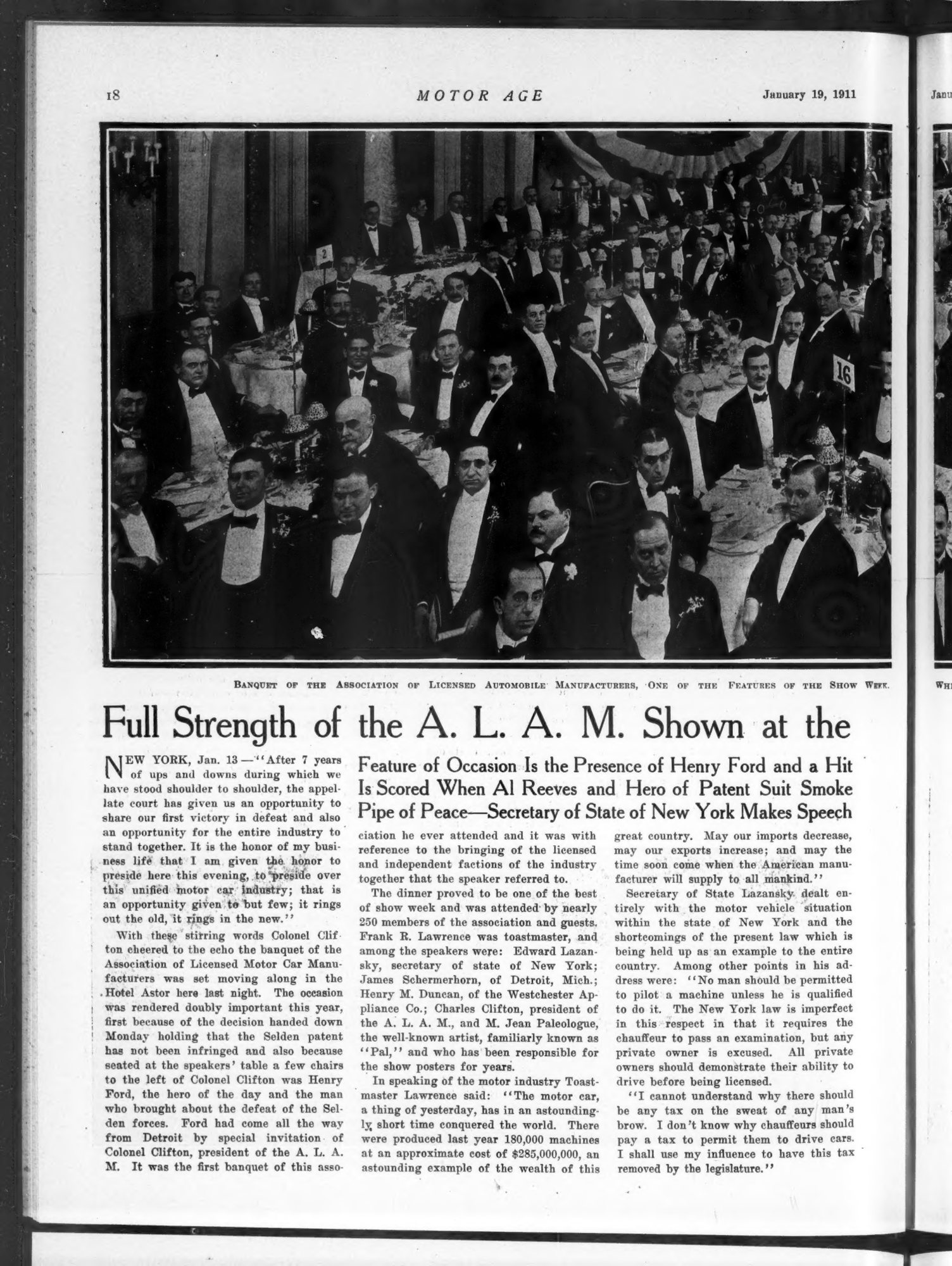
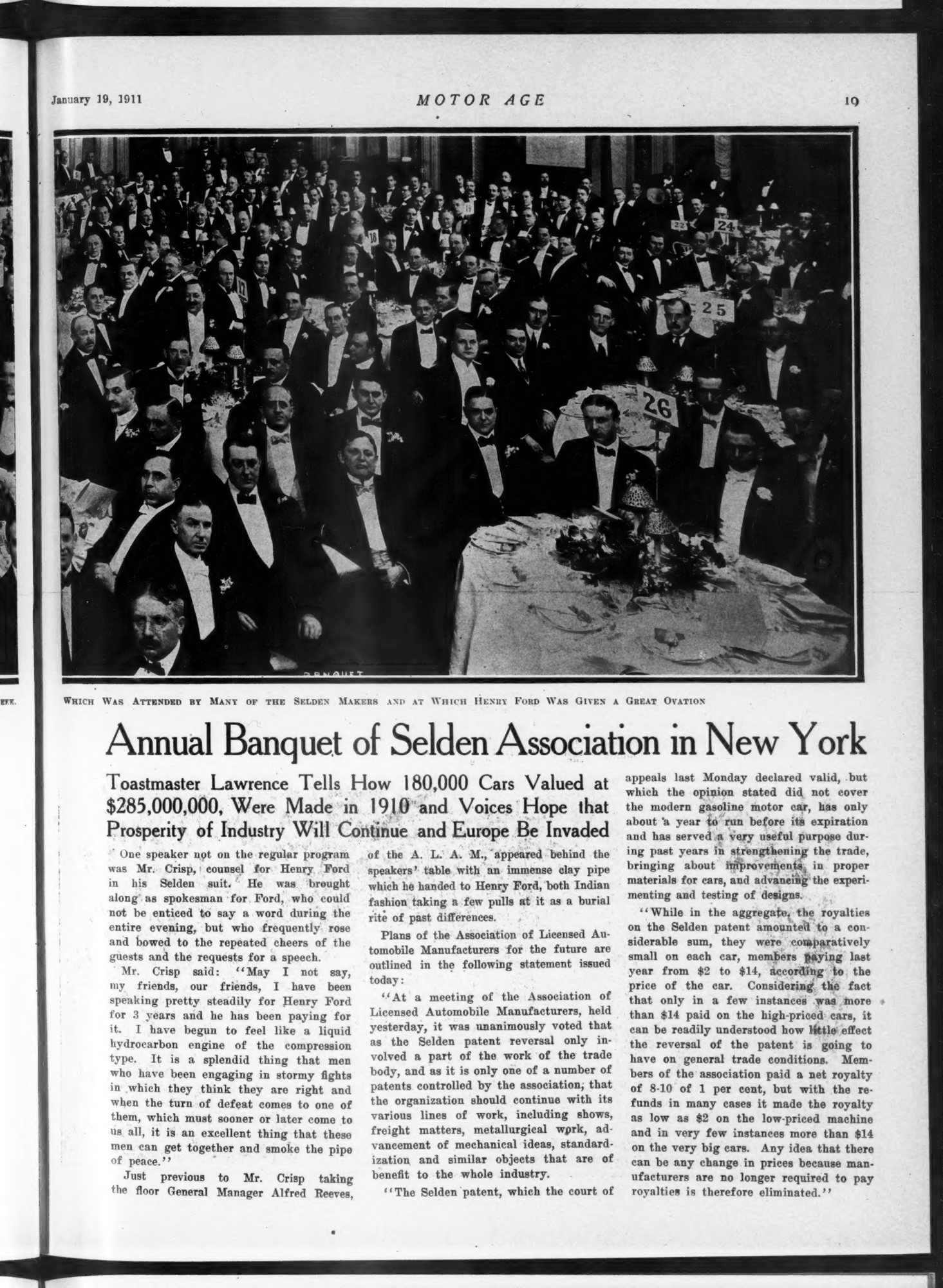
Three days later, at the association's own banquet in New York, Ford was given an ovation, and the association's manager handed him "an immense clay pipe"; they both took a few pulls on it (Motor Age, 19 January 1911). The royalties, the association said, had been small: members had paid from $2 ≈ $69 to $14 ≈ $480 a car in 1910.
What happened next
The patent ran out in 1912: seventeen years from its grant, as the law then stood. (That is our arithmetic; we found no report of the expiry at the time.) The association faded. In its place, according to the historian William Greenleaf, the makers agreed to share their patents freely, from 1915. Greenleaf also gives "an authoritative estimate" of everything paid under the patent: about $5.8 million ≈ $200 million.
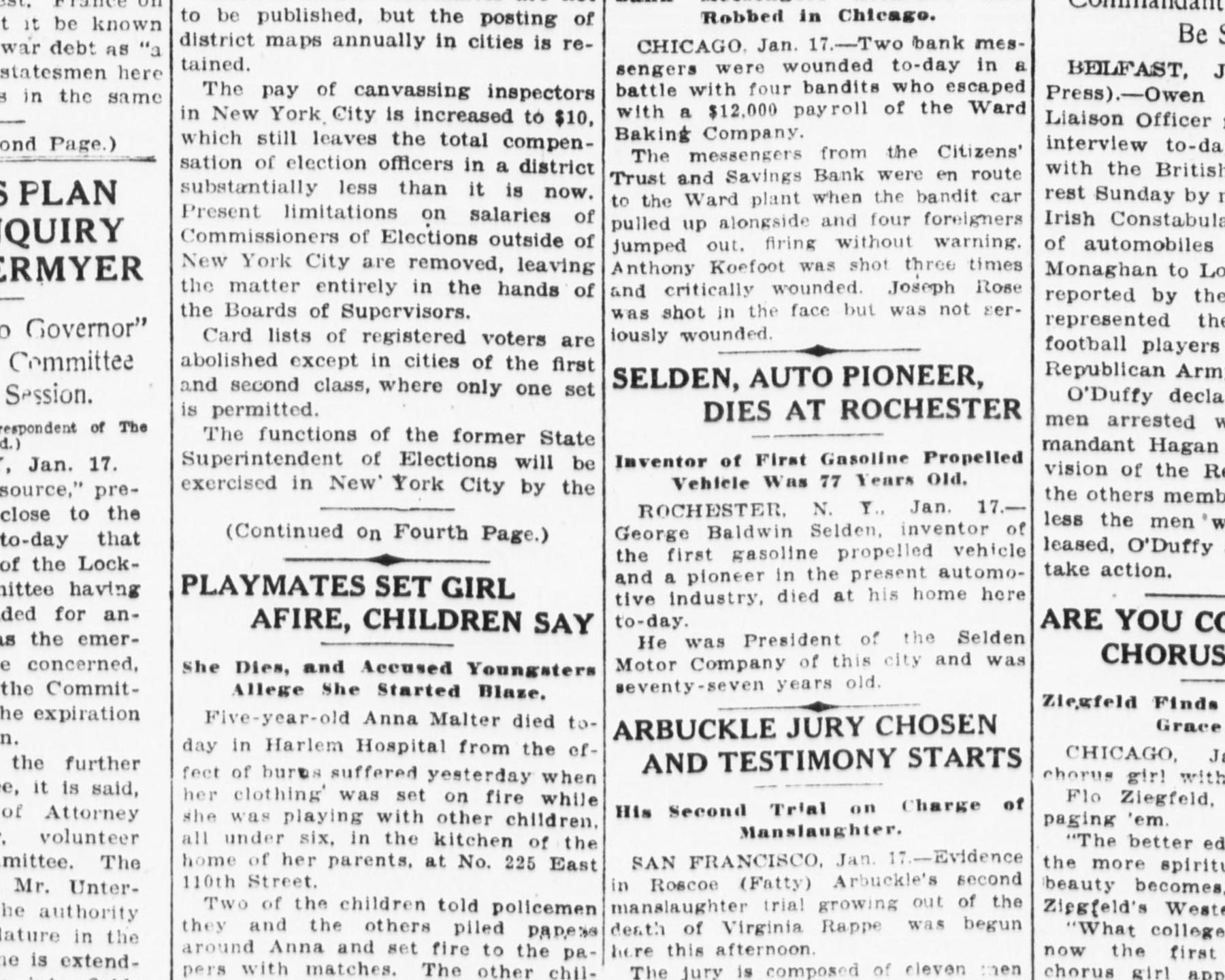
Selden built cars and trucks of his own, advertised as licensed under the Selden patent. He died in Rochester in January 1922. The wire report called him the "inventor of the first gasoline propelled vehicle".
The appeal court had already written the last word. Had he appreciated the superiority of the Otto engine and adapted that type for his combination, "his patent would cover the modern automobile. He did not do so."
Read the original patents
All four patents are in the public domain. Click a page for full resolution; drawing sheets come first, then the specification.
US 549,160, George B. Selden, Road-Engine, filed 8 May 1879, granted 5 November 1895
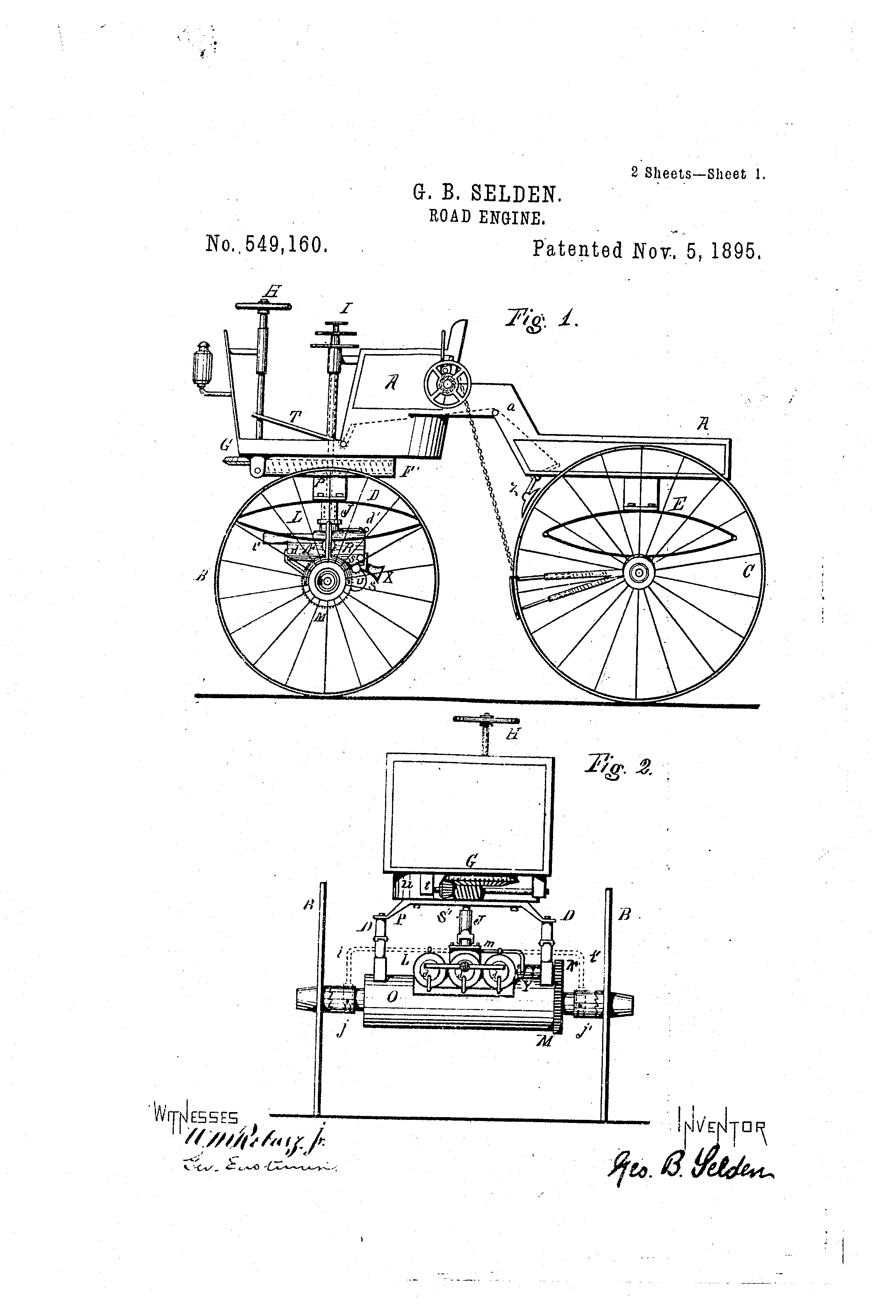
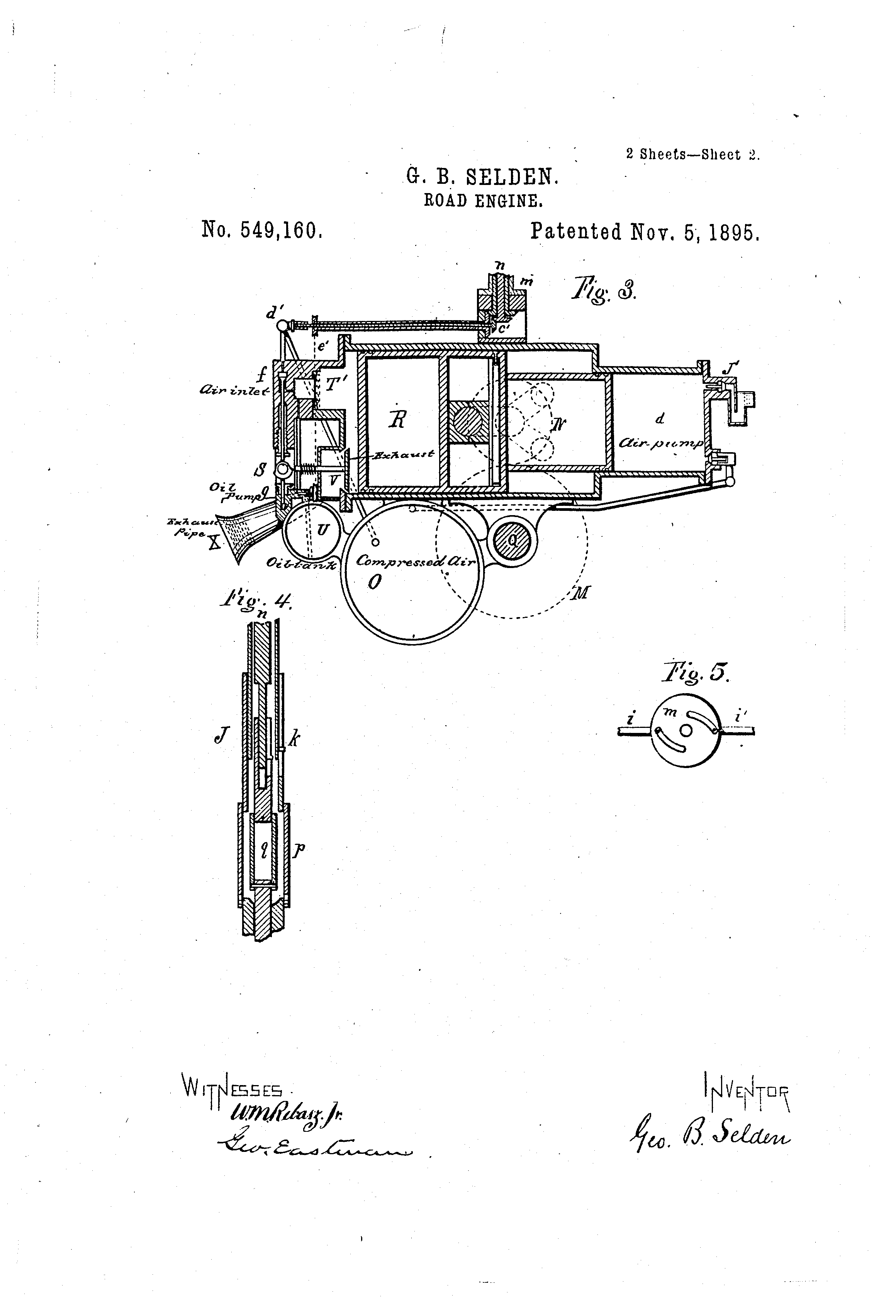
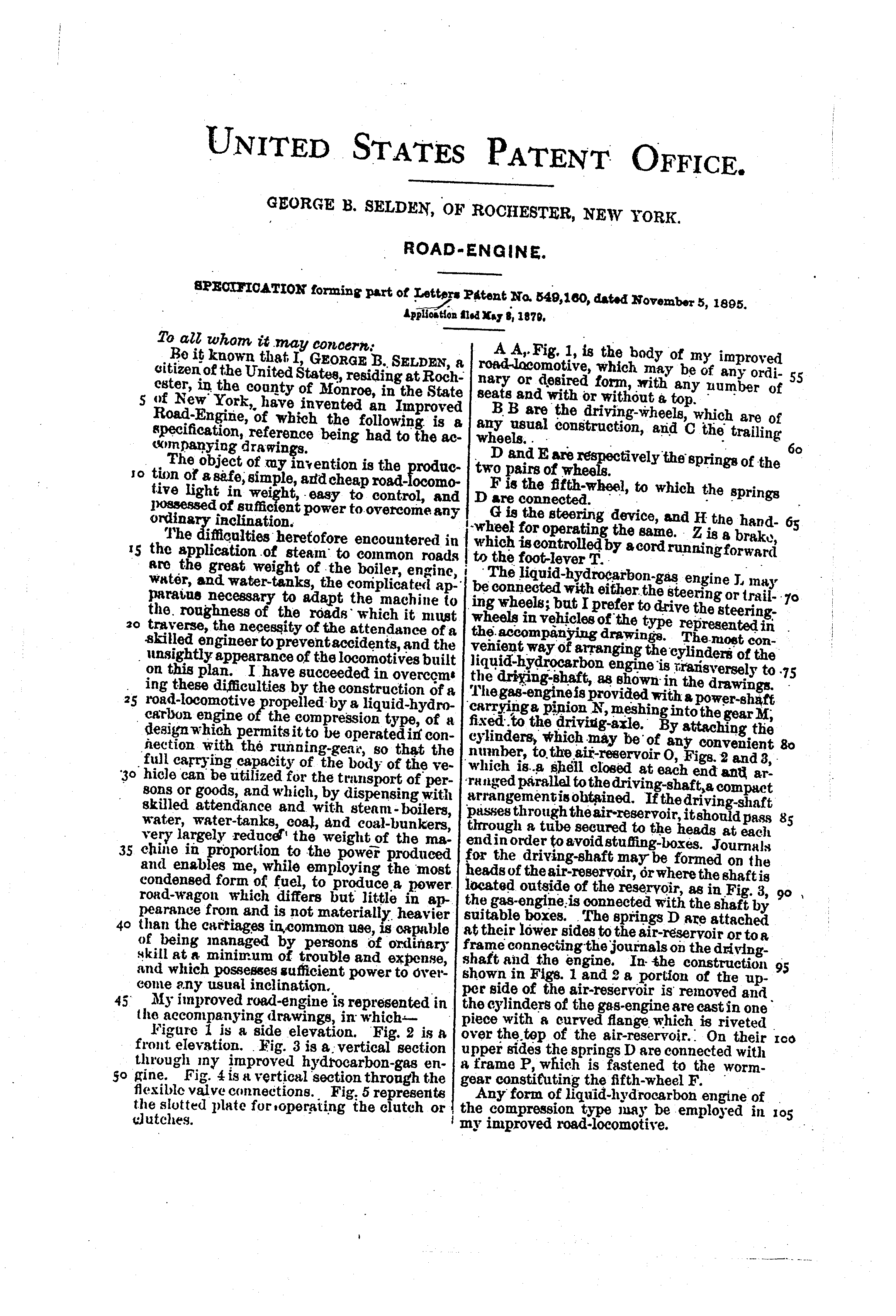
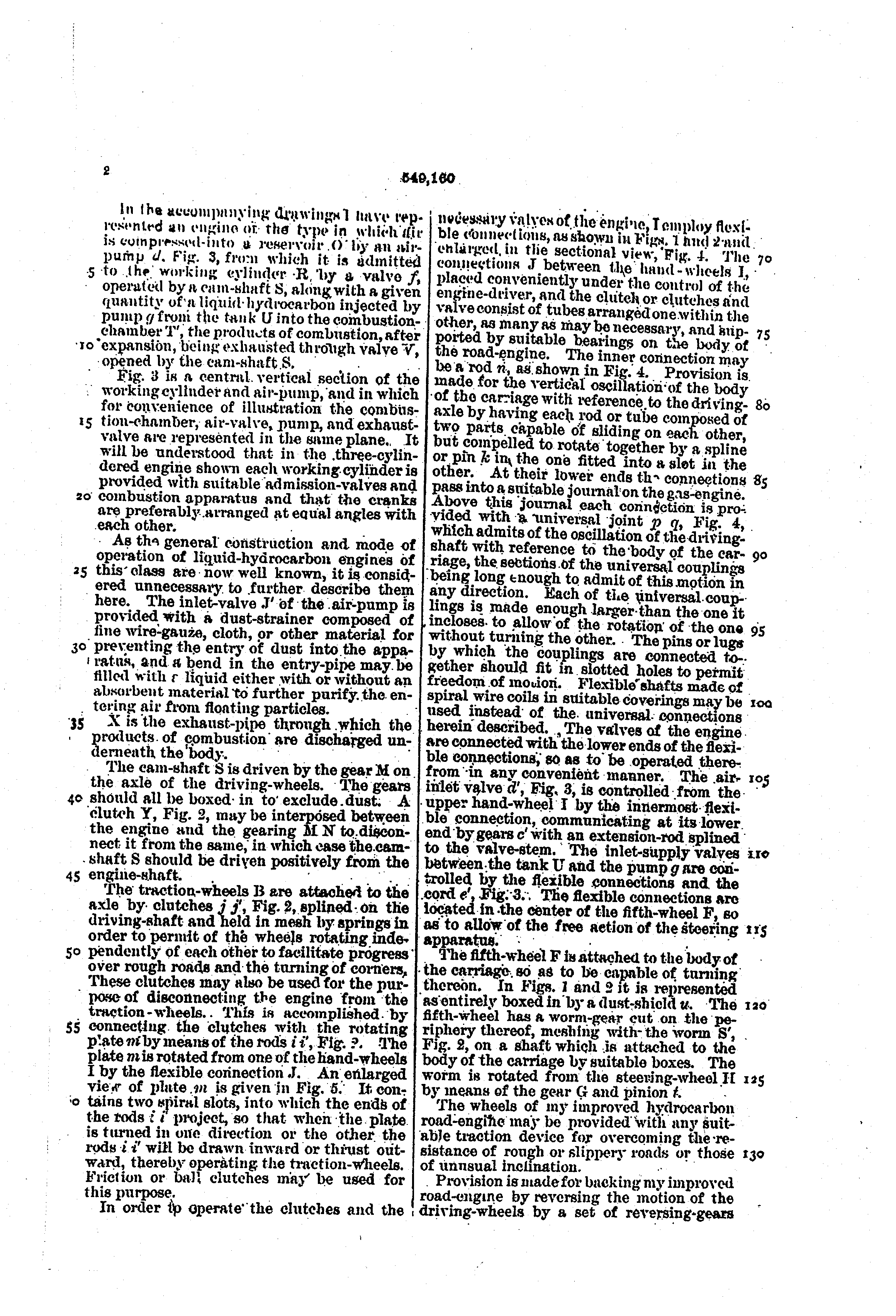
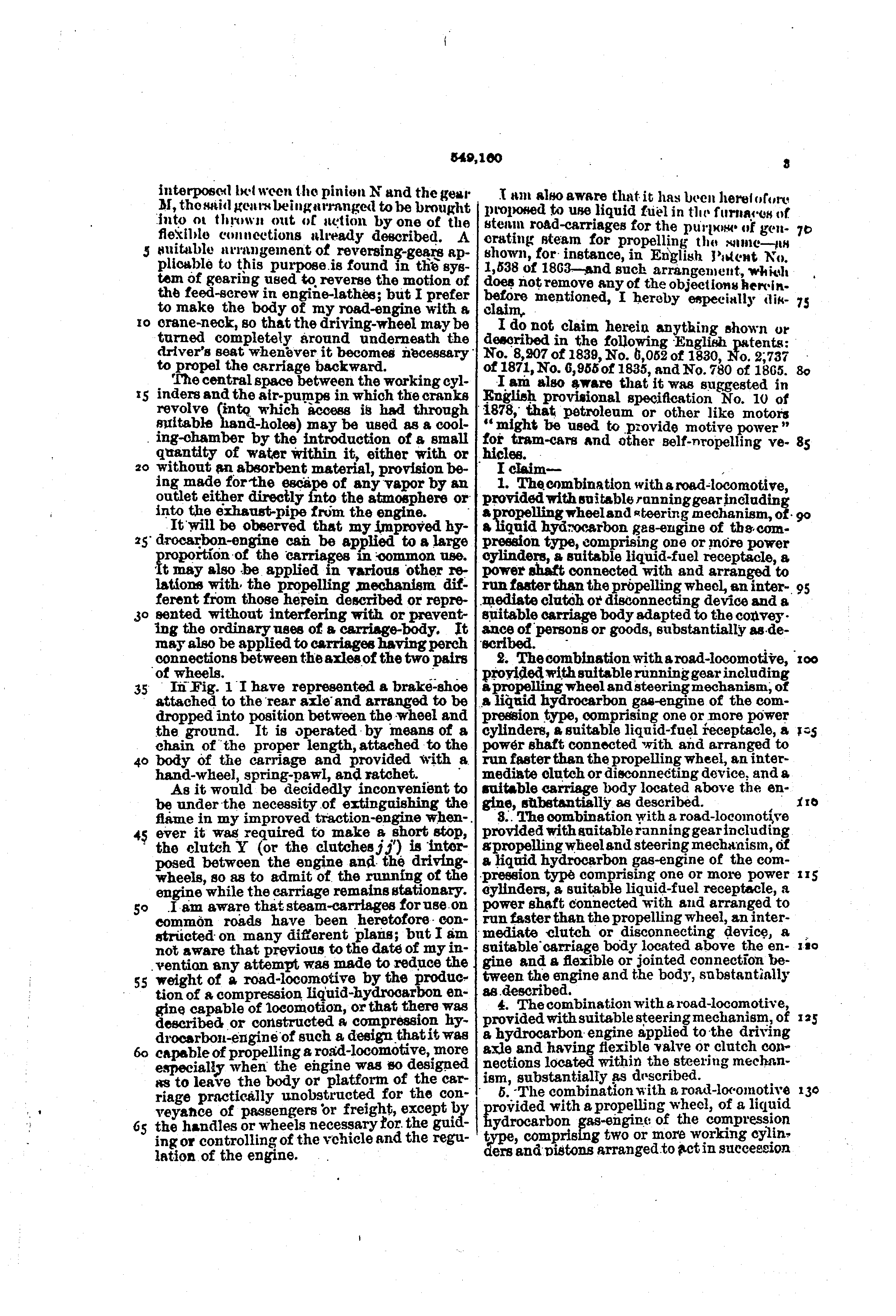
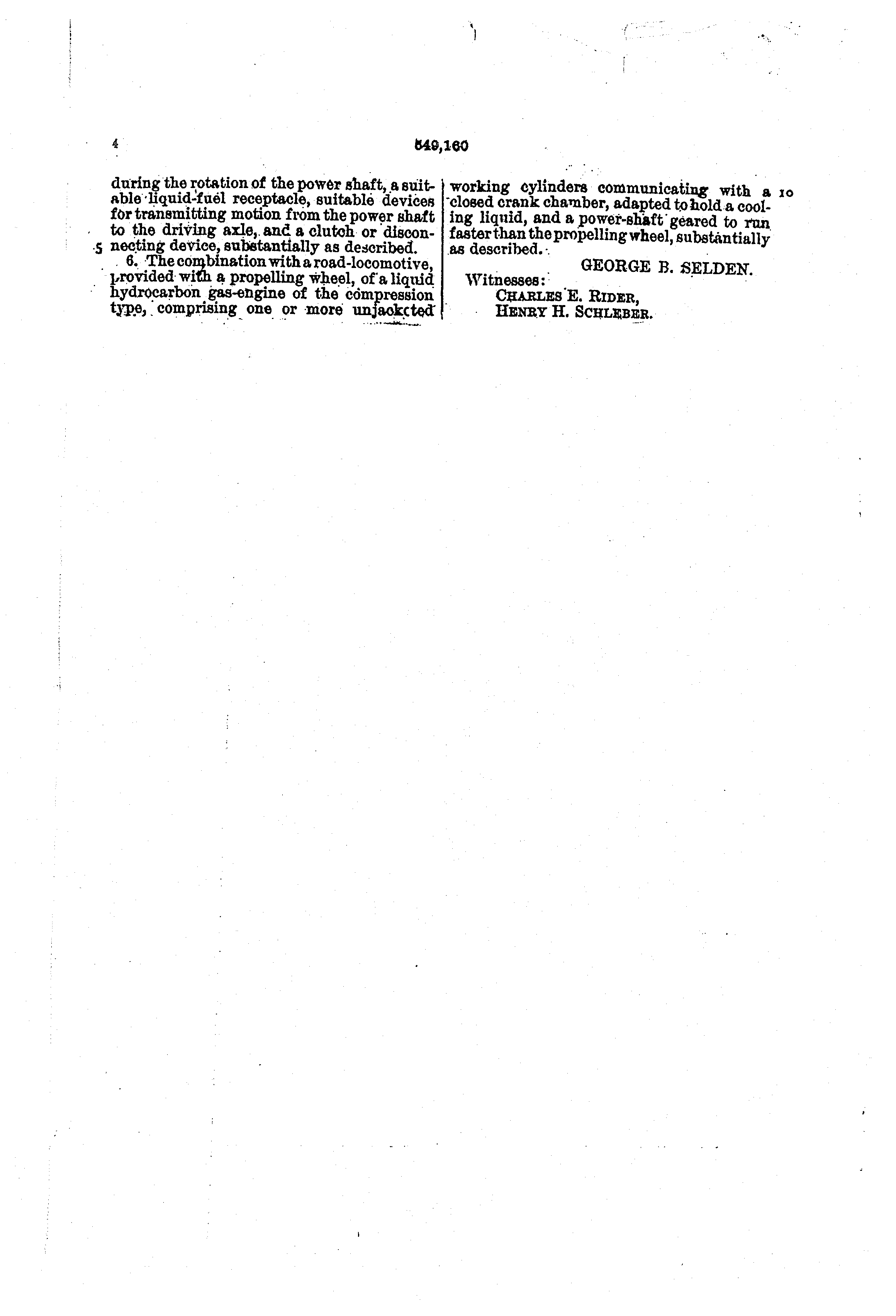
PDF · Google Patents · Figures as cropped for this page: Fig. 1, Fig. 2, Fig. 3, Fig. 4, Fig. 5
US 125,166, George B. Brayton, Improvement in Gas-Engines, granted 2 April 1872
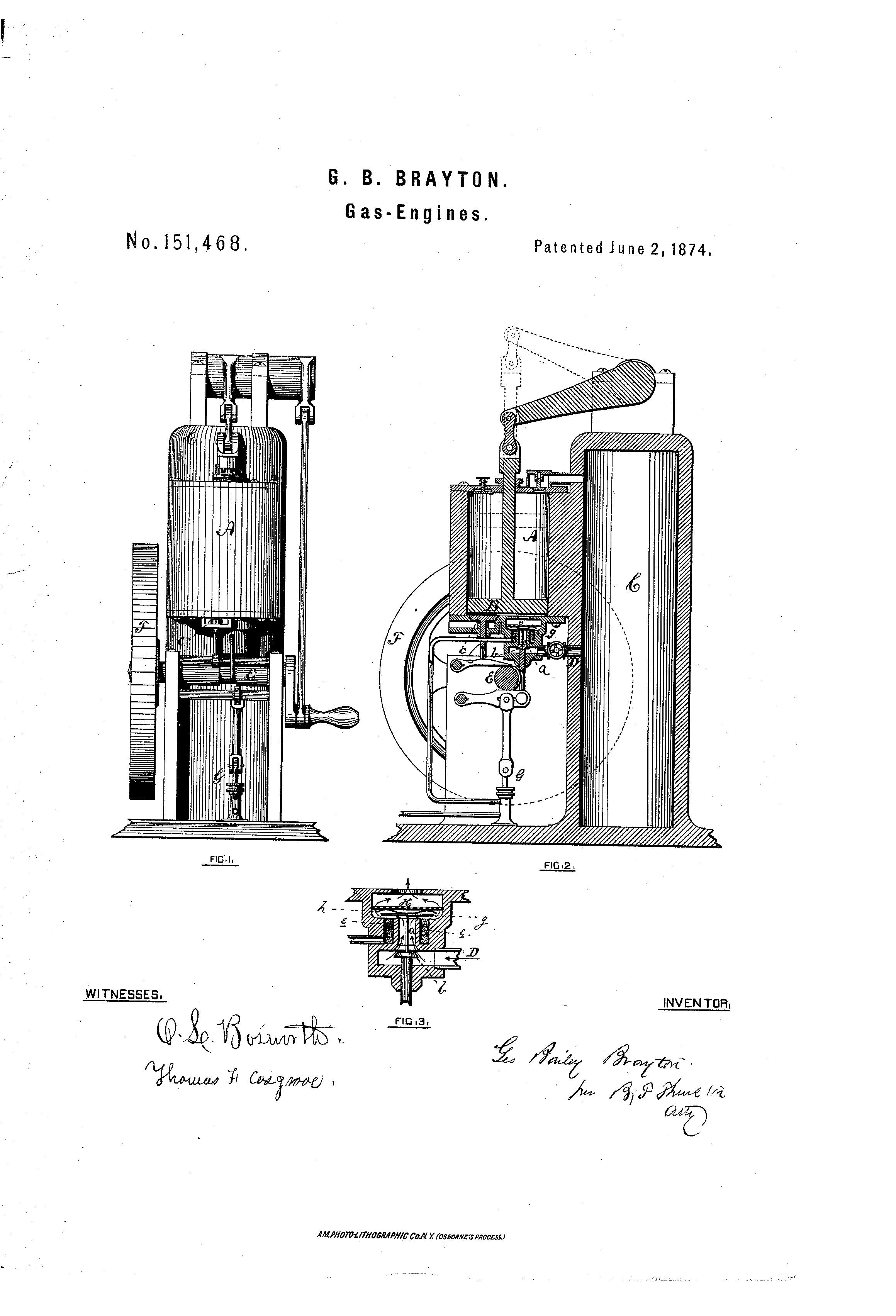
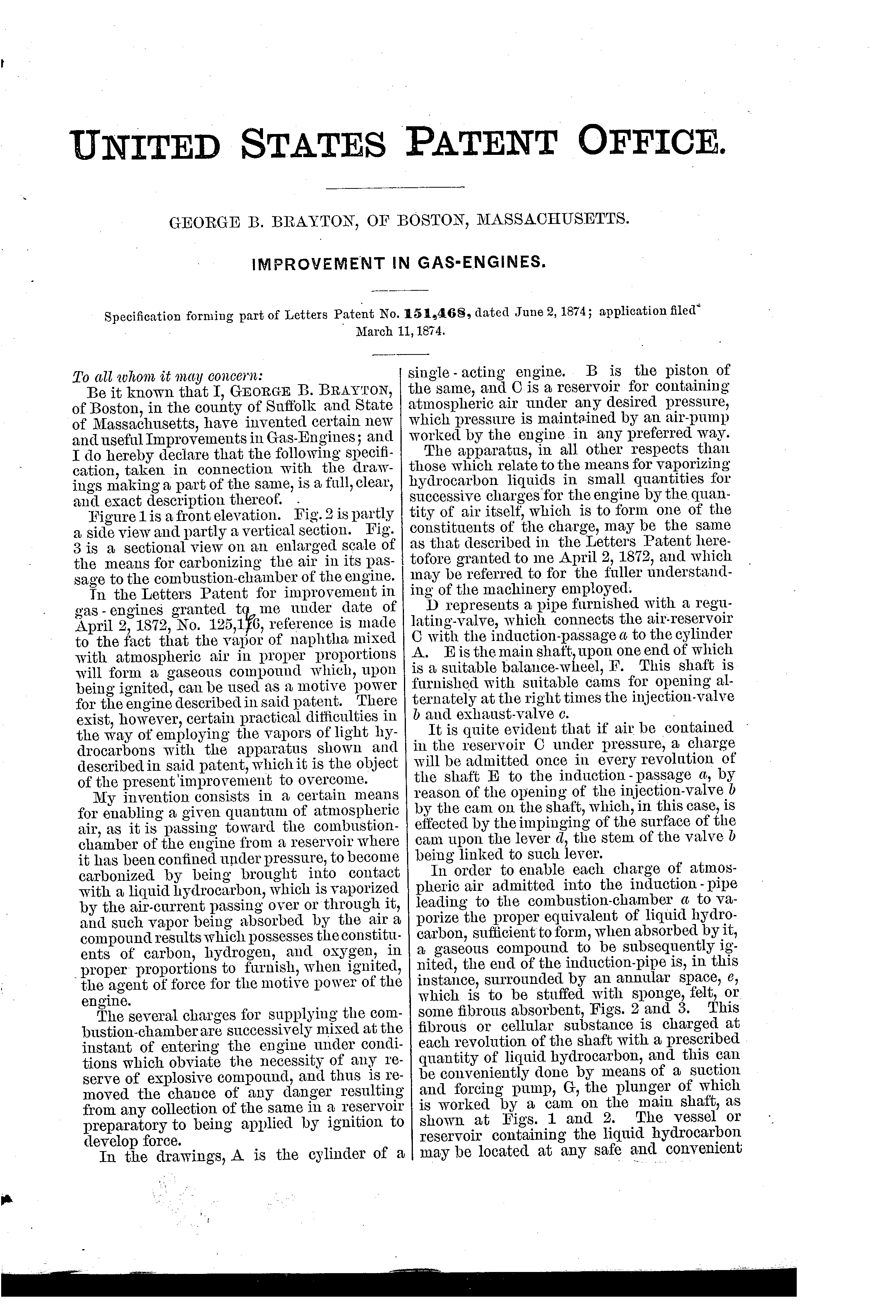
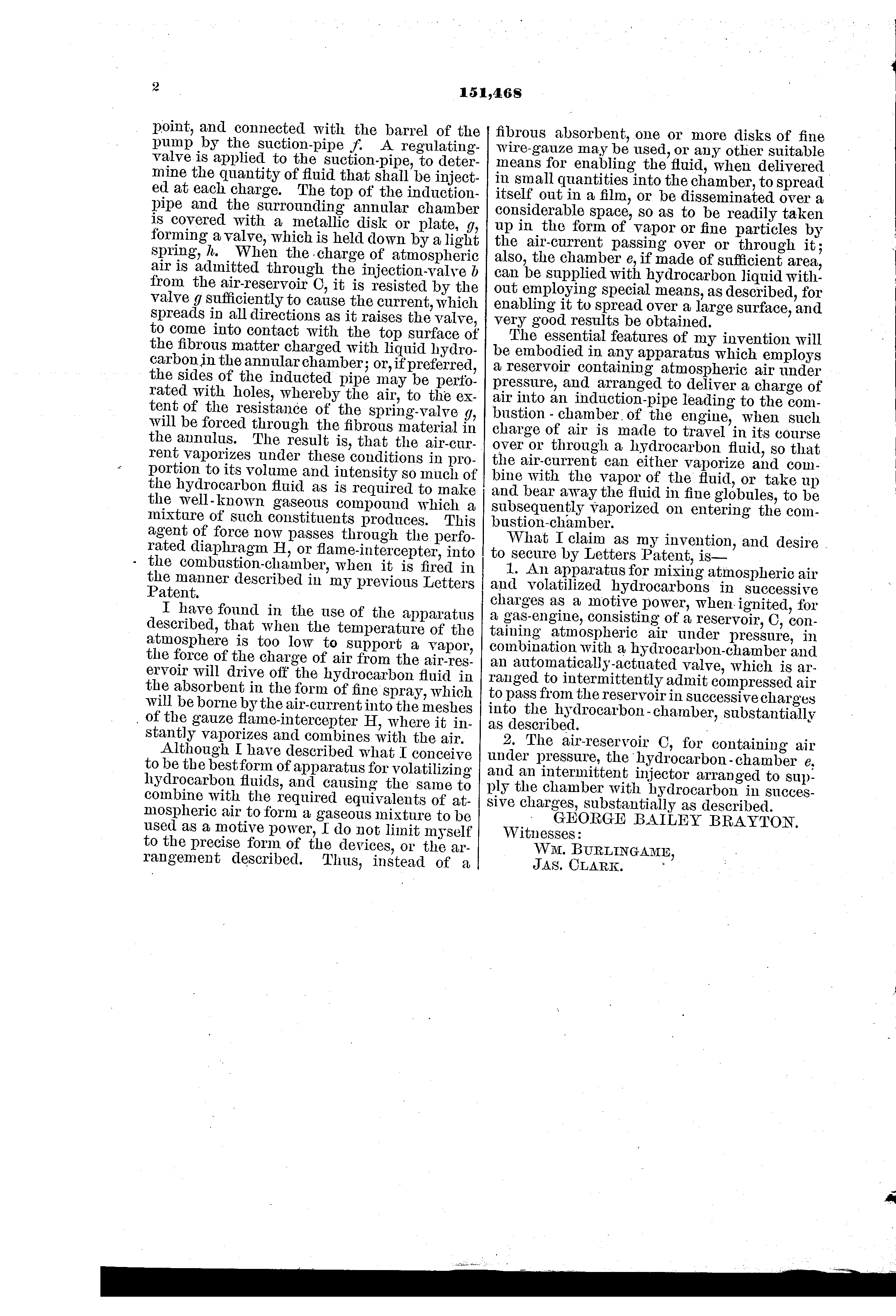
US 151,468, George B. Brayton, Improvement in Gas-Engines (liquid fuel), granted 2 June 1874
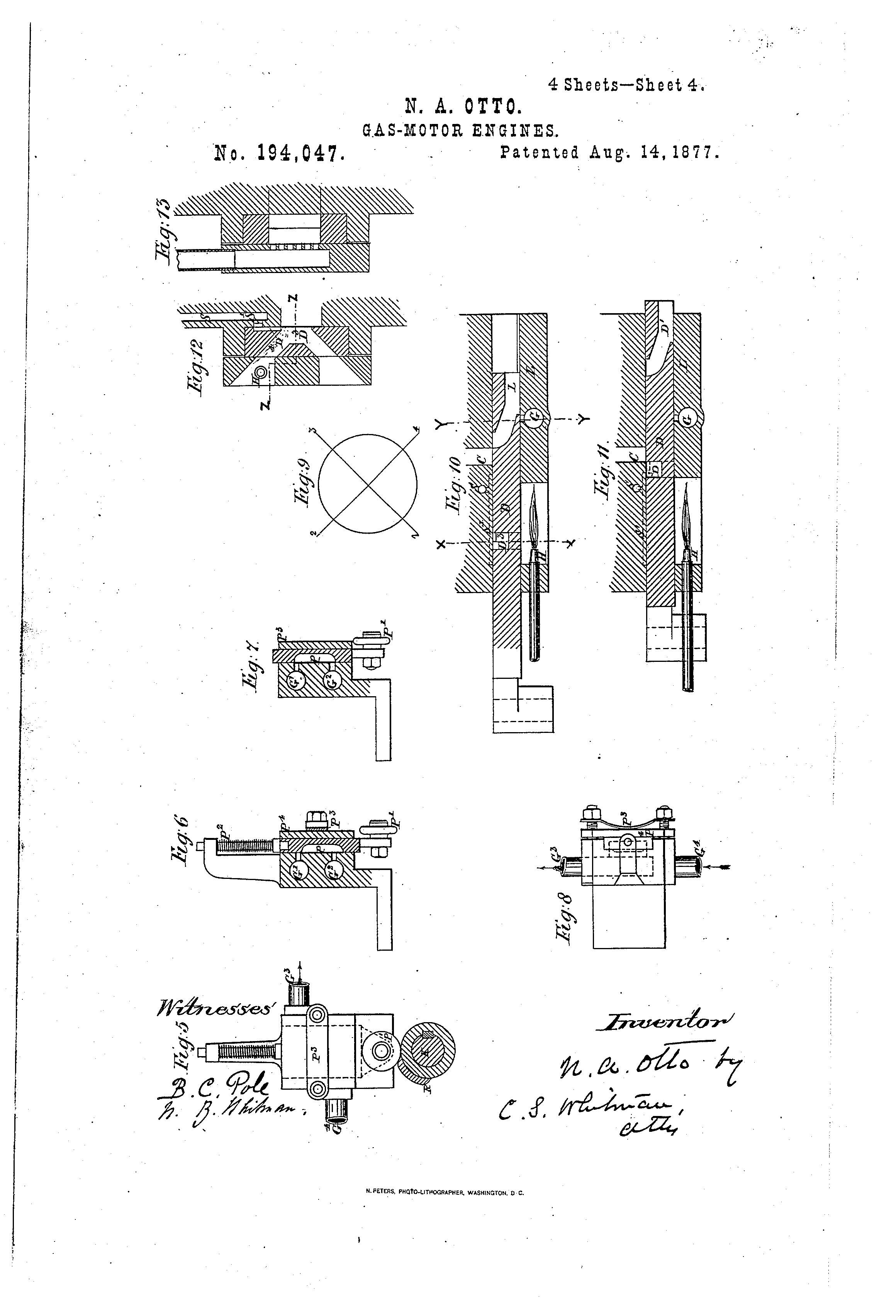
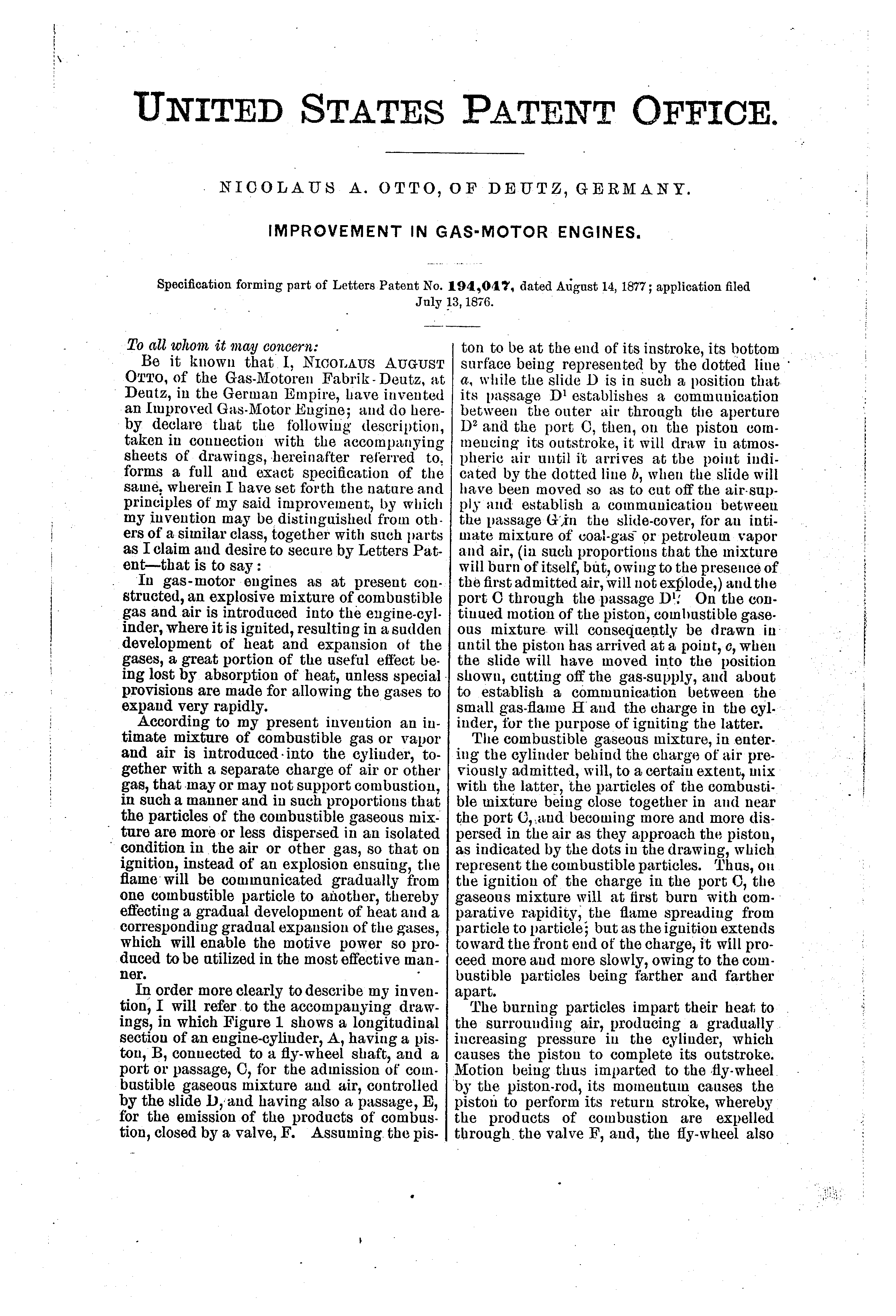
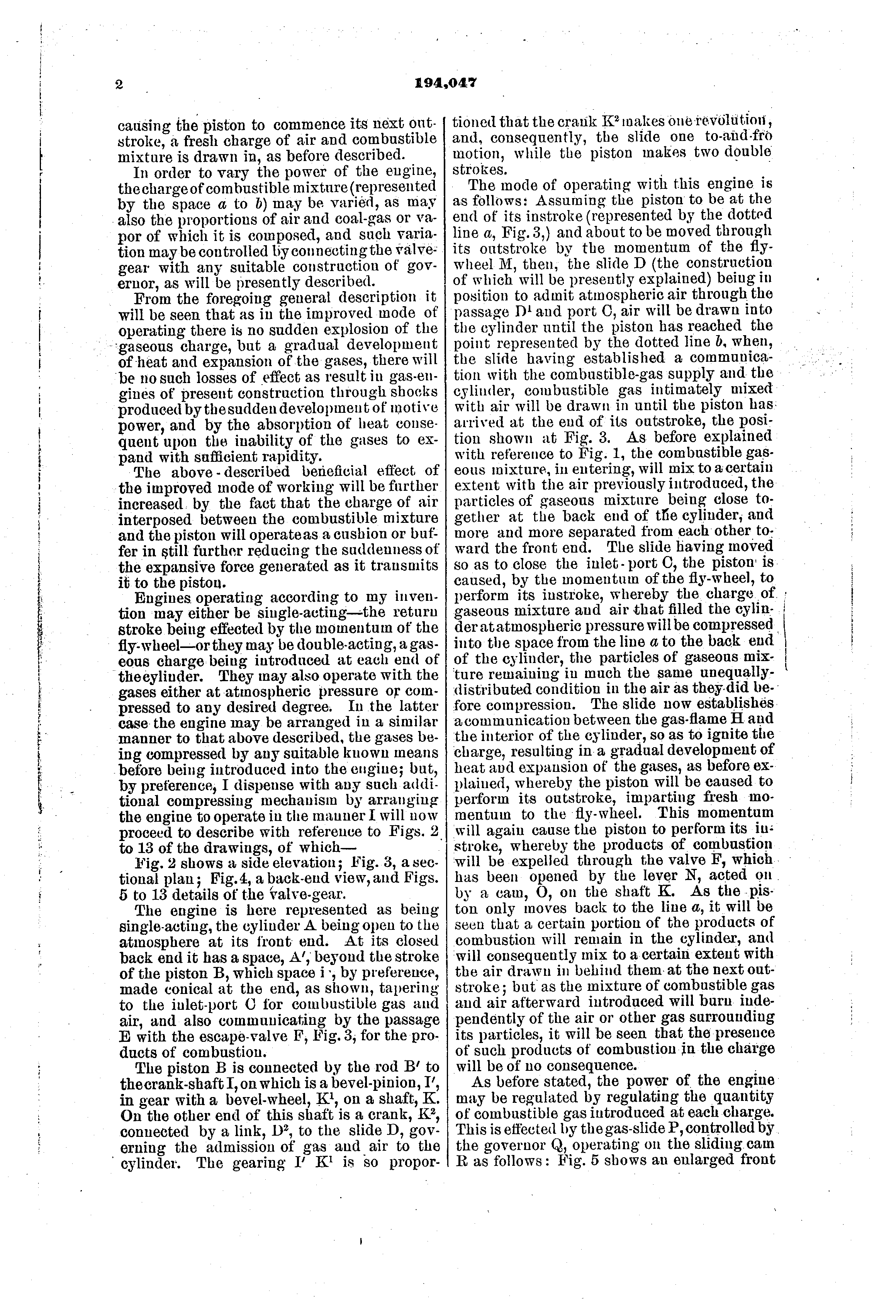
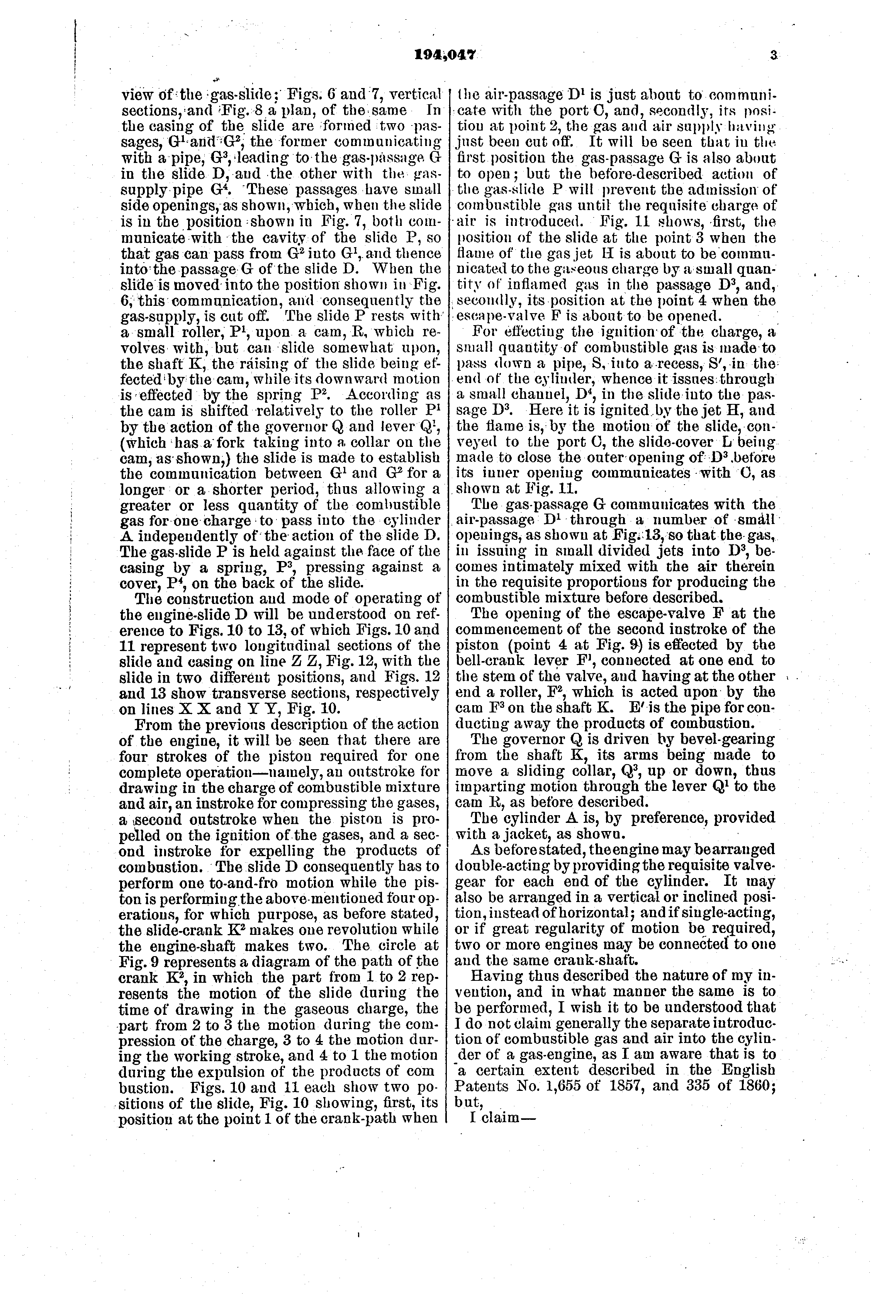
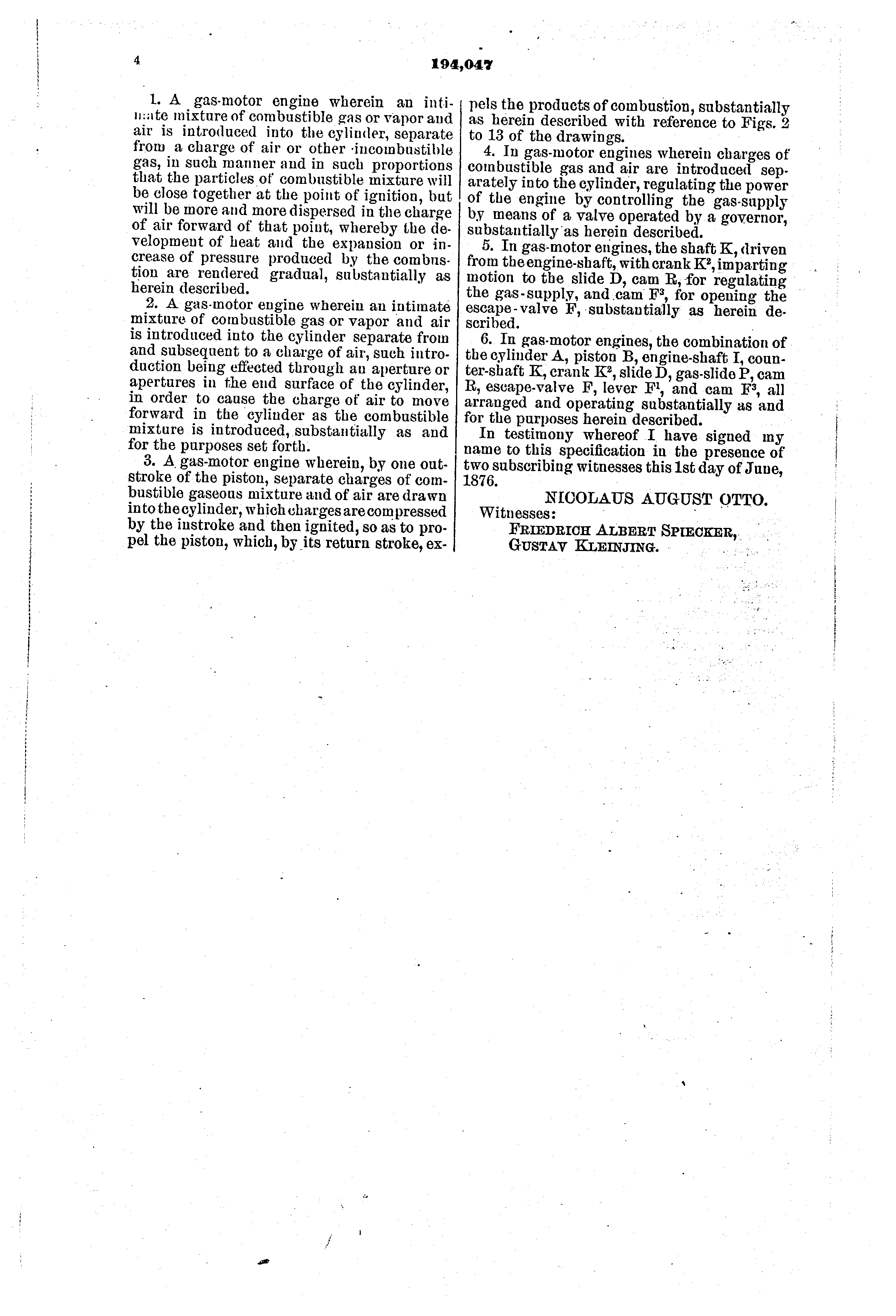
US 194,047, Nicolaus A. Otto, Improvement in Gas-Motor Engines, granted 14 August 1877
Sources
Every fact on this page comes from these, as in the episode. Where we have read a source only second-hand, or only as a machine reading of the page, the text says so.
Patents
- G. B. Selden, Road-Engine, US Patent 549,160, filed 8 May 1879, granted 5 November 1895: the carriage and its parts, "I prefer to drive the steering-wheels", the fifth wheel and worm, the column through its centre, the crane-neck, plate m and the clutches, "decidedly inconvenient", "now well known", the 1889 paragraph, claim 1.
- G. B. Brayton, Improvement in Gas-Engines, US Patents 125,166 (2 April 1872: the reservoir "at least sixty pounds", "a living torch") and 151,468 (2 June 1874: liquid fuel).
- N. A. Otto, Improvement in Gas-Motor Engines, US Patent 194,047, granted 14 August 1877: the four strokes (claim 3), the slide and the side shaft, "instead of an explosion ensuing".
The two decisions
- Electric Vehicle Co. v. C. A. Duerr & Co., 172 F. 923 (Circuit Court, S.D.N.Y., 15 September 1909), Judge Charles M. Hough, Caselaw Access Project: Selden "a member of the bar" (p. 933), "We have struck a new power" (p. 930), "variations in rapidity of breath" (p. 930), his engine against Brayton's (p. 931), the years in the Patent Office and "file wrapper" (pp. 934-935), "had never built a motor car" (p. 934), the 36 volumes (note 1), "the pleasure of contradicting Clerk" (note 10), the two cars built for the case and "wretchedly poor" (pp. 936-937).
- Columbia Motor Car Co. v. C. A. Duerr & Co., 184 F. 893 (Circuit Court of Appeals, 2d Cir., 9 January 1911), Judge Walter C. Noyes, with Judges Lacombe and Ward, Caselaw Access Project: "The public gained absolutely nothing" (p. 895), claim 1 as "three elements" (the report's summary), Brayton's streetcar and launches (p. 900), Thurston's test (p. 904), Clerk's "I at once recognize it" (p. 906), "solving a problem, not for stating one" (p. 908), "particle after particle" (p. 914), "substantial" and "slow operation" (p. 915), "He made the wrong choice" and "the modern automobile" (p. 916); Clerk's book quoted in note 2.
Engines
- D. Clerk, The Gas Engine (London: Longmans, Green, 1886): Brayton at the Centennial (p. 32), the Brayton petroleum engine (p. 153, Fig. 40), Thurston's test (p. 157), his own 1878 test and "48 lbs." (p. 160, Figs. 46-47), the 6 hp Otto diagram (p. 177, Fig. 53). The engines' traces on this page are traced from Figs. 46 and 53.
Trade press and newspapers
- The Horseless Age, April 1900: the purchase of the patent; The Horseless Age, March to May 1903: the association, the pooled patents, the members' deposit, its manager; The Horseless Age, 23 May 1906, p. 739: the rebuilt car, "a continuous flame Brayton type" (read on the page image); The Horseless Age, September and October 1909, p. 307: "It will be fought to a finish", and Buick's back royalties. Read in the Internet Archive's machine reading of the scans, except where marked.
- Motor Age, 30 July 1903, p. 21: the association's first notice. Motor Age, 1 October 1903, pp. 26-27: the two notices; p. 13: "No Compromise Sought by Ford". Motor Age, 29 October 1903: the suit served. Motor Age, 26 November 1903: Ford's advertisement and its price.
- Motor Age, 12 January 1911: the cover, the bonds (p. 3), the complainants' scale drawings (pp. 8-9). Motor Age, 19 January 1911, pp. 18-19: the banquet, the pipe, the royalties paid in 1910. Motor Age, 7 October 1909: the Selden Motor Vehicle Co.'s advertisement.
- New York Herald, 21 August 1903, p. 10: the association's meeting at Niagara Falls, "must either gracefully retire from business" (read in the Library of Congress's machine reading of the page).
- "Selden Wins Patent Suits", The Sun (New York), 16 September 1909, p. 16.
- The association's advertisement, New-York Tribune, 8 February 1910, p. 8; Ford's reply, Newark Evening Star, 19 February 1910, p. 21: "Divine Body", and the bond backed by "at least" twelve million dollars of assets.
- "Ford Co. Scores Sweeping Victory", The Detroit Times, 10 January 1911, p. 1.
- "Selden, Auto Pioneer, Dies at Rochester", The Evening World (New York), 17 January 1922, p. 1.
Books and archives
- H. Ford with S. Crowther, My Life and Work (1922), chapter 4: the cars sold in 1910, "perhaps fifty" bonds asked for. Ford's own account, twelve years on.
- W. Greenleaf, Monopoly on Wheels: Henry Ford and the Selden Automobile Patent (Detroit: Wayne State University Press, 1961): the royalty of one and a quarter per cent, the cross-licensing of 1915, the estimate of the total paid under the patent. We read it only as search results in the Internet Archive's lending copy, without page numbers.
- The Henry Ford, Benson Ford Research Center, Finding Aid for Selden Patent Lawsuit Collection, accession 86.1.1704: the usual account of the royalty, the later account of the assembler refusal.
- Dollar amounts in today's money: the ratio of annual-average consumer prices, from the Federal Reserve Bank of Minneapolis, "Consumer Price Index, 1800-", with 2025 as today, rounded to two figures. Prices before 1913 are estimates, which is why every figure is marked ≈. Greenleaf's estimate of the total is taken at 1907, the middle of the years the royalties were paid.
- The reconstructions are our own work, as described under each model.
Images
- Patent drawings and specifications: USPTO, public domain.
- Motor Age (1903, 1911), The Horseless Age (1906) and Clerk's The Gas Engine (1886): scans via the Internet Archive; published before 1931, public domain. The photographers of the 1906 photograph and the 1911 portraits are not named.
- The Sun (1909), New-York Tribune and Newark Evening Star (1910), The Detroit Times (1911) and The Evening World (1922): Library of Congress, Chronicling America; published before 1931, public domain.